
Ripstop & High-Durability Fabrics
Products for category Ripstop & High-Durability Fabrics
Ripstop is a reinforcing weave technique where a crosshatch pattern of stronger yarns is woven into the fabric at regular intervals — creating a visible grid that stops tears from spreading. In environments where uniforms snag on equipment, rub against rough surfaces, or undergo frequent industrial laundering, ripstop construction can extend garment life by 50–100% compared to standard twill or plain weave equivalents.
Showing all 2 results
-
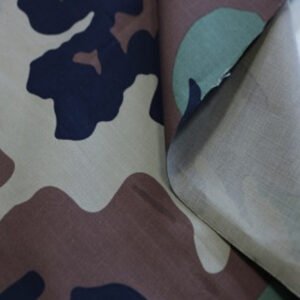
COT-RS-230 — 100% Cotton Ripstop 230–250gsm
Read more -
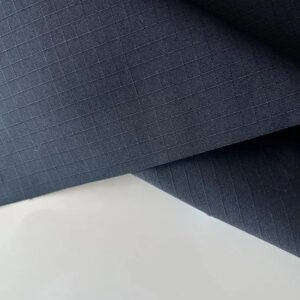
PC-RS-240 — 65/35 Poly-Cotton Ripstop 240–260gsm
Read more
How Ripstop Works
A standard twill or plain weave fabric has uniform yarn count throughout. When a tear starts, it runs unimpeded through the fabric structure. A ripstop fabric incorporates a thicker, stronger yarn every 5–8mm in both warp and weft directions — creating a “stop” that a tear cannot cross without breaking the reinforcing yarn.
Ripstop vs. Standard Weave — Performance Comparison
| Property | Standard Twill 200gsm | Ripstop 200gsm |
|---|---|---|
| Tear strength (warp) | ~25 N | ~35–45 N — 40–80% higher |
| Abrasion resistance | Baseline | 20–30% higher |
| Weight | Same | Same (+5% max) |
| Cost | Baseline | +8–12% |
| Appearance | Clean diagonal | Visible grid pattern |
Available Ripstop Fabric Types
| Product Code | Composition | Weight (GSM) | Application | Key Feature |
|---|---|---|---|---|
| COT-RS-230 | 100% Cotton | 230–250 | Military/tactical OCP uniforms, law enforcement | Traditional cotton ripstop — breathable, matte finish, IR treatment available |
| PC-RS-240 | 65% Polyester / 35% Cotton | 240–260 | Industrial workwear, heavy-duty trousers | Durable PC ripstop — higher tear strength, industrial wash compatible |
| CN-RS-280 | 88% Cotton / 12% Nylon | 280–320 | Tactical, mining, high-wear industrial | Maximum tear strength — 88/12 blend with ripstop grid |
| PES-RS-140 | 100% Polyester | 120–160 | Lightweight outerwear, Hi-Vis vests, packable gear | Lightweight ripstop — tight grid, wind-resistant, packable |