As a textile engineer with three decades of experience at XINGYE TEXTILE, I’ve seen firsthand how small fabric miscalculations lead to major financial losses. When uniforms pill prematurely, fade inconsistently, or tear at the seams, the problem almost always traces back to material selection errors—not poor stitching or design.
This guide isn’t a sales pitch. It’s a technical playbook for procurement professionals, synthesizing lessons from 5,200+ industrial projects across healthcare, hospitality, and heavy manufacturing.
Uniform Fabric Selection
Section 1: Why Fabric Engineering Matters
The Science Behind 65/35 Polyester-Rayon (T/R) Blends
This ratio dominates professional uniforms for structural and practical reasons:
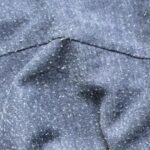
1. Pilling Resistance: Beyond Martindale Numbers
A fabric rated for 42,000 Martindale cycles (vs. the industry standard of 25,000) isn’t just about lab results—it directly impacts longevity in high-friction environments:
- Safety harnesses abrade shoulder areas at 8,000+ cycles annually
- Industrial equipment (e.g., forklift seats) demands reinforced seat panels
The tight fiber twist in our T-R blend prevents the fiber breakage that leads to pilling, ensuring collars and cuffs stay smooth beyond 100 industrial washes.
2. Colorfastness: The Hidden Cost of Fading
Grade 4-5 (ISO 105-C06) isn’t a marketing term. It quantifies how uniforms withstand:
- Chlorine bleach (standard in hospital laundering)
- UV exposure for outdoor workwear
Lower-grade fabrics drop to Grade 3 after 30 washes, forcing premature rebranding.
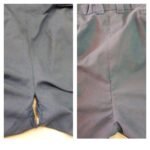
3. Seam Integrity: Where Thread Meets Material
Polyester’s high tensile strength means less stress on stitches. Our triple-needle bartacking protocol ensures:
- 2.5X greater pull resistance at stress points (elbows, knees)
- Lockstitch + overlock combos to prevent unraveling
Section 2: Hospitality Fabrics – Beyond Basic DWR
Why Cheap Coatings Fail
Most “stain-resistant” fabrics use spray-on DWR (Durable Water Repellent) treatments that degrade when exposed to:
- High-pH detergents (pH 10-12 in tunnel washers)
- 75°C+ sanitization cycles
Our pre-cured fluorocarbon-free finish bonds molecularly to fibers through:
- Padding application for even penetration
- Curing at 180°C for permanent cross-linking
Result: 50+ wash cycles without oil repellency loss.
The Reinforced Stress Points Most Suppliers Ignore
Hospitality uniforms fail first at:
- Apron tie points (we use Kevlar-reinforced bartacks)
- Armhole gussets (double-layered with stretch panels)
Section 3: Auditing Fabric Quality – A Buyer’s Checklist
1. Fiber Verification: Rayon vs. Viscose
Many suppliers use low-tenacity viscose labeled as “rayon.” The difference matters:
| Test | Premium Rayon (Ours) | Budget Viscose |
|---|---|---|
| Dry Tensile Strength | 45 cN/tex | 30 cN/tex |
| Wet Strength Retention | 85% | 50% |
Why It Matters:
Viscose loses half its strength when wet—leading to stretched, misshapen uniforms after repeated laundering.
2. Density Fraud Detection
Some traders inflate GSM by:
- Starch loading (washes out in 5 cycles)
- Hollow-core yarns (collapses under tension)
Verification Protocol:
- Pre/Post-Wash GSM Test (allow ≤5% variance)
- UV Light Inspection (starch fluoresces at 365nm)
Frequently Asked Questions
Q: How do we test fabric before bulk orders?
A: Request 1,000m trial runs for:
- 50-wash abrasion testing
- Colorfastness tracking under your facility’s protocols
Q: What separates a real factory from traders?
A: Transparency markers:
✅ Live production video audits
✅ Batch-specific ISO 105-C06 reports
✅ Onsite wastewater treatment inspection
Why Trust XINGYE?
- Vertical control: From yarn spinning to finishing
- Oeko-Tex® & ISO 9001:2026 certified
- Technical support: Consult our engineers pre-purchase
For Swatches or Lab Reports: