If you've ever watched a cooking show or visited a professional kitchen, you've likely noticed the tall, white hat perched atop a chef's head. The chef's hat — known as the toque blanche — carries genuine culinary history, symbolism, and practical purpose, though not all of the stories attached to it hold up to scrutiny. Here's what's actually documented, what's likely embellished legend, and why the hat still matters in professional kitchens today.
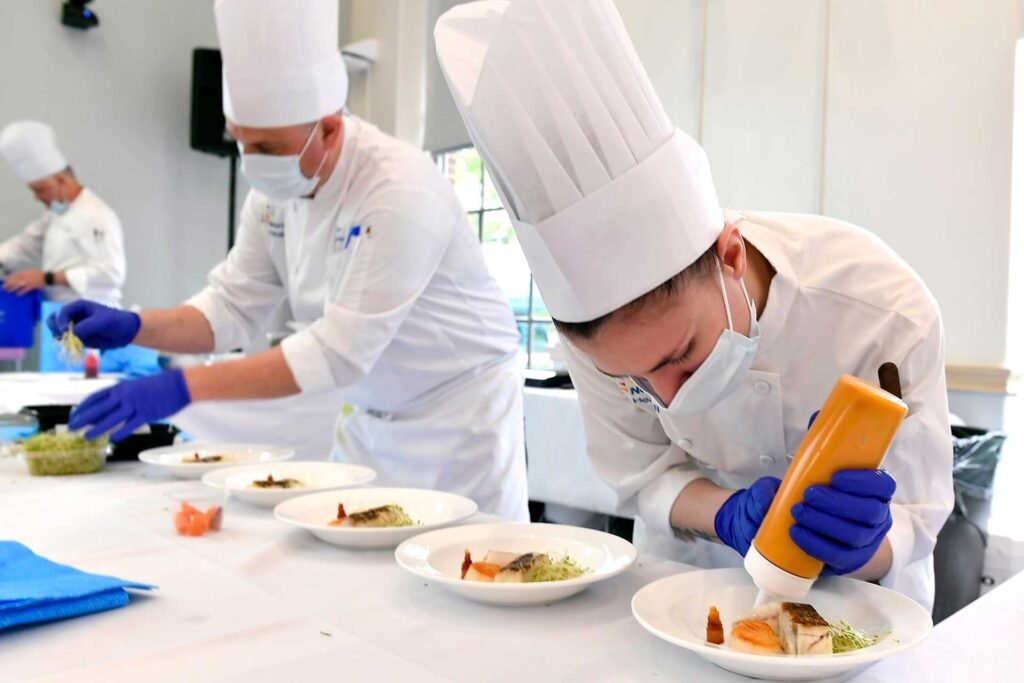
Why Do Chefs Wear Hats
The Origins of the Chef's Hat: Separating Documented History from Legend
Two origin stories circulate widely about the chef's hat's beginnings — and it's worth being upfront that neither is well-documented history.
The story that Assyrian King Ashurbanipal required his chefs to wear special hats to signal loyalty, and the story that England's King Henry VIII executed a chef over a hair found in his food, leading to mandatory head coverings, are both popular anecdotes that show up across food blogs and kitchen-history retellings — but neither traces back to a credible primary historical source. They function more as culinary folklore than documented fact, and we'd rather say so plainly than repeat them as settled history.
What is well-documented is the toque's modern history: the tall, pleated white hat was popularized in the early 19th century by French chef Marie-Antoine Carême, who drew on the structured, hierarchical style of military uniforms to elevate the chef's hat into a symbol of professionalism and culinary rank. Auguste Escoffier, the father of modern French cuisine, later formalized the toque's role within his brigade system — the kitchen hierarchy still referenced in professional kitchens today — where the hat became a visible marker of a cook's position in that structure.
Why Do Chefs Wear Hats? The Practical and Symbolic Reasons
1. Hygiene and Food Safety
This is the primary, functionally verifiable reason. Kitchens are high-risk environments for contamination, and loose hair or sweat can fall into food during preparation. A chef's hat keeps hair secured and helps absorb sweat before it reaches a dish — which is why hair covering requirements appear directly in food safety frameworks like HACCP guidance, independent of whether a kitchen uses a traditional toque or a simpler cap.
2. Signaling Rank and Expertise
Traditionally, hat height corresponded to kitchen hierarchy — an executive chef's toque could reach a notably taller height than a junior cook's cap, functioning as a visible marker of experience within Escoffier's brigade system. The folklore that each pleat represents a distinct technique the chef has mastered — with a mythical '100-pleat' hat signifying 100 ways to prepare an egg — is a charming piece of kitchen lore, not a documented culinary standard. Worth repeating as the story it is, not as fact.
3. Professionalism and Uniformity
A chef's hat contributes to a clean, unified kitchen appearance and reinforces workplace discipline. The traditional white color made stains and dirt immediately visible, which functioned as a built-in incentive to maintain a clean uniform and workspace.
The Evolution of Chef Hats: From Toque Blanche to Modern Variations
Most professional kitchens today have moved away from the tall traditional toque toward more practical alternatives:
- Traditional toque — tall, pleated, white; still used for formal or ceremonial kitchen settings
- Straight-sided toque — cylindrical, often open at the top for ventilation; commonly disposable paper for hygiene-focused environments
- Baker's cap — flat-topped, lightweight; popular near ovens where heat and comfort matter more than tradition
- Skull cap / beanie — snug, breathable mesh-top styles favored in fast-paced modern kitchens
- Baseball caps and head wraps — casual alternatives in food trucks and informal kitchens, still meeting hair-covering requirements
Why Are Chef Hats White?
White has long signaled cleanliness in food service settings — a stained white hat is immediately visible, which reinforces hygiene standards in a way a darker color wouldn't. Some modern kitchens have shifted to darker colors specifically to mask inevitable staining during service, but white remains the traditional and most recognized choice.
Is Wearing a Chef Hat Mandatory?
In most professional kitchens, some form of head covering is mandatory under food safety codes or internal policy — though it doesn't have to be the traditional toque. Hats, caps, hairnets, or head wraps all satisfy the underlying requirement: keeping hair and sweat away from food.
Summary: Why Do Chefs Wear Hats?
| Reason | Explanation |
|---|---|
| Hygiene | Keeps hair out of food and helps manage sweat — the functionally documented reason |
| Hierarchy | Hat height historically signaled rank within Escoffier's brigade system |
| Professionalism | Reinforces a clean, unified kitchen appearance |
| Tradition | Carême and Escoffier's documented influence on the modern toque, distinct from unverified origin legends |
| Comfort | Modern styles prioritize ventilation for long kitchen shifts |
Conclusion
The chef's hat carries real culinary history — Carême's design influence and Escoffier's brigade hierarchy are well documented — even where some of the more colorful origin stories attached to it don't hold up to scrutiny. Whatever style a kitchen chooses today, from the tall pleated toque to a simple breathable skull cap, the underlying function hasn't changed: keeping hair and sweat out of the food, and keeping the kitchen team looking like a team.
For kitchens specifying uniforms and headwear that need to hold up to heat, frequent washing, and long shifts near ovens and stovetops, fabric choice matters as much as style — see our guide on heat-resistant kitchen uniform fabric for what actually performs under real kitchen conditions.