Choosing the right plaid fabric for school uniforms is a critical decision that influences not only the appearance but also the durability, comfort, and longevity of the garments students wear daily. Whether you’re a school administrator, uniform supplier, or garment manufacturer, understanding how to select the best plaid fabric can save costs, reduce replacement frequency, and ensure a polished, consistent look year after year.
In this comprehensive guide, we’ll explore everything you need to know about how to choose plaid fabric for school uniforms, including fabric composition, weave types, performance characteristics, and sourcing tips — all backed by insights from leading industry experts and top Google search results.
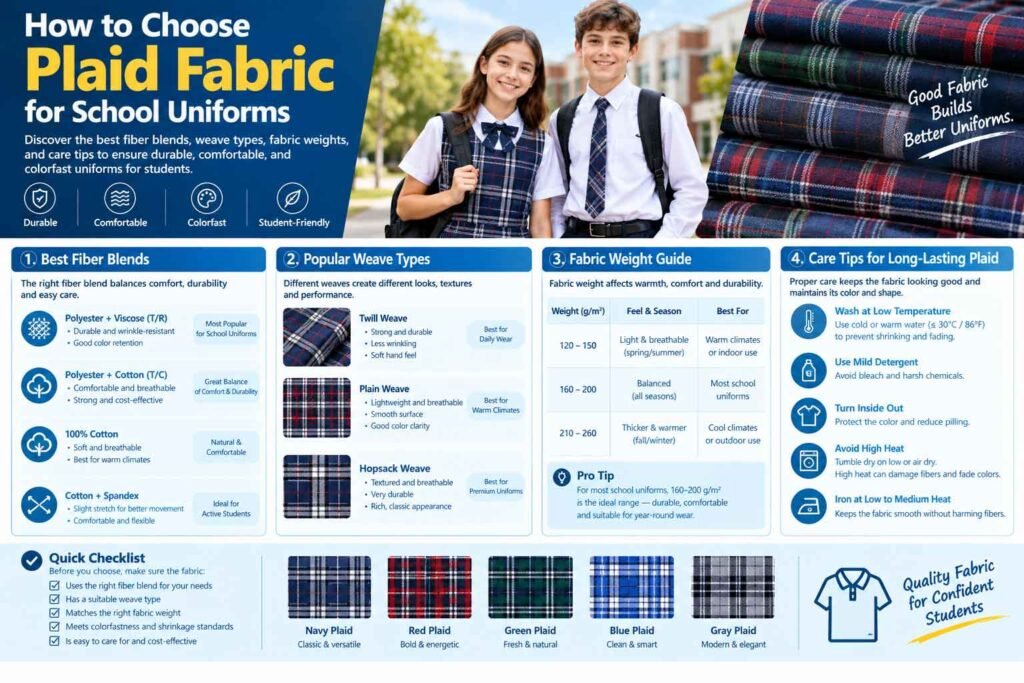
How to Choose Plaid Fabric for School Uniforms
Why Choosing the Right Plaid Fabric Matters
Plaid fabric is more than just a pattern; it is a foundational element of school identity and uniformity. The fabric must withstand rigorous daily wear, frequent washing, and maintain its color and shape over multiple academic years. Selecting the wrong fabric leads to faded colors, distorted patterns, shrinkage, and discomfort — all of which can undermine the uniform’s professional appearance and cause dissatisfaction among students and parents.
Understanding Uniform Plaid Fabric: What Sets It Apart?
Uniform plaid fabric is a specialized textile engineered specifically for school and institutional uniforms. Unlike fashion plaids, which often change with trends, uniform plaids prioritize:
- Repeatable, stable patterns: The check or tartan patterns are yarn-dyed and woven, ensuring both sides of the fabric display the same pattern and color.
- Colorfastness: Yarn-dyed fabric maintains vibrant colors even after 50+ industrial wash cycles.
- Durability: Designed to endure daily wear and industrial laundering without pilling or shrinking.
- Long-term availability: Schools often reorder the same plaid for 10-15 years, making batch-to-batch consistency essential.
Key Factors to Consider When Choosing Plaid Fabric for School Uniforms
1. Fiber Composition
The fiber blend affects comfort, durability, and care requirements. The most common blends include:
- 65% Polyester / 35% Viscose (Rayon): Offers wrinkle resistance, breathability, and soft hand feel. Ideal for pleated skirts and jumpers due to excellent pleat retention and durability.
- 65% Polyester / 35% Cotton: A slightly more economical option with good durability but may require more ironing and can lose dye saturation faster.
- 100% Polyester: Provides high wrinkle resistance and colorfastness but can be less breathable, suitable for uniforms requiring minimal ironing.
- 100% Cotton: Preferred in some markets for natural fiber requirements but less durable and prone to shrinkage.
Insight: The 65/35 polyester-viscose blend is widely regarded as the optimal choice for school uniforms, balancing durability, comfort, and wrinkle resistance.
2. Fabric Weight (GSM)
Fabric weight affects the garment’s drape, warmth, and durability:
- 180-220 gsm: Suitable for summer uniforms or lightweight shirts and blouses.
- 220-280 gsm: Ideal for pleated skirts, kilts, and jumpers, providing enough body to hold pleats and resist wear.
- Up to 300 gsm: Used for winter uniforms or colder climates, offering additional insulation and structure.
Tip: For pleated skirts and jumpers, a heavyweight twill fabric between 220-280 gsm is recommended to maintain sharp pleats and resist abrasion.
3. Weave Structure
The weave affects durability, texture, and appearance:
- Twill Weave (2/2 twill): The most popular for skirts, trousers, and pinafores due to its diagonal ribbing, which provides excellent drape, abrasion resistance, and tear strength.
- Plain Weave: Commonly used for shirts and blouses, offering crisp pattern definition and breathability.
- Double Cloth or Brushed Finishes: Better for colder climates, adding softness and warmth.
4. Pattern and Color Consistency
- Yarn-Dyed Construction: The plaid pattern is woven into the fabric using pre-dyed yarns, ensuring superior colorfastness and pattern integrity compared to printed plaids.
- Color Matching: Uniform programs require batch-to-batch consistency with a delta E (δE) color variation below 1.0 to prevent noticeable differences across production runs.
- Pattern Repeat Size: Must be standardized and approved to minimize fabric waste and ensure seamless garment assembly.
5. Performance Characteristics
- Durability: Look for fabrics with Martindale abrasion resistance above 20,000 cycles for polyester blends.
- Color Fastness: Grade 4 or higher on ISO or AATCC scales for washing, rubbing, perspiration, and light exposure.
- Dimensional Stability: Shrinkage should be under ±3% after multiple washes.
- Pilling Resistance: Grade 4 or better to maintain a smooth look after repeated wear.
- Wrinkle Resistance: Important for maintaining a professional appearance with minimal ironing.
Practical Tips for Selecting and Sourcing Plaid Fabric
- Request Samples and Lab Test Reports: Verify abrasion resistance, colorfastness, shrinkage, and pilling resistance before placing a bulk order.
- Confirm Minimum Order Quantities (MOQs): Yarn-dyed plaids require higher MOQs due to loom setup and dyeing processes; typically 1,500 to 3,000 meters.
- Plan for Lead Times: Custom pattern development can take 12-18 months; repeat orders usually ship within 4-6 weeks.
- Work with Certified Suppliers: Choose manufacturers with ISO and OEKO-TEX certifications to ensure safety and compliance.
- Consider Related Materials: Coordinating sewing threads, interlinings, and trims with your plaid fabric supplier can streamline production and quality control.
Common Types of Plaid Patterns for School Uniforms
- Classic Tartan: Traditional multi-colored bands forming distinctive patterns, often linked to heritage.
- Vichy Checks: Simple two-tone squares, suitable for lightweight summer uniforms.
- Madras: Bright, lightweight plaids ideal for warm climates.
- Houndstooth (Pata de Gallo): A subtle, elegant pattern used in formal uniforms.
- Buffalo Checks: Bold, large checks often used in outerwear or colder climate uniforms.
Note: Pattern choice should align with school branding and uniform regulations.
Care and Maintenance Tips for Uniform Plaid Fabric
- Machine Wash Cold: Use mild detergents to preserve color and fabric integrity.
- Avoid Bleach: Prevents color fading and fiber damage.
- Tumble Dry Low or Air Dry: Reduces shrinkage and maintains fabric quality.
- Iron on Low Heat: Only if necessary, to avoid damaging synthetic fibers.
- Follow Supplier Instructions: Always adhere to specific care labels for best results.
Proper care extends garment life, maintaining a crisp and professional look throughout the school year.
Conclusion: Make an Informed Choice for Lasting Uniform Quality
Understanding how to choose plaid fabric for school uniforms is essential for delivering garments that combine tradition, durability, and comfort. Prioritize yarn-dyed polyester-viscose blends with a twill weave at 220-280 gsm for the best balance of performance and appearance. Ensure consistent color matching and durability through rigorous testing and reliable supplier partnerships.
By investing time in selecting the right plaid fabric, schools and manufacturers can reduce replacement costs, uphold institutional identity, and keep students looking sharp every day.
Ready to Source the Perfect Plaid Fabric?
Explore trusted suppliers with proven expertise in uniform plaid fabrics. Request samples, verify certifications, and discuss your specific uniform requirements to secure high-quality, durable materials that meet your school’s needs.