When it comes to choosing the right fabric for outdoor gear, rainwear, or everyday clothing, the terms waterproof, water resistant, and water repellent often pop up. While they may sound similar, these fabrics offer very different levels of protection against moisture. Selecting the wrong one can leave you wet, uncomfortable, and frustrated. Whether you’re shopping for a jacket, backpack, or upholstery, understanding waterproof vs water resistant vs water repellent fabric is essential to making an informed choice.
In this article, we’ll break down what each term means, how these fabrics work, and which is best suited for various activities and weather conditions. We also delve into the science behind these finishes and treatments to give you a comprehensive guide to staying dry no matter the forecast.
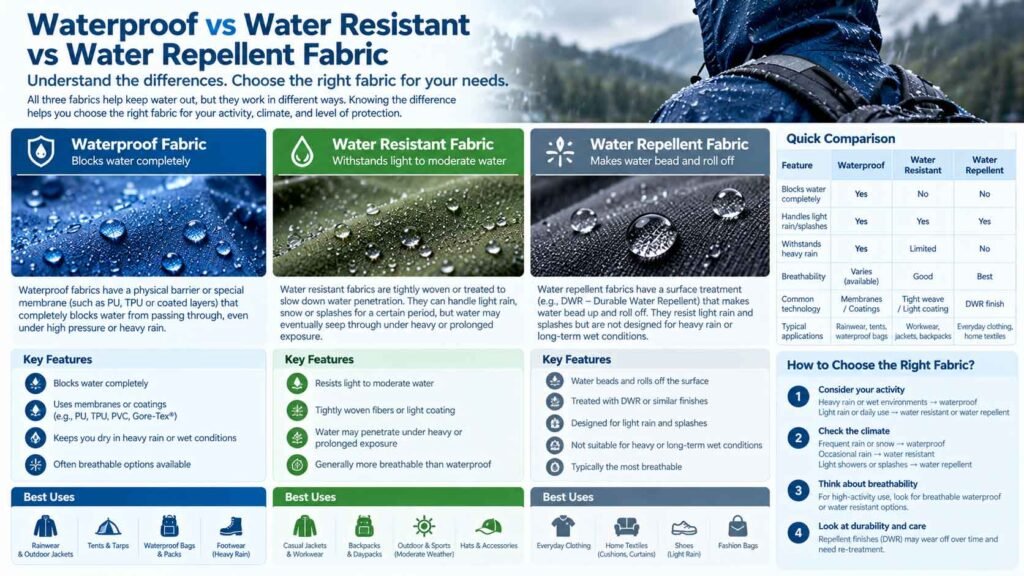
Waterproof vs Water Resistant vs Water Repellent Fabric
What Does Waterproof Mean?
Waterproof fabric provides the highest level of protection against water penetration. It is designed to be completely impervious to water, even under heavy rain or prolonged exposure.
Key Characteristics:
- Material Construction: Typically uses densely woven fabrics coated or laminated with waterproof membranes such as Gore-Tex, polyurethane, or other synthetic barriers.
- Seam Sealing: Seams are taped or welded to prevent water from seeping through the tiny holes created by stitching.
- Water Column Rating: Waterproof fabrics have a high water column rating (usually above 10,000 mm), indicating they can withstand significant water pressure before leaking.
- Breathability: Advanced waterproof fabrics often balance waterproofness with breathability, allowing sweat vapor to escape while keeping rain out.
Best For:
- Heavy rain, storms, and wet conditions requiring prolonged exposure.
- Outdoor activities like hiking, camping, fishing, and sports.
- Situations where staying dry is critical for comfort and safety.
What Is Water Resistant Fabric?
Water resistant fabric offers moderate protection by resisting water penetration for a limited time. It is not fully waterproof but can handle light rain or splashes.
Key Characteristics:
- Tighter Weave: Often made from tightly woven fibers that slow down water absorption.
- Light Coatings: May have a thin surface treatment that adds some water resistance but doesn’t form a complete barrier.
- Lower Water Column: Water column ratings typically range from 3,000 to 5,000 mm.
- Seam Construction: Seams are usually not fully sealed, so water can eventually seep through.
Best For:
- Occasional or light rain exposure.
- Daily wear in urban settings where brief showers are expected.
- Activities with intermittent outdoor time and low moisture risk.
Understanding Water Repellent Fabric
Water repellent fabric is treated with a finish that causes water to bead up and roll off the surface rather than soaking in. This finish is often applied as a Durable Water Repellent (DWR) coating.
Key Characteristics:
- Surface Treatment: Hydrophobic chemicals, waxes, or fluorochemicals are applied to reduce the fabric’s surface energy.
- Water Beading: Water droplets form beads and slide off, preventing saturation.
- Porosity: The fabric remains breathable with open pores allowing air and moisture vapor to pass through.
- Temporary Protection: The repellent finish wears off over time and requires reapplication.
Best For:
- Light rain or drizzle.
- Situations where breathability is a priority.
- Fabrics that need to shed water quickly but remain comfortable, such as casual jackets or hats.
Scientific Insights: How Do These Fabrics Work?
The difference between waterproof, water resistant, and water repellent fabrics lies largely in their surface chemistry and fabric construction.
- Contact Angle and Surface Energy: Water repellency depends on the fabric's ability to maintain a high contact angle with water droplets, causing them to bead rather than spread. Materials with low critical surface tension (around 24-30 dynes/cm) are considered water repellent.
- Hydrophobic Finishes: Paraffin waxes, silicones, and fluorochemical finishes are commonly used to lower surface energy and enhance repellency.
- Fabric Porosity: Waterproof fabrics have fewer pores and often use membranes to block water, while water repellent fabrics have open pores but coated surfaces.
- Durability: Waterproof coatings fill pores and seal seams, providing long-lasting protection. Water repellent coatings are more susceptible to abrasion and washing.
Comparing Waterproof, Water Resistant, and Water Repellent Fabrics
| Feature | Waterproof | Water Resistant | Water Repellent |
|---|---|---|---|
| Water Protection | Complete, no water penetration | Partial, resists light rain | Surface sheds water, beads form |
| Water Column Rating | >10,000 mm | 3,000-5,000 mm | N/A (surface treatment only) |
| Seam Construction | Taped or welded seams | Usually not sealed | Not sealed |
| Breathability | Moderate to high (with membranes) | Moderate | High |
| Durability | High, long-lasting | Moderate | Low, needs reapplication |
| Typical Uses | Hiking, heavy rain, outdoor gear | Daily wear, light rain jackets | Casual wear, hats, backpacks |
Practical Tips for Choosing the Right Fabric
- Assess Your Needs: Consider the weather conditions you’ll face and your activity level. For heavy, prolonged rain, waterproof is essential. For occasional showers, water resistant or repellent may suffice.
- Check Fabric Ratings: Look for water column ratings and whether seams are sealed.
- Consider Breathability: If you expect to sweat or exert yourself, prioritize breathable waterproof fabrics.
- Maintain Your Gear: Water repellent finishes wear off. Use spray-on or wash-in DWR treatments to restore repellency.
- Understand Limitations: No fabric is truly 100% waterproof forever. Proper care and realistic expectations are key.
Applications of Water-Repellent Finishes
Water repellent finishes are often created by depositing hydrophobic materials such as paraffin wax, silicones, or fluorochemicals on fabric surfaces. For example:
- Paraffin Wax: Economical but less durable; melts and coats fibers to repel water.
- Silicone Finishes: More durable than wax, provide water repellency and stain resistance.
- Fluorochemical Repellents: Provide both water and oil repellency, used in high-performance rainwear and upholstery.
These finishes improve fabric performance without compromising breathability, making them popular for lightweight rain jackets and casual wear.
Conclusion
Understanding the differences between waterproof vs water resistant vs water repellent fabric is crucial for choosing the right gear to keep you dry and comfortable. Waterproof fabrics offer the highest protection for harsh conditions, water resistant fabrics provide moderate defense for light rain, and water repellent fabrics shed water effectively but require upkeep.
By considering your activity, environment, and fabric properties, you can select clothing and gear that match your needs perfectly. Don’t forget to maintain your water repellent finishes to extend their effectiveness.
Stay dry, stay comfortable, and make smart fabric choices! For more tips on fabric care and waterproofing technologies, explore our related articles and gear reviews.