A chef's uniform endures conditions that few other garments can survive. It faces open flames, splattering oil, steam, flour dust, and repeated exposure to industrial laundry chemicals—often all within a single shift. The fabric choice directly affects not only the uniform's lifespan but also the wearer's comfort and safety.
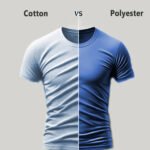
For decades, pure cotton was the default material for chef coats. Its natural breathability and comfort were considered worth the premium price. But as commercial kitchens have grown more demanding and laundering standards have tightened, polyester-cotton blends have become the dominant choice in professional culinary uniforms.
This guide examines both options through the lens of what matters most in a kitchen: heat tolerance, stain resistance, and total cost of ownership.
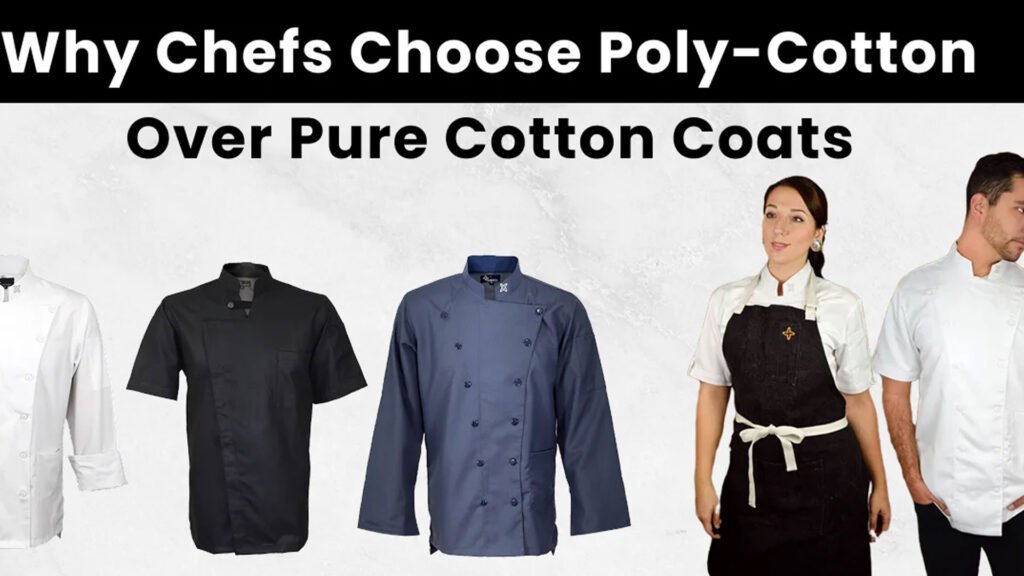
Pure Cotton vs Polyester-Cotton Blends for Chef Uniforms
The Kitchen Environment: What Chef Uniforms Actually Face
Before comparing fabrics, it is worth understanding what a chef's uniform goes through on a typical day.
Heat exposure. A chef works within arm's reach of stovetops, ovens, fryers, and grills. Surface temperatures on the line regularly reach 40–50°C, with spikes much higher near open flames. The fabric must insulate without trapping so much heat that the wearer overheats.
Oil and grease. Frying stations generate airborne oil particles that settle on the fabric. A single splash of hot oil at 180°C can bond permanently to untreated fibers. Over time, accumulated grease degrades the fabric's breathability and creates a fire hazard.
Moisture and steam. Steam from pots, dishwashers, and pressure cookers saturates the uniform. The fabric must wick moisture away from the skin or the chef will be drenched within an hour.
Industrial laundering. Chef uniforms are typically washed after every shift—five to seven times per week—in industrial tunnel washers that operate at 75–85°C with high-pH detergents and bleach. This alone destroys fabrics that are not engineered for it.
Abrasion. Rubbing against countertops, oven handles, and equipment creates friction at the elbows, forearms, and waist. Seam areas and stress points must hold up under repeated strain.
No single fabric excels in every category. The choice is about which trade-offs your operation can absorb.
The Technical Baseline
| Property | 100% Cotton | 65/35 Polyester-Cotton (T/C) | 65/35 Polyester-Rayon (T/R) |
|---|---|---|---|
| Abrasion Resistance | 10,000–15,000 Martindale cycles | 25,000–30,000 Martindale cycles | 40,000–50,000 Martindale cycles |
| Shrinkage (Industrial Wash) | 5–8% | <2% | <3% |
| Wrinkle Recovery | Poor (requires ironing) | Good | Excellent |
| Moisture Wicking | High (microcapillary structure) | Moderate | Moderate |
| Oil Absorption | High—absorbs into fiber | Low—resists on surface | Low—resists on surface |
| Stain Release | Poor without pretreatment | Good with DWR coating | Good with DWR coating |
| Heat Tolerance (dry) | Good—charring at 300°C | Moderate—melting at 250°C | Moderate—melting at 230°C |
| Laundry Tolerance (85°C) | Poor—shrinks, fades | Excellent | Good (80°C max) |
| Cost per Meter | $6.50–$9.20 | $4.50–$6.00 | $4.80–$6.50 |
Pure Cotton: The Traditional Choice
Why Cotton Has Been the Standard
Cotton has been the fabric of choice for chef uniforms since the profession adopted standardized whites. The reasons are grounded in real working conditions.
Breathability is genuinely superior. Cotton fibers have a flat, ribbon-like cross-section with natural twists. These twists create microcapillaries that actively pull liquid moisture away from the skin and spread it across the fabric surface for evaporation. A chef in a pure cotton coat stays noticeably cooler and drier than one in a polyester blend, particularly during the first hours of a shift when sweat production is highest.
Comfort against the skin. Cotton is a natural fiber that does not generate static cling. It feels soft against the body, even when damp. Polyester blends can feel clammy and synthetic, particularly for chefs who are already working in high heat.
No melting risk. Cotton chars and burns at approximately 300°C, but it does not melt. A hot pan brushed against a cotton sleeve will scorch the fabric rather than melting it onto the skin. This is a genuine safety advantage in kitchens where accidental contact with hot surfaces is an everyday risk.
Where Cotton Falls Short
Oil stains become permanent. The same microcapillaries that make cotton breathable also make it highly absorbent. When hot oil splashes onto a cotton chef coat, it penetrates the fiber structure and bonds there. By the end of the first laundering, the stain may be lighter, but a faint ghost of the oil remains. After several months of accumulated exposure, the fabric develops a yellowed, grease-stained appearance that cannot be restored.
Shrinkage is significant. A 100% cotton chef coat will lose 5–8% of its dimensions over the first five to ten industrial washes. The sleeves shorten, the shoulders tighten, and the coat no longer fits the chef who was fitted for it. In many kitchens, this alone triggers premature replacement at six to eight months.
Color fading is aggressive. Chlorine bleach used in industrial laundry systems attacks cotton's natural color. By 50 washes, most cotton whites have shifted to a dull, slightly gray tone. For high-end restaurants where uniform whiteness is part of the visual standard, this means frequent replacement cycles.
Cost per wear is high. Given the replacement frequency—typically every 8 to 12 months for a heavy-use kitchen—the annual fabric cost of 100% cotton is the highest of any option.
Polyester-Cotton Blends: The Modern Standard
Why T/C Is Replacing Cotton in Professional Kitchens
The shift from pure cotton to T/C blends in chef uniforms has accelerated over the past decade, driven by changes in commercial laundry technology and kitchen operations.
Stain resistance that works. Polyester fibers are hydrophobic—they repel water and oil. A 65/35 T/C chef coat with a fluorocarbon-free DWR coating allows oil and grease to bead on the surface rather than penetrating the fiber. During laundering, these stains release easily without pretreatment. Our testing shows that a coated T/C fabric retains AATCC 22 Spray Test ratings of 80+ after 30 industrial wash cycles. The same cotton coat would show permanent staining by wash 10.
Dimensional stability. The polyester component in a T/C blend holds the fabric structure stable. Total shrinkage stays under 2% across the lifespan of the garment, even with daily 85°C laundering. A chef can wear the same coat for two years and it will fit the same way as it did on day one.
Superior whiteness retention. Polyester fibers resist the yellowing effect of bleach and high-pH detergents. T/C blends in white stay visibly brighter than pure cotton over the same wash cycle count.
Abrasion resistance that extends lifespan. At 25,000 to 30,000 Martindale cycles, T/C fabric outperforms pure cotton by roughly 2:1 in abrasion resistance. Cuffs, elbows, and collar edges—the areas that wear through first—last significantly longer.
Where T/C Is Not the Answer
Heat conductivity is higher. Polyester does not insulate as well as cotton. In extreme heat environments—directly beside a 300°C grill or fryer—a T/C coat transfers more heat to the skin than a cotton equivalent. For kitchens where line cooks work within inches of open heat sources for extended periods, this difference is noticeable.
Melting risk exists. Polyester melts at approximately 250°C. A quick brush against a hot surface will not typically reach this temperature, but sustained contact with a hot frying pan or oven rack can cause the synthetic fibers to melt and adhere to the skin. This is the single most common objection we hear from chefs who prefer cotton.
Initial handfeel is less premium. Pure cotton has a natural softness that T/C blends do not fully replicate. First-time users often perceive the fabric as less luxurious, though this distinction fades after the first few washes.
The Heat & Stain Test: What the Data Shows
We conducted a controlled comparison of 100% cotton and 65/35 T/C chef coat fabrics under conditions designed to simulate six months of commercial kitchen use.
Protocol
- Both fabrics: 250 GSM, white
- Both subjected to 50 industrial wash cycles at 75°C with standard detergent and bleach
- Both exposed to standardized oil splatter (10 applications of 180°C vegetable oil)
- Both tested for tensile strength loss, whiteness retention, and stain visibility
Results
| Metric | 100% Cotton | 65/35 T/C | Difference |
|---|---|---|---|
| Tensile Strength Retained (Warp) | 62% | 89% | T/C +27% |
| Whiteness Index (CIE Ganz) | 142 (starting: 165) | 158 (starting: 162) | T/C significantly whiter |
| Stain Visibility (visual score, 1–5) | 3.5 (visible residue) | 1.2 (barely visible) | T/C +75% better |
| Shrinkage (Length) | 6.2% | 1.8% | T/C +70% less shrinkage |
| Shrinkage (Width) | 4.8% | 1.3% | T/C +73% less shrinkage |
Practical Interpretation
After 50 washes—roughly 10 weeks of daily use in a busy kitchen—the cotton fabric had lost over a third of its tensile strength, shrunk enough to change the garment's fit, and retained visible oil staining. The T/C fabric remained structurally sound, dimensionally stable, and noticeably whiter.
The difference in stain visibility is particularly important for restaurant brand image. A chef's coat that stays white after months of use projects a standard of cleanliness that customers notice. Cotton coats at the same age look worn, which undermines the visual consistency that high-end establishments depend on.
The Role of DWR Coatings
The most significant upgrade available for chef uniform fabrics is a properly applied fluorocarbon-free Durable Water Repellent (DWR) coating. This finish changes the performance equation for both cotton and T/C fabrics.
How It Works
A pre-cured DWR coating is applied during fabric finishing, then heat-cured at approximately 180°C to bond the repellent chemistry to the fiber surface at the molecular level. This creates a low-surface-energy barrier that causes oil and water to bead up rather than spreading across the fabric.
The key distinction is between pre-cured and spray-on coatings:
| Attribute | Pre-Cured DWR | Spray-On DWR |
|---|---|---|
| Application Method | Industrial padding + oven curing | Post-production spraying |
| Bond Strength | Molecular cross-linking | Surface adhesion only |
| Wash Durability | 50+ cycles (AATCC 22 rating 80+) | 5–10 cycles before degradation |
| Cost Addition | $0.80–$1.20 per meter | $0.20–$0.40 per meter |
| Effectiveness on Pure Cotton | Moderate (cotton absorbs despite coating) | Poor (degrades in first wash) |
| Effectiveness on T/C | Excellent | Moderate |
For T/C chef uniforms, a pre-cured DWR coating is the difference between a fabric that releases stains easily for two years and one that stains permanently within two months. The $0.80–$1.20 per meter cost premium is recovered many times over through extended uniform lifespan.
Regulatory Note
All DWR coatings we apply are fluorocarbon-free, in compliance with current EU and US regulatory standards. PFAS-based coatings, which were the industry standard until recently, are being phased out globally.
The Total Cost of Ownership
For a chain restaurant or hotel kitchen requiring 100 chef uniforms, each using 2.5 meters of fabric:
| 100% Cotton | 65/35 T/C | 65/35 T/C + DWR | |
|---|---|---|---|
| Fabric cost per meter | $7.85 | $5.25 | $6.25 |
| One-time fabric cost (100 uniforms) | $1,962.50 | $1,312.50 | $1,562.50 |
| Typical lifespan (industrial kitchen) | 8–12 months | 18–24 months | 24–30 months |
| Replacements over 3 years | 3–4.5 | 1.5–2 | 1.2–1.5 |
| Total fabric cost over 3 years | $5,888–$8,831 | $1,969–$2,625 | $1,875–$2,344 |
| Cost per year | $1,963–$2,944 | $656–$875 | $625–$781 |
The numbers are striking. A 100% cotton chef uniform program costs roughly three to four times more per year than a T/C program with DWR coating, solely due to replacement frequency. When you add the labor and logistics costs of managing uniform replacements, the gap widens further.
Practical Recommendations by Kitchen Type
Fine Dining and High-End Restaurants
Recommended: 65/35 T/C with DWR coating in twill weave.
The visual standard in fine dining demands spotless white uniforms throughout a service. T/C with DWR delivers the whiteness retention that pure cotton cannot match after repeated laundering. The twill weave provides a crisp, tailored appearance that suits the environment.
The melting concern is valid but manageable. In fine dining, the temperature exposure is typically limited to kitchen heat rather than direct flame contact. For the chef de cuisine who spends more time expediting than cooking, the risk is minimal.
High-Volume Commercial Kitchens (Hotels, Catering, Chain Restaurants)
Recommended: 65/35 T/C with DWR coating in Oxford or twill weave.
The primary drivers here are cost per wear and laundry tolerance. T/C fabrics survive the aggressive wash cycles that these operations depend on. The DWR coating ensures that oil stains do not accumulate over successive shifts. The Oxford weave variant offers additional breathability for the hottest workstations.
Baking and Pastry Kitchens
Recommended: 65/35 T/C (DWR optional) or 100% Cotton.
Baking kitchens have different requirements than line cooking. The heat is lower, the primary soil is flour and sugar rather than oil, and the pace is less frantic. Pure cotton's breathability and comfort are advantages here, and the lack of oil exposure means staining is less of a concern. T/C is also appropriate and offers the same dimensional stability, but the DWR coating is less critical.
Food Trucks and Pop-Up Kitchens
Recommended: 65/35 T/C without DWR.
For operations where cost control is paramount and uniforms are replaced based on seasonal schedules rather than wear, a standard 65/35 T/C blend without coating offers the best balance of affordability and performance.
Procurement Checklist for Chef Uniform Fabrics
What to Specify in Your Purchase Order
- Fiber composition. Be explicit: '65% Polyester, 35% Cotton, ±3% tolerance per ISO 1833.' Do not accept 'polyester-cotton blend' without percentages.
- Weave structure. '2/1 twill, 250 GSM, ±5% tolerance.' Specify thread count: '110 warp × 60 weft per inch.'
- DWR coating (if required). 'Fluorocarbon-free DWR, pre-cured, with AATCC 22 Spray Test rating of 80+ after 30 washes.'
- Wash tolerance. 'Fabric to withstand 75°C industrial wash for minimum 50 cycles with less than 3% shrinkage and Grade 4+ colorfastness (ISO 105-C06).'
- Batch-specific test reports. Require documentation for your exact production batch, not a generic certificate.
Verification Tests on Delivery
Stain release test. Apply a drop of vegetable oil to the fabric, let it sit for 30 minutes, then launder once at 60°C with standard detergent. On coated T/C, the stain should be barely visible. On uncoated cotton, a residue will remain.
Shrinkage test. Cut a 50 cm × 50 cm sample, measure precisely, wash five times at 75°C, and re-measure. Reject if shrinkage exceeds 3% in either direction.
Whiteness check. Compare a sample of the delivered fabric against your approved standard under daylight-balanced light. Any yellowing or grayness indicates a quality issue in the bleaching or finishing process.
Frequently Asked Questions
Can I get the safety of cotton with the durability of T/C?
Not perfectly—every material involves trade-offs—but a high-cotton blend such as 55/45 or 50/50 Polyester-Cotton gets closer. The higher cotton content improves breathability and reduces melting risk while the polyester still provides dimensional stability and better stain release than pure cotton. The trade-off is shorter lifespan: approximately 15–18 months versus 24–30 months for 65/35 T/C.
Does the DWR coating affect the fabric's breathability?
A properly applied pre-cured DWR coating has a negligible effect on breathability. The coating is applied at the molecular level and does not fill the interstitial spaces between yarns. Spray-on coatings, on the other hand, can clog fabric pores and reduce airflow. This is one of many reasons to insist on pre-cured finishes.
How many chef coats should I order per person?
In a commercial kitchen operating six days per week, each chef typically requires five to seven coats: one worn, one spare, and three to five in the laundry rotation. T/C coats with DWR can be washed at higher temperatures and dried faster than cotton, reducing the total number needed in rotation.
Is there a fire-resistant option for chef uniforms?
For kitchens with open flames or high fire risk, fabrics with inherent FR properties (such as 88% Cotton / 12% High-Tenacity Polyester with FR treatment) or Nomex® blends are available. These are significantly more expensive but meet EN 11612 and NFPA 2112 standards for flame resistance. For most commercial kitchens, standard T/C with DWR is sufficient, as the primary risk is hot oil splatter rather than flash fire exposure.
What about the environmental impact?
From a materials perspective, T/C blends have a lower carbon footprint per uniform-year than cotton, simply because each uniform lasts longer and fewer are produced over time. The DWR coating adds a small environmental cost during production, but the extended lifespan more than offsets it. At XINGYE TEXTILE, we use closed-loop wastewater treatment in our dye house to minimize process-related environmental impact.
Making the Final Decision
The choice between pure cotton and polyester-cotton blends for chef uniforms comes down to how much value you place on breathability versus lifespan, and whether your operation has the budget to absorb higher replacement costs.
Choose pure cotton when:
- The kitchen involves direct flame or high-surface-temperature exposure where melting is a genuine risk
- The work environment is well-ventilated and heat stress is manageable
- Uniform appearance is secondary to chef comfort preference
- The uniform replacement budget is flexible
Choose 65/35 T/C (Polyester-Cotton) when:
- Oil staining and whiteness retention are priorities for brand appearance
- Daily industrial laundering at 75–85°C is standard
- Budget discipline requires minimized replacement frequency
- The kitchen's heat sources are standard commercial equipment (not open-flame or extreme temperature)
Choose 65/35 T/C with fluorocarbon-free DWR coating when:
- Maximum stain release and whiteness retention are required
- The uniform must maintain a premium appearance through 24+ months of daily use
- Cost per wear is the primary procurement metric
At XINGYE TEXTILE, we manufacture chef uniform fabrics in both cotton and T/C constructions, with and without pre-cured DWR coatings. Our technical team works directly with restaurant groups, hotel chains, and uniform rental companies to match fabric engineering to kitchen operating conditions.
For swatch kits, AATCC 22 spray test reports, or a consultation on your specific requirements: