School uniforms are more than just a dress code—they are a daily part of students’ lives, influencing comfort, confidence, and even academic focus. Choosing the best fabric for school uniform shirts is critical for schools, parents, and uniform suppliers who want durable, comfortable, and easy-to-maintain garments that stand up to the rigors of school life.
In this guide, we’ll explore the various fabric options, their benefits and drawbacks, and expert recommendations based on recent industry insights and research. Whether you’re a school administrator, parent, or uniform manufacturer, this article will help you make an informed decision.
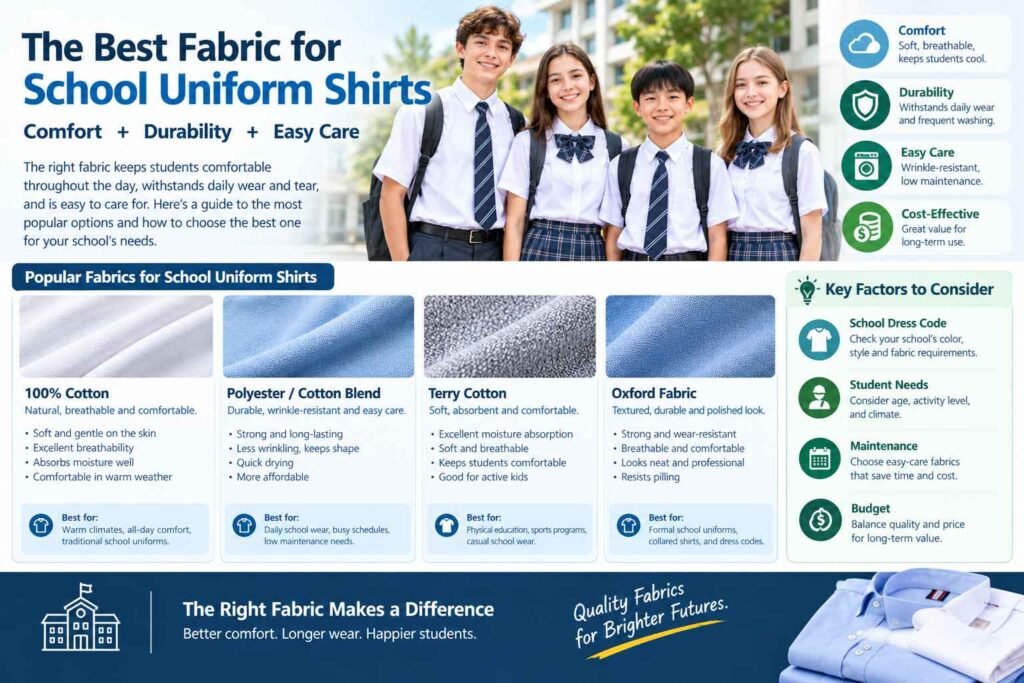
Best Fabric for School Uniform Shirts
Why Fabric Choice Matters for School Uniform Shirts
School uniforms endure heavy use—worn 180 to 220 days annually, subjected to frequent washing, physical activities, and varying climates. The choice of fabric affects:
- Durability: Can the fabric withstand repeated washes without fading, shrinking, or pilling?
- Comfort: Does it breathe well and allow freedom of movement?
- Appearance: Does it maintain a crisp, neat look throughout the day?
- Care: Is it wrinkle-resistant and easy to wash and dry?
Poor fabric choices can lead to discomfort, early replacements, and dissatisfaction among students and parents. Therefore, selecting the right fabric is a foundational step in uniform procurement.
Top Fabrics for School Uniform Shirts
1. 100% Cotton
Pros:
- Natural fiber known for breathability and softness.
- Hypoallergenic and ideal for sensitive skin.
- Excellent moisture absorption, keeping students cool in hot climates.
- Provides a soft, comfortable hand feel.
Cons:
- Prone to shrinking (5-8% without pre-shrinking).
- Wrinkles easily, requiring frequent ironing.
- Moderate durability, lasting about 40-60 wash cycles.
- Color fading occurs faster, especially with dark colors.
Best For: Schools in hot and humid climates prioritizing breathability and comfort, and premium uniform programs willing to invest in care.
2. Polyester-Cotton Blends (Poly-Cotton)
Blends of polyester and cotton combine the best qualities of both fibers, offering durability and comfort.
-
65/35 Polyester-Cotton Blend: The global standard for school uniforms.
- Balances durability, comfort, and cost.
- Typically weighs 150-200 gsm.
- Shrinks less than 3%.
- Withstands 70-80 wash cycles.
- Wrinkle resistance is moderate.
- Maintains color well over time.
-
80/20 Polyester-Cotton Blend:
- Higher polyester content for maximum durability and wrinkle resistance.
- Less breathable, less comfortable in hot climates.
- Ideal for trousers and skirts that undergo physical stress.
-
50/50 Polyester-Cotton Blend:
- Offers better breathability than 65/35.
- Suitable for warm climates needing a balance of comfort and durability.
Best For: Most school uniform shirts globally, especially in moderate climates or where easy care is prioritized.
3. Terry Cotton (Terry Cloth)
- A looped knit fabric ideal for polo shirts and PE uniforms.
- Offers stretch, softness, and moisture absorption.
- Typically heavier (180-240 gsm) for durability.
- Less formal appearance, not suitable for dress shirts.
- Susceptible to pilling and snagging.
Best For: Polo shirts, PE wear, and casual uniform tops, especially in international and warm markets.
4. 100% Polyester
- Maximum durability and color retention.
- Wrinkle-free and dimensionally stable (less than 1% shrinkage).
- Quick drying and easy care.
- Poor breathability; traps heat and moisture.
- Can cause discomfort in warm climates.
Best For: Blazers, ties, or uniforms in cooler climates where durability and easy care are paramount.
5. Polyester-Viscose Blend (65% Polyester, 35% Viscose)
- A superior woven fabric combining polyester’s strength and viscose’s softness.
- Breathable and moisture-wicking due to viscose.
- Soft, silky hand feel with reduced skin irritation.
- Excellent wrinkle resistance and colorfastness.
- Suitable for year-round wear—cool in summer, warm in winter.
- Durable and resistant to pilling.
Best For: School uniform skirts, shirts, and garments requiring a balance of comfort, durability, and style.
Key Fabric Performance Criteria for School Uniform Shirts
When selecting the best fabric for school uniform shirts, consider these critical factors:
Durability
- Should withstand at least 50 wash cycles without significant fading or shrinkage.
- Polyester blends generally last longer than pure cotton.
- Look for fabrics with high tensile strength and resistance to abrasion.
Comfort and Breathability
- Natural fibers like cotton and viscose offer superior breathability.
- Blends with higher cotton or viscose content improve moisture management.
- Avoid pure polyester in hot climates due to poor ventilation.
Wrinkle Resistance and Easy Care
- Polyester blends resist wrinkles better than cotton.
- Parents prefer fabrics that require minimal ironing.
- Pre-shrunk fabrics help maintain size and fit.
Colorfastness
- Uniforms must maintain vibrant colors after repeated washing.
- ISO 105 testing (washing, light, rubbing) with minimum grades of 4 is ideal.
- Polyester and polyester blends excel in color retention.
Fabric Weight (GSM)
- Formal shirts: 110-150 gsm for crispness and opacity.
- Polo shirts: 180-220 gsm for durability and hand feel.
- Heavier fabrics may restrict movement; balance is key.
Choosing Fabric by Climate
- Hot and Humid Climates: 100% cotton (150-160 gsm) or 50/50 poly-cotton blends with moisture-wicking finishes.
- Temperate Climates: 65/35 poly-cotton blends (160-200 gsm) for balanced durability and comfort.
- Cool Climates: 80/20 poly-cotton or 100% polyester for warmth and wrinkle resistance.
Additional Fabric Considerations
Seam Construction
- Double-needle or flat-felled seams improve durability.
- Reinforced collars and cuffs reduce wear.
Fit and Sizing
- Proper fit enhances comfort and uniform lifespan.
- Adjustable waistbands and tagless labels improve wearability.
Sustainability
- Certifications like OEKO-TEX Standard 100 and Bluesign ensure safe and eco-friendly production.
- Recycled polyester blends reduce environmental impact.
Conclusion: Making the Right Fabric Choice for School Uniform Shirts
Selecting the best fabric for school uniform shirts requires balancing comfort, durability, climate suitability, and cost. The 65/35 polyester-cotton blend remains the most popular and practical choice worldwide, offering reliable performance and easy care. For hot climates, increasing cotton content or opting for 100% cotton enhances breathability. For formal or cooler environments, polyester-rich blends or polyester-viscose fabrics deliver durability and wrinkle resistance.
Investing in quality fabric not only improves student comfort and appearance but also reduces long-term replacement costs and enhances school pride.