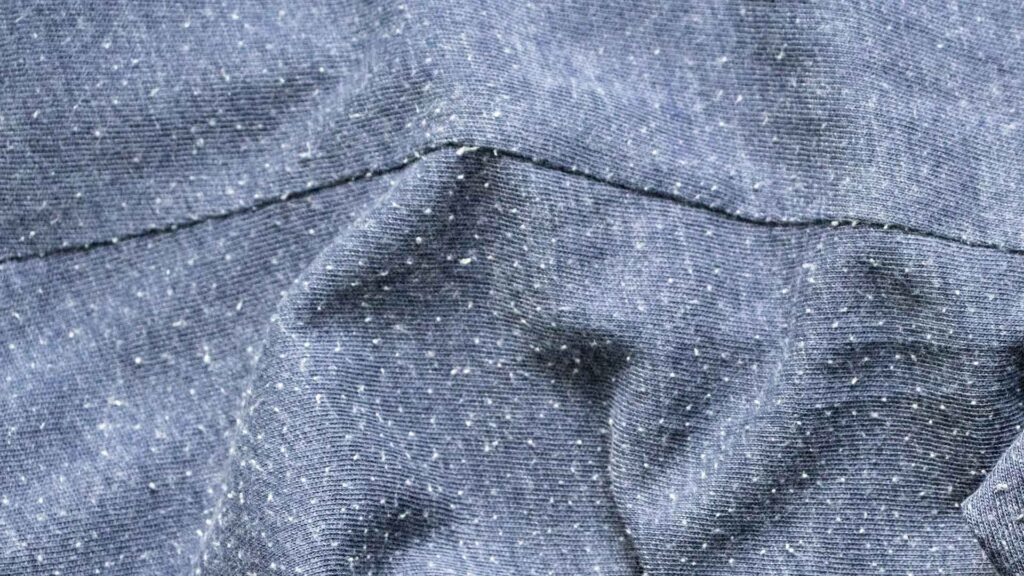
I have stood beside industrial washing machines in hotels, hospitals, and uniform rental laundries, watching procurement teams pull out jackets and trousers that looked like they had been through a decade of service when they were barely three months old. The surface was covered in tiny balls of fiber—pills—that made the fabric look worn, cheap, and unprofessional.
The conversation always follows the same pattern. The buyer blames the laundry. The laundry blames the detergent. The detergent supplier blames the fabric. And the fabric supplier, if they are still taking calls, blames something else entirely.
After thirty years of manufacturing uniform fabrics at XINGYE TEXTILE, I can tell you exactly who is at fault: the fiber selection and yarn construction that went into that fabric. Pilling is not a laundry problem. It is a textile engineering problem that manifests in the wash.
This guide explains what pilling is at the microscopic level, why it strikes certain fabrics around the 20-wash mark, and how to specify fabrics that will not pill at any point in their service life.
Why Your Uniforms Pill After 20 Washes
What Pilling Actually Is
Pilling is the formation of small balls of entangled fibers on the surface of a fabric. It happens through a three-stage process that repeats continuously until the visible pills appear.
Stage 1: Fiber Rise. Short fibers—those that are not fully anchored into the yarn structure—work their way to the fabric surface. This happens through friction during wear and mechanical agitation during washing. Every fabric sheds loose fibers to some degree. The question is how many loose fibers it has to shed.
Stage 2: Entanglement. The loose fibers on the surface become tangled together under the influence of friction and moisture. They form small balls—pills—that are anchored to the fabric by a few remaining fibers that have not yet broken.
Stage 3: Anchor Breakage. As wear and washing continue, the anchor fibers fatigue and break. The pill detaches from the fabric surface, leaving behind a slightly thinned area. The process then repeats with the next layer of loose fibers.
A fabric that pills heavily is not just unsightly. It is losing mass with every pill that detaches. Over time, the fabric thins at wear points and loses its structural integrity.
The 20-Wash Threshold: Why It Happens There
The observation that pilling becomes visible around the 20th wash is not anecdotal. It corresponds to a specific point in the lifecycle of low-quality yarns.
Industrial washing at 75–85°C accelerates fiber fatigue. Each wash cycle subjects the fabric to thermal expansion, chemical attack from detergents and bleach, and mechanical abrasion from the tumbling action. After approximately 20 cycles, the cumulative damage reaches a threshold where short fibers that were loosely held in the yarn structure begin to release en masse.
The trigger point depends on three variables:
| Variable | How It Affects Pilling Timing | What to Look For |
|---|---|---|
| Fiber staple length | Shorter fibers pill earlier (10–15 washes) | Egyptian or Pima cotton (long staple) vs ordinary cotton |
| Yarn twist per inch | Lower twist releases fibers faster | Minimum 18 TPI for single yarns, 14 TPI for plied yarns |
| Fiber strength | Weak fibers break at the anchor stage sooner | High-tenacity polyester vs standard polyester |
If your uniforms are pilling at exactly the 20-wash mark, the most likely culprit is short-staple fibers combined with low-twist yarn construction. The supplier has optimized for softness and low cost at the expense of fiber retention.
Fiber Science: Why Some Fibers Pill and Others Do Not
Staple Fibers vs Filament Fibers
The most fundamental distinction is between staple fibers—short, measured lengths of natural or cut synthetic fiber—and continuous filaments, which run the entire length of the yarn.
| Staple Fibers | Continuous Filaments | |
|---|---|---|
| Example | Cotton, rayon, cut polyester | Silk, uncut polyester, nylon |
| Pilling Risk | High—fiber ends protrude | Low—no loose ends to rise |
| Typical Use | Most uniform fabrics | High-end suiting, linings |
| How to Identify | Hairy surface under 10× magnification | Smooth, uniform surface |
All staple fiber fabrics pill. It is a question of degree, not presence. The goal is not to eliminate pilling entirely—that would require switching to continuous filaments, which have their own trade-offs—but to push the onset of visible pilling to a point well beyond the garment's expected service life.
Polyester vs Cotton Pilling Behavior
Polyester fibers are stronger than cotton, which sounds like an advantage. In pilling, it can be a disadvantage. When a cotton fiber breaks loose, it snaps quickly and the pill detaches. When a polyester fiber breaks loose, it is strong enough to stay anchored for longer, holding the pill on the fabric surface where it remains visible.
This is why pure polyester fabrics often look worse when they pill than cotton fabrics do. The pills are more tenacious and harder to remove. The solution is not to avoid polyester—its durability advantages are too valuable—but to engineer the yarn so that fibers do not break loose in the first place.
Blended fabrics present a unique challenge. In a 65/35 T/C or T/R fabric, the cotton or rayon fibers are shorter and weaker than the polyester fibers. The cellulosic fibers break first, forming pills that are held in place by the stronger polyester fibers. The result is a fabric that pills more visibly than either pure component would alone. This is why pilling resistance is a specific engineering target for blended uniform fabrics, not an automatic benefit of the blend ratio.
Yarn Construction: The Preventable Factor
The most common cause of pilling in commercial uniform fabrics is low twist in the yarn.
Why Twist Matters
When a yarn is twisted, the individual fibers are forced together and held in place by friction. Higher twist creates greater inter-fiber friction, which resists the fiber rise that initiates pilling.
| Twist Level | Typical TPI (cotton count 20s) | Pilling Resistance |
|---|---|---|
| Low (soft) | 12–14 TPI | Poor—fibers release easily |
| Medium | 15–18 TPI | Moderate |
| High (hard) | 19–22 TPI | Good—fibers held tightly |
| Very high | 23+ TPI | Excellent—minimal fiber rise |
The trap for buyers: Low-twist yarns produce a softer, more comfortable fabric with a better handfeel. They also cost less to produce because twisting is a time-intensive process. A supplier who offers a 'premium soft feel' may be delivering a fabric that will pill aggressively after 15–20 washes.
The Two-Ply Solution
The most reliable way to prevent pilling is to specify two-ply yarns rather than single-ply yarns. In a two-ply yarn, two single strands are twisted together in the opposite direction from their original twist. This creates a balanced, compact structure that holds fibers far more effectively than a single-ply yarn at the same twist level.
| Construction | Typical Pilling Onset | Relative Cost |
|---|---|---|
| Single-ply, low twist | 10–20 washes | Low |
| Single-ply, high twist | 20–40 washes | Moderate |
| Two-ply, standard twist | 50–80 washes | Moderate to high |
| Two-ply, high twist | 100+ washes | High |
Two-ply construction is the single most effective specification you can include in your purchase order to prevent pilling. It adds approximately 15–25% to the yarn cost but extends pilling-free life by 3–5 times.
Weave Density: The Second Line of Defense
A tightly woven fabric resists pilling in two ways. First, the fiber ends are pressed together more closely, creating higher inter-fiber friction. Second, the tight structure allows fewer fiber ends to reach the surface.
Thread count matters. For a given fiber and yarn quality, increasing the thread count by 20% typically reduces pilling by 30–40%. The dense structure physically blocks fiber rise.
| Fabric Type | Minimum Thread Count (warp × weft per inch) | Pilling Performance |
|---|---|---|
| Dress shirt weight | 80 × 60 (plain weave) | Moderate |
| Medium workwear | 100 × 60 (twill) | Good |
| Heavy industrial | 120 × 70 (twill) | Excellent |
Twill weaves outperform plain weaves at equivalent thread counts because the longer floats (where yarn travels over multiple opposing threads) create fewer interlacing points per unit area, reducing the number of fiber ends that can work loose.
Finishing Treatments That Reduce Pilling
Beyond fiber selection and yarn construction, certain finishing processes can significantly improve pilling resistance.
Singeing
The fabric is passed through a flame or over a heated plate to burn off protruding fiber ends from the surface. This removes the loose fibers before they have a chance to form pills. Proper singeing is the first line of defense in finishing, and most reputable mills include it as standard. The absence of singeing is a strong indicator of cost cutting.
Bio-Polishing (for cellulosic fibers)
An enzymatic treatment that attacks the protruding fiber ends on cotton or rayon fabrics, removing them without damaging the base structure. Bio-polishing is particularly effective for T/R blends where the rayon component is the primary source of loose fibers.
Resin Finishing
A light resin coating applied to the fabric surface binds down protruding fiber ends. This is effective in the short term, but resin finishes can degrade after repeated wash cycles. We generally recommend resin finishing as a supplement to good yarn engineering rather than a substitute for it.
Shearing
The fabric is passed over rotating blades that trim the surface fibers to a uniform height. This is common for heavier fabrics such as wool blends and fleece, but less common for lightweight uniform fabrics.
How to Test Pilling Resistance Before You Order
Laboratory Methods
The industry standard test for pilling resistance is ASTM D4970 / ISO 12945-2 (Martindale pilling test) or ISO 12945-1 (ICI pilling box method).
Martindale Pilling Test (ISO 12945-2):
- A circular fabric sample is rubbed against a standard abradant in a Lissajous motion
- The fabric is evaluated after a specified number of rubs (typically 2,000, 5,000, and 7,000)
- Rating scale: 1 (severe pilling) to 5 (no pilling)
ICI Pilling Box Method (ISO 12945-1):
- Fabric samples are mounted on rubber tubes and tumbled inside a cork-lined box
- Simulates the mechanical agitation of laundering
- Evaluated after 5, 10, and 20 hours of tumbling
What to request from your supplier:
- Test method and number of cycles used
- The actual rating (4+ is good for industrial uniforms; 5 is excellent)
- Batch-specific results, not generic data from a different production run
Field Testing Before Bulk Commitment
Before committing to a large order, we recommend a simple field test that tells you more than any lab report:
- Order 5–10 meters of the proposed fabric
- Have it made into sample garments
- Wash the garments 30 times using your facility's standard laundering protocol
- Inspect the garments after every 5 washes
- Photograph the collar, cuffs, and any high-friction areas
- Grade the pilling using the rating scale (1–5)
This test adds two weeks to your procurement timeline. It can save you from ordering 5,000 uniforms that look unacceptable after two months.
The XINGYE Approach to Pilling Prevention
At XINGYE TEXTILE, we engineer pilling resistance into every fabric we produce, not as an optional upgrade but as a standard specification.
Our T-R Series (65/35 Polyester-Rayon)
| Parameter | Our Specification | Why It Matters |
|---|---|---|
| Yarn twist | 20–22 TPI (high twist) | Locks rayon fibers into the yarn structure |
| Yarn construction | Two-ply for warp yarns | Creates balanced, compact yarns |
| Polyester tenacity | 6.0–6.5 cN/dtex (high-tenacity) | Resists fiber breakage at the anchor stage |
| Rayon quality | High-tenacity, wet strength >80% | Prevents fiber weakening during laundering |
| Weave | 2/1 twill | Longer floats reduce fiber end exposure |
| Finishing | Full singeing + optional bio-polishing | Removes loose fibers before they can pill |
Our T-R Series fabrics consistently achieve ISO 12945-2 ratings of 4–5 after 7,000 rub cycles. In real-world conditions, clients report no visible pilling through 100+ industrial wash cycles.
Our T/C Series (65/35 Polyester-Cotton)
| Parameter | Our Specification | Why It Matters |
|---|---|---|
| Cotton staple | Long-staple (minimum 1.125 in / 28.6 mm) | Fewer fiber ends per yarn cross-section |
| Yarn twist | 18–20 TPI | Higher friction resists fiber rise |
| Yarn construction | Two-ply available on request | Adds 20–30% to pilling resistance |
| Polyester | Standard high-tenacity | Matches cotton's wear profile |
| Weave | 2/1 twill or 3/1 twill | Optimal fiber locking |
| Finishing | Singeing + shearing | Clean surface from the start |
Our T/C Series fabrics achieve ISO 12945-2 ratings of 3–4 at standard specification and 4–5 with two-ply yarn upgrade.
What to Put in Your Purchase Order
To ensure pilling resistance, include these specifications in your fabric purchase order:
- Fiber quality: 'Long-staple cotton (minimum 28 mm staple length)' or 'High-tenacity polyester (6.0+ cN/dtex)'
- Yarn construction: 'Two-ply warp yarns' or 'Single-ply with minimum 20 TPI'
- Pilling resistance requirement: 'ISO 12945-2 rating of minimum 4 after 7,000 rub cycles'
- Testing protocol: 'Batch-specific pilling test report required for each production lot'
- Finishing: 'Full singeing applied; bio-polishing required for cellulosic blends'
Frequently Asked Questions
Is pilling covered by fabric warranties?
It depends on the supplier. At XINGYE TEXTILE, we warranty our T-R Series fabrics against visible pilling for 24 months or 100 wash cycles, whichever comes first. Many commodity fabric suppliers do not offer pilling warranties because their yarn construction cannot support one.
Can pilled fabric be restored?
Fabric shavers and pill removers can cut off surface pills, but this is a temporary fix that thins the fabric with each use. Each pass removes not just the pills but a small amount of intact fiber. After 3–4 treatments, the fabric becomes visibly thinner at the treated area. Restoration is not a solution; prevention is.
Does fabric softener cause pilling?
Yes. Fabric softeners reduce inter-fiber friction, making it easier for loose fibers to rise to the surface. In commercial laundry operations, we recommend against fabric softeners for any uniform fabric where pilling resistance is a priority. The softening effect is temporary, but the increase in pilling rate is permanent for that wash cycle.
Does pilling affect the fabric's durability?
Indirectly, yes. Each pill that forms and detaches removes fiber mass from the fabric. Over many cycles, this mass loss accumulates and weakens the fabric at wear points. A heavily pilled fabric is typically 10–15% thinner at the affected area than an unpilled equivalent after the same number of washes.
Why do some areas pill more than others?
Pilling concentrates where friction is highest: collars and cuffs (rubbing against skin and surfaces), inner thighs (leg friction), elbows and knees (repeated bending against surfaces), and waistbands (contact with belts and apron ties). These areas should be constructed with reinforced fabrics or higher yarn twist specifications.
Making the Final Decision
Pilling is not a mysterious defect. It is a predictable consequence of fiber length, yarn twist, and weave density. If you are seeing pills after 20 washes, the fabric was engineered for softness and cost rather than longevity.
The correction is straightforward: specify long-staple fibers, high-twist yarns, two-ply construction where budget allows, and a tight twill weave. Add batch-specific pilling test results to your delivery inspection protocol, and you will eliminate pilling as a source of uniform replacement cost.
At XINGYE TEXTILE, pilling resistance is engineered into every fabric we produce. Our T-R and T/C Series fabrics are designed to remain pill-free through 100+ industrial wash cycles—not because of a special coating or treatment, but because the fiber selection, yarn construction, and weave density are specified with pilling prevention as a primary objective.
For pilling test reports, yarn specification sheets, or swatch comparisons: