How to Test School Uniform Fabric Before Bulk Production
Why Testing School Uniform Fabric Matters
- Excessive pilling and fading
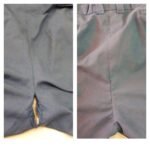
- Seam damage and shape distortion
- Shrinkage and poor fit retention
- Discomfort leading to poor uniform compliance
Key Fabric Properties to Evaluate Before Bulk Production
1. Fabric Weight & Drape
- Measure grams per square meter (gsm) using a kitchen scale.
- Ideal weight varies by garment type: school blazers typically require 280–320 gsm for structure, while nursing scrubs or polo shirts may use lighter fabrics around 120–140 gsm.
- Drape tests involve holding the fabric at the shoulders to check for appropriate hang without stiffness or sagging.
2. Fiber Composition & Construction
- Cotton-polyester blends are popular, balancing comfort and durability.
- Knitted fabrics offer stretch and softness, while woven fabrics provide structure and formality.
- Confirm fiber content matches specifications (e.g., “65% polyester / 35% cotton”) rather than vague terms like “poly-cotton blend.”
3. Color Fastness & Fidelity
- Compare fabric samples to Pantone color cards under natural daylight, not artificial lighting.
- A ΔE (color difference) value greater than 3 indicates visible color shifts that may affect uniform consistency.
- Testing includes wash fastness, rubbing fastness, perspiration resistance, and light fastness, especially important for dark colors like navy or maroon.
4. Seam Allowance & Stitch Density
- Minimum seam allowance: 1 cm for woven fabrics, 0.8 cm for knits.
- Stitch density should be ≥ 10 stitches per inch to prevent seam blowouts after multiple washes.
5. Functional Testing
- Evaluate garment mobility: zip zippers, button closures, and perform movements such as kneeling, squatting, and raising arms fully.
- Any restrictions indicate fitting or grading issues, not just a “break-in period.”
Testing Methods for Fabric Durability and Performance
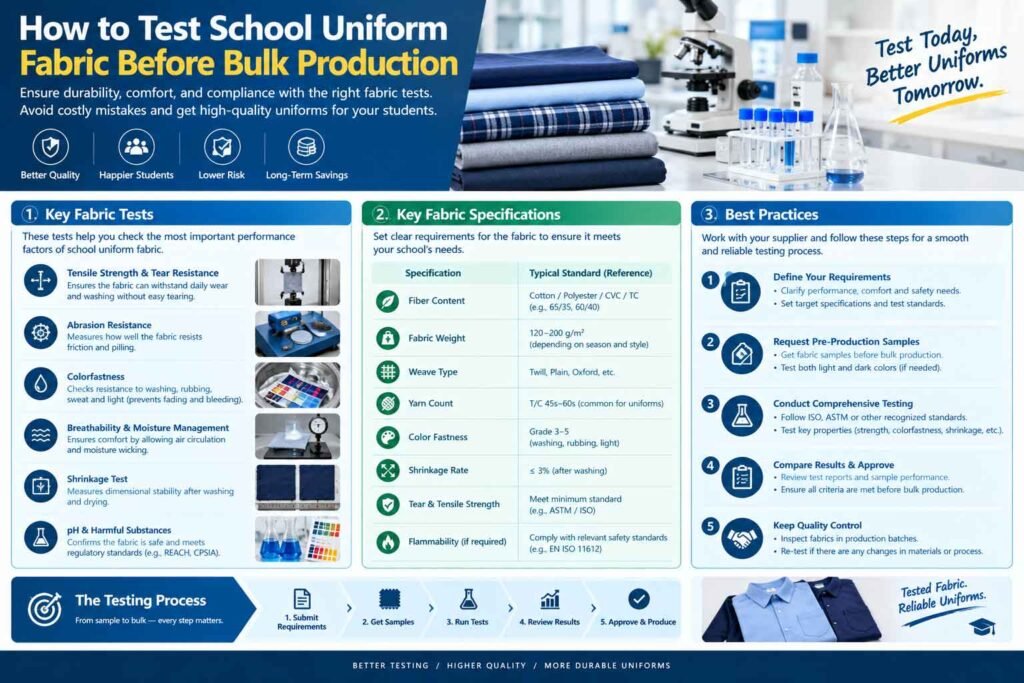
Abrasion Resistance Testing
- Uses Martindale or similar machines to simulate rubbing cycles against desks, chairs, and playground surfaces.
- Polyester fabrics typically excel due to their strong fiber durability.
Pilling Resistance Testing
- Assesses the formation of small fiber balls on the fabric surface after repeated washing.
- Anti-pilling finishes and compact yarn structures enhance fabric longevity.
Shrinkage and Dimensional Stability Testing
- Multiple wash cycles replicate real-life laundering to observe shrinkage percentage and deformation.
- Shrinkage beyond 2–3% lengthwise in woven fabrics signals the need for fabric or design adjustments.
Colorfastness Testing
- Tests fabric resistance to fading from washing, rubbing, perspiration, and sunlight exposure.
- Ensures uniforms maintain consistent appearance over time, critical for brand identity.
Seam Strength Testing
- Evaluates the tensile strength of seams using ASTM D1683 or equivalent protocols.
- Ensures seams withstand daily wear without splitting or tearing.
Sample Types and Their Role in Fabric Testing
- Single-Size Physical Sample: One garment in the median staff size and primary color. Ideal for quick checks on fabric feel, logo placement, and basic fit.
- Size-Range Pack: Samples across several sizes (e.g., S, M, L) to validate grading accuracy and cross-size fit consistency. Recommended for groups with diverse body types.
- Multi-Style + Multi-Color Bundle: Includes coordinated items (blazer, shirt, trousers) in multiple colors to ensure color matching and fabric consistency across garments. Best for brand-critical roles.
Step-by-Step Guide to Testing School Uniform Fabric Before Bulk Production
-
Define Critical Failure Modes
Identify your top concerns—shrinkage, seam splitting, color fading, or pilling—to prioritize specific tests.
-
Select Representative Samples
Choose the median size worn by over 40% of your team and your primary brand color for initial evaluation.
-
Request Detailed Fabric Specifications and Care Labels
Insist on fabric composition, weight, finishing details, and ISO-compliant care labels with samples.
-
Conduct Initial Physical and Visual Inspections
Check fabric hand-feel, drape, seam allowance, stitch density, and label accuracy immediately upon receipt.
-
Perform Functional and Durability Tests
Wash samples according to expected care cycles, conduct abrasion and pilling tests, and assess color retention under natural light.
-
Review Test Results and Approve or Revise
Compare findings against your specifications and adjust orders or suppliers accordingly before bulk production.
Common Pitfalls to Avoid When Testing Uniform Fabric
- Ordering samples made from “sample-only” fabrics that are softer or lighter than bulk production materials.
- Skipping critical fit checks like sleeve length on blazers, a leading cause of returns.
- Assuming a single size fits all without verifying grading consistency across sizes.