In the apparel and textile industry, fabric quality is the foundation of a successful product. Whether you’re a fashion brand, manufacturer, or sourcing agent, knowing how to check fabric quality before bulk production is crucial to avoid costly returns, dissatisfied customers, and production delays. Approving a fabric swatch based on appearance alone can be misleading—fabric performance under real-world conditions often tells a different story.
This article dives deep into the systematic approach to fabric quality control, drawing from industry best practices, expert insights, and proven testing methods. By mastering these steps, you can protect your brand reputation, enhance product durability, and ensure customer satisfaction.
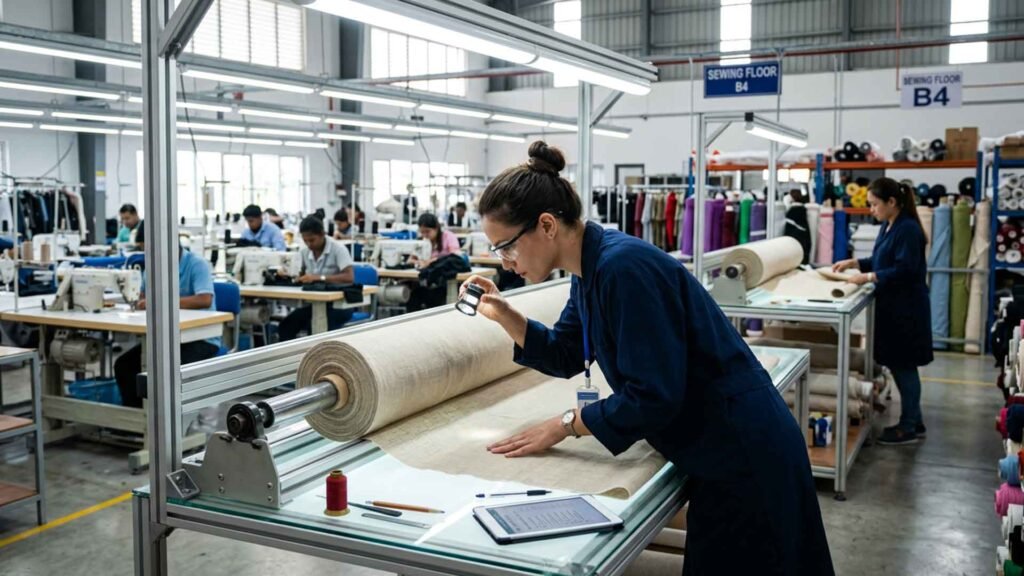
How to Check Fabric Quality Before Bulk Production
Why Fabric Quality Matters Before Bulk Production
Fabric quality impacts every stage of garment manufacturing—from cutting and sewing to finishing and consumer use. Poor fabric can lead to:
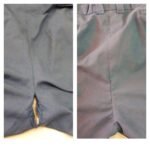
- Shrinkage and distortion after washing
- Color fading or bleeding
- Weak tensile and tear strength causing premature wear
- Pilling and abrasion issues reducing garment lifespan
- Non-compliance with chemical safety standards
Checking fabric quality before bulk production is not just a technical necessity—it’s a strategic business decision that safeguards your investment and brand equity.
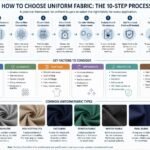
Key Steps to Check Fabric Quality Before Bulk Production
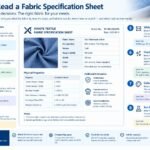
1. Understand Fabric Specifications and Composition
Start by verifying the fiber content and fabric construction. Confirm that the supplier’s label matches the actual material using:
- Burn tests (basic differentiation of natural vs synthetic fibers)
- Microscopic analysis (fiber morphology)
- Chemical solubility tests (to quantify blend ratios)
- Infrared spectroscopy (FTIR) for polymer identification in synthetics
Accurate fiber content verification prevents surprises in shrinkage, durability, and compliance later on.
2. Measure Fabric Weight and Density (GSM and Thread Count)
- GSM (grams per square meter) is a standard measure of fabric weight. Use a GSM cutter and digital scale to ensure the fabric weight matches buyer specifications within a 3-5% tolerance.
- Thread count or density (ends per inch and picks per inch) indicates how tightly the fabric is woven or knitted. Higher density usually means better strength and durability.
Example: A cotton poplin with 80s-120s thread count is generally considered high quality, while anything below 60s may feel cheap and less durable.
3. Conduct Physical and Mechanical Testing
Fabric strength is not just about how it feels but how it performs under stress:
- Tensile Strength: Measures force required to break the fabric.
- Tear Strength: Assesses resistance to tearing once a cut exists.
- Bursting Strength: Important for knit fabrics, measuring pressure resistance.
- Abrasion Resistance: Uses Martindale or Wyzenbeek tests to simulate surface wear.
- Pilling Resistance: Evaluates the formation of fiber balls on the surface.
These tests ensure the fabric can withstand real-world use without premature failure.
4. Evaluate Color Consistency and Fastness
Color issues are among the most common customer complaints. To avoid them:
- Check color consistency across different points of the fabric roll (center vs. selvedge, beginning vs. end).
- Perform color fastness tests against washing, rubbing (dry and wet), perspiration, and light exposure using standards like ISO 105 series.
- Ensure color does not bleed or fade, especially on dark or vibrant fabrics.
Testing after finishing processes (printing, coating) is critical since these treatments can alter color behavior.
5. Test Dimensional Stability and Shrinkage
Shrinkage and distortion can ruin garment fit and assembly:
- Conduct wash and dry tests following ISO 6330 and ISO 5077 standards.
- Measure dimensional changes after multiple wash cycles (1st, 3rd, and 5th washes) to assess progressive shrinkage.
- Acceptable shrinkage typically ranges from 1-3% depending on fabric type and end use.
For multi-layer products, coordinate shrinkage tolerance across layers to avoid bubbling or wrinkling.
6. Verify Finishing Quality and Chemical Safety
Special finishes like water repellency, wrinkle resistance, or anti-microbial treatments must be consistent and safe:
- Test finishes with appropriate methods (e.g., spray test for water repellency).
- Screen for restricted substances (formaldehyde, heavy metals, PFAS) aligned with OEKO-TEX Standard 100 or regional regulations.
- Request up-to-date lab reports, not just certificates, to ensure batch-to-batch consistency.
Implementing a Quality Control Manual for Fabric Inspection
A structured quality control manual guides inspection stages and ensures consistency:
- Sampling: From styling samples to pre-production samples, ensure fabric and accessories match approved specs.
- Fabric Inspection: Use a 4-point system to rate fabric defects; reject lots exceeding defect thresholds.
- Shade Blanket and Shade Band: Organize fabric rolls by color shade to avoid mismatches in production.
- Shrinkage and Distortion Testing: Conduct tests on representative samples from each dye lot.
- Cutting and Sewing QC: Inspect markers, spreading, and cutting for fabric alignment and defects.
- Finishing Checks: Perform trimming, pressing, and metal detection before packing.
Following such a manual reduces errors and supports accountability across departments.
Common Mistakes to Avoid When Checking Fabric Quality
- Relying solely on visual approval without lab testing.
- Ignoring batch-to-batch variations and only testing initial samples.
- Skipping post-finishing tests that reveal real-life performance.
- Using generic test packages without aligning them to product risk and end use.
- Overlooking chemical compliance, risking recalls and brand damage.
Conclusion: Secure Your Bulk Production with Rigorous Fabric Quality Checks
Mastering how to check fabric quality before bulk production is essential for delivering garments that meet customer expectations and regulatory standards. By combining thorough fiber verification, precise physical testing, colorfastness evaluation, dimensional stability checks, and chemical safety screening, you build a robust quality assurance system.
Investing time and resources in fabric quality control upfront saves you from costly reworks, returns, and reputation loss downstream. Collaborate closely with your suppliers, insist on transparent lab reports, and implement a detailed quality control manual tailored to your product.
Ready to protect your brand and streamline your production? Start integrating these fabric quality checks today and ensure every bulk order meets the high standards your customers deserve.