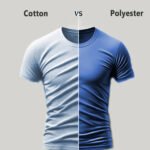
GSM (Grams per Square Meter) is a measurement of fabric density — it tells you how much a one-meter-by-one-meter piece of fabric weighs. The higher the GSM, the denser and typically heavier the fabric; the lower the GSM, the lighter and more breathable it tends to be. A t-shirt might sit around 160–200 GSM, while denim can run 300–500+ GSM.
That's the definition you'll find everywhere, and it's accurate — but on its own, it doesn't tell you much. The real question most people typing this into Google actually want answered is: what does this number mean for the thing I'm about to buy or make? That's the part most articles skip, so let's actually get into it.
What Is GSM in Cloth
GSM Is Not the Same as Quality — This Is the Part Everyone Gets Wrong
The most common misconception is that higher GSM means better fabric. It doesn't. GSM tells you density, not fiber quality, weave skill, or durability. A cheap, coarse 200 GSM cotton can feel and perform worse than a beautifully spun 150 GSM fabric made from long-staple cotton with a tight, even weave.
Think of it like comparing two winter coats by weight alone — a heavier coat isn't automatically warmer if it's stuffed with low-quality insulation. GSM is one input into how a fabric performs, not a verdict on it.
This matters most in two situations people get burned by regularly:
- T-shirt shopping: A 220 GSM shirt from a bargain brand can pill and thin out faster than a well-constructed 180 GSM shirt from a brand that sources better cotton.
- Bedsheets: High-thread-count marketing has a GSM equivalent problem — very high GSM sheets can actually trap more heat and feel stiffer, not 'more luxurious.'
GSM Ranges That Actually Mean Something (By Product, Not Just Fabric Type)
Generic 'light/medium/heavy' charts don't help much because the right GSM depends entirely on what the fabric is for. Here's a more useful, product-specific breakdown:
| Product | Typical GSM Range | Why |
|---|---|---|
| Summer/athletic t-shirts | 120–160 GSM | Needs airflow and stretch recovery, not structure |
| Everyday casual t-shirts | 160–200 GSM | Balance of drape and durability |
| Heavyweight streetwear tees | 220–280 GSM | Prized for structure and a 'boxy' drape, not comfort in heat |
| Dress shirting | 100–150 GSM | Needs to move and breathe against a tucked-in body |
| Denim (jeans) | 300–500+ GSM | Needs abrasion resistance far more than breathability |
| Hoodies/sweatshirts | 280–400 GSM | Insulation and structure over airflow |
| Bedsheets (percale) | 130–180 GSM | Crisp, cool feel — this is intentionally lower, not a downgrade |
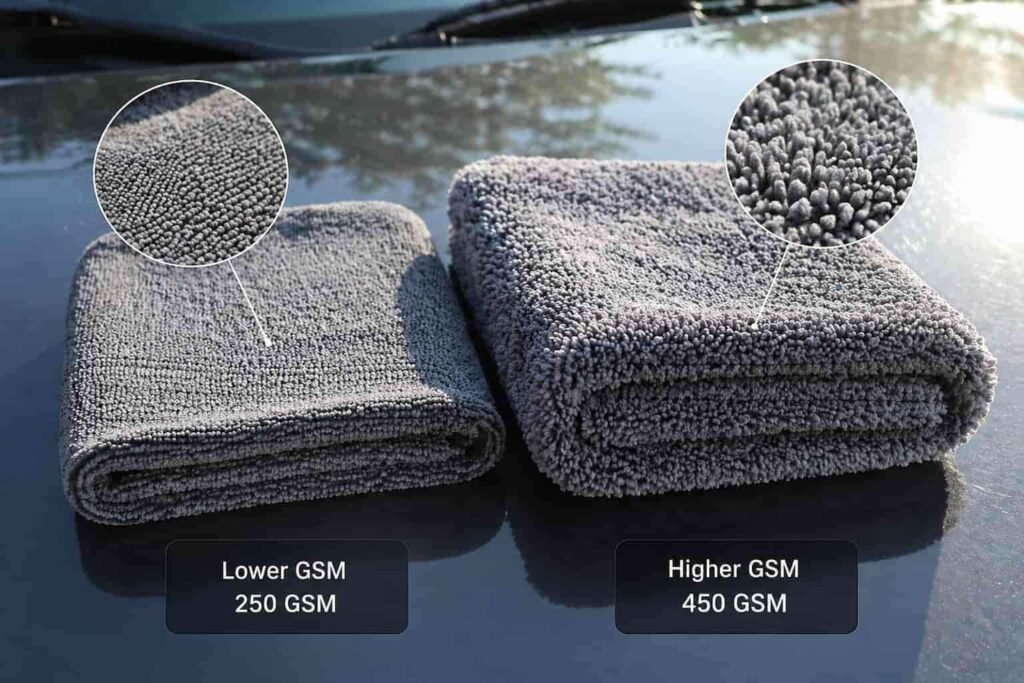
| Bath towels | 400–600 GSM | Absorbency scales with density here, unlike apparel |
Notice the towel entry is the exception that proves the rule: for towels, higher GSM genuinely does correlate with better absorbency, because the fabric's whole job is holding water in dense terry loops. That's not true for t-shirts, where higher GSM often just means 'harder to move in and hotter to wear.'
How to Actually Check GSM Yourself (No Lab Required)
You don't need a fabric mill to estimate GSM. A rough at-home method:
- Cut or find a fabric swatch of a known size (say, 10cm × 10cm).
- Weigh it on a kitchen scale that measures in grams.
- Calculate the area in square meters (0.1m × 0.1m = 0.01 m²).
- Divide the weight by the area: GSM = weight (g) ÷ area (m²).
A 2-gram swatch at 10cm × 10cm gives you 2 ÷ 0.01 = 200 GSM. This won't be lab-precise, but it's accurate enough to sanity-check a supplier's claimed spec or compare two fabrics side by side.
GSM vs Ounces per Square Yard (oz/yd²)
US suppliers often list weight in oz/yd² instead of GSM, which causes constant confusion when comparing fabrics from different regions.
Conversion: GSM = oz/yd² × 33.91
So a fabric listed as 6 oz/yd² is roughly 203 GSM — useful to know before you assume two suppliers are quoting wildly different weights when they're actually describing the same fabric.
The Real Skill: Matching GSM to Purpose, Not Chasing a Number
The most valuable habit when reading a GSM spec isn't memorizing ranges — it's asking what does this fabric need to do? A gym shirt that needs to move sweat away from skin wants low GSM and an open weave. A pair of work pants that needs to survive kneeling on concrete wants high GSM and tight construction. The same number that makes one fabric perfect makes another fabric a poor fit.
Next time a product page proudly lists '220 GSM' like it's a selling point on its own, the right question isn't 'is that good?' — it's 'good for what?'