# Uniform Shrinkage After Industrial Laundry: What Fabric Specs Prevent It?
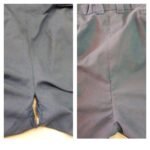
A logistics company in Shenzhen ordered 2,000 new work jackets. They fit perfectly on delivery day. After the first industrial wash cycle, the sleeves had shortened by three centimeters. After ten washes, the jackets no longer covered the workers' wrists. The company spent $14,000 replacing a uniform program that was three months old.
I have seen this exact scenario repeat itself across dozens of clients—hotels, hospitals, airlines, and manufacturing plants. The procurement team ordered a fabric that looked right on the spec sheet, but the shrinkage specification was either missing or incorrect.
Shrinkage is not a mysterious defect. It is a predictable physical response of fibers to heat, water, and mechanical agitation. The question is not whether a fabric will shrink, but how much—and whether that amount is acceptable for your application.
At XINGYE TEXTILE, after 30 years of manufacturing uniform fabrics for global clients, we treat shrinkage as a primary design parameter, not an afterthought. This guide explains what causes it, how to measure it, and, most importantly, what specifications to include in your purchase order to prevent it.

Uniform Shrinkage After Industrial Laundry
Section 1: The Physics of Fabric Shrinkage
Shrinkage happens through three distinct mechanisms. Understanding each one helps you identify which is causing your problem and how to solve it.
Relaxation Shrinkage
When fabric is manufactured under tension—during weaving, knitting, or finishing—the yarns and fibers are stretched beyond their natural resting state. When the fabric is first washed, the tension is released, and the fibers contract back toward their original length.
How much: Typically 1–3% for properly finished fabrics.
When it happens: Almost entirely in the first wash.
Is it preventable: Yes, through a process called compaction or sanforization during finishing.
Relaxation shrinkage is normal and predictable. A fabric that has been properly compacted during finishing will relax to its stable dimensions in the first wash and remain there for the rest of its life. The problem arises when a manufacturer skips the compaction step to save time and cost.
Swelling Shrinkage
Cellulosic fibers—cotton, rayon, linen—absorb water and swell laterally. As each fiber expands in diameter, the yarns that were tightly packed together are pushed apart. To accommodate this lateral expansion, the yarns must shorten lengthwise.
This is why cotton-rich fabrics shrink more than synthetic fabrics. Cotton fibers can absorb up to 25% of their weight in water. The swelling is significant, and the resulting lengthwise contraction can reach 5–8% unless the fabric has been chemically treated to resist it.
How much: 3–8% for untreated cotton; 1–3% for treated cotton.
When it happens: Builds over the first 5–10 washes as fibers progressively swell.
Is it preventable: Yes, through resin finishing or mercerization.
Thermal Shrinkage
Synthetic fibers—polyester, nylon—respond to heat rather than water. When exposed to temperatures near their glass transition point (approximately 70–80°C for standard polyester), the polymer chains relax and the fiber contracts.
Industrial laundries operating at 75–85°C are near this threshold. If the fabric was heat-set during manufacturing at a temperature below the wash temperature, further heat-setting will occur in the laundry, causing permanent shrinkage.
How much: 1–3% for properly heat-set polyester.
When it happens: In the first few high-temperature washes.
Is it preventable: Yes, through heat-setting at 180–200°C during finishing—well above any temperature the fabric will encounter in service.
Section 2: How Different Fibers Behave
| Fiber | Shrinkage Mechanism | Typical Shrinkage (Industrial Wash) | Prevention Method |
|---|---|---|---|
| Cotton | Swelling | 5–8% (untreated), 2–3% (treated) | Mercerization, resin finishing, blending with polyester |
| Rayon / Viscose | Swelling (severe) | 6–12% (standard), 3–5% (high-tenacity) | High-tenacity fiber grade, resin finishing |
| Polyester | Thermal | <1% (properly heat-set), 3–5% (poorly heat-set) | Heat-setting at 180–200°C |
| Nylon | Thermal | 2–4% | Heat-setting, lower wash temperatures |
| 65/35 T/C (Polyester-Cotton) | Mixed (swelling + thermal) | 1.5–2.5% | Balanced by polyester content, resin finish |
| 65/35 T/R (Polyester-Rayon) | Mixed (swelling dominant) | 2–4% | High-tenacity rayon, heat-set polyester, resin finish |
The Blended Fabric Advantage
This is where polyester-cotton and polyester-rayon blends demonstrate one of their most important advantages. The polyester component, which does not swell in water and has been heat-set at high temperature, acts as a structural stabilizer. Even as the cotton or rayon fibers swell and attempt to contract, the polyester yarns resist the dimensional change.
A 65/35 T/C fabric, properly finished, will typically shrink 1.5–2.5% over its entire lifespan. A comparable 100% cotton fabric at the same weight and weave will shrink 5–8%. The difference is the difference between a uniform that fits for two years and one that stops fitting after two months.
Section 3: The Finishing Processes That Control Shrinkage
The raw fabric coming off the loom is dimensionally unstable. It becomes stable only through specific finishing processes. These processes are invisible in the final product, but their presence or absence determines whether your uniforms will hold their size.
Compaction (Sanforization)
The fabric is passed through a machine that mechanically compresses it in the lengthwise direction, forcing the yarns into a more relaxed state. The fabric leaves the machine shorter than it entered—permanently. When the end user washes it, there is no remaining tension to release.
Look for: 'Sanforized' or 'compacted' on the specification sheet.
Cost impact: Adds approximately $0.15–$0.30 per meter.
Heat-Setting (for synthetic and blended fabrics)
The fabric is passed through a stenter oven at 180–200°C while held at its finished width. This relaxes the synthetic fibers and locks them into their stable dimensions. Any subsequent exposure to lower temperatures—including industrial laundering—will not cause further thermal shrinkage.
Look for: 'Heat-set at minimum 180°C' in the finishing specification.
Cost impact: Standard for any fabric containing synthetic fibers; absence indicates a corner was cut.
Resin Finishing (for cellulosic fibers)
A cross-linking resin is applied to cotton or rayon fibers that physically blocks the swelling that causes shrinkage. The resin bonds to the cellulose molecules, preventing water from penetrating the fiber's amorphous regions.
Look for: 'Resin-finished for shrinkage control' or 'anti-shrink treatment.'
Cost impact: Adds approximately $0.20–$0.40 per meter.
Liquid Ammonia Treatment
An advanced treatment for high-end cotton fabrics. The fabric is passed through liquid ammonia, which penetrates the cotton fibers and causes them to swell uniformly, then relaxes them into a permanently stable state. This is the most effective shrinkage control method for 100% cotton, achieving shrinkage rates below 3%.
Look for: 'Liquid ammonia treated' in the finishing specification.
Cost impact: Significant—adds $0.50–$1.00 per meter, typically used for premium shirting fabrics.
Section 4: How to Read a Shrinkage Specification
When a supplier sends you a fabric specification, the shrinkage data should look like this:
Shrinkage (ISO 6330, 3 wash cycles at 75°C):
- Warp (lengthwise): ≤2.0%
- Weft (crosswise): ≤1.5%
If the supplier cannot provide this data, or if the data is from a non-standard test method, the fabric has not been properly evaluated for shrinkage, and you are taking a risk.
What the Numbers Mean in Practice
| Shrinkage % | Practical Impact |
|---|---|
| <1% | Essentially no visible change. Safe for all tailored garments. |
| 1–2% | Minor change, noticeable only on precise measurements. Acceptable for most uniforms. |
| 2–3% | Sleeves and pant lengths may shorten visibly over time. Requires allowance in pattern making. |
| 3–5% | Significant change. Jackets become tight across shoulders; pants shorten at hem. Reliable complaints within first 10 washes. |
| >5% | Unacceptable for any uniform application. Garment will not fit after a few washes. |
A Note on Test Cycles
Standard shrinkage tests (ISO 6330, AATCC 135) typically measure after 3 or 5 wash cycles. For industrial uniforms that will be washed 100+ times, ask for an extended test of 20–30 cycles. A fabric that stabilizes at 2% after 3 washes may continue shrinking to 4% by wash 20. Extended testing reveals the true long-term behavior.
Section 5: The Role of Fabric Construction
Beyond fiber and finishing, the fabric's physical construction affects how much it shrinks.
Weave Density
Tighter weaves resist shrinkage better than open weaves because the yarns are already packed closely together, leaving less room for lateral swelling to cause lengthwise contraction. For equal fiber content and finishing:
| Weave Type | Relative Shrinkage Resistance |
|---|---|
| Plain weave (high density) | Best—yarns locked in place |
| Twill weave (2/1, 3/1) | Good—moderate density |
| Oxford weave | Moderate—open structure allows more movement |
| Plain weave (low density) | Worst—yarns shift easily |
Yarn Twist
High-twist yarns shrink less than low-twist yarns because the fibers are already tightly bound together, reducing the capacity for further consolidation. A yarn with 20 TPI will typically shrink 30–40% less than a yarn with 14 TPI, all else being equal.
GSM (Fabric Weight)
Heavier fabrics tend to shrink more than lighter fabrics of the same fiber and weave because they contain more fiber mass per unit area, providing more material for swelling and contraction. This is why workwear (250–300 GSM) requires more careful shrinkage control than dress shirts (120–180 GSM).
Section 6: The XINGYE Approach to Shrinkage Control
At XINGYE TEXTILE, we engineer shrinkage into every fabric at the specification stage, then verify it through batch testing.
Our T-R Series (65/35 Polyester-Rayon)
| Parameter | Our Specification | Industry Baseline |
|---|---|---|
| Shrinkage (Warp, 3 washes) | ≤2.5% | 3–5% |
| Shrinkage (Weft, 3 washes) | ≤2.0% | 2–4% |
| Shrinkage (Warp, 30 washes) | ≤3.0% | 5–8% |
| Stabilization | Extended at wash 1 | Continues through wash 10 |
| Finishing | Heat-set + resin treated | Heat-set only or untreated |
Why our T-R Series achieves better shrinkage performance than industry averages:
1. High-tenacity rayon yarns — The rayon fibers we use are engineered for wet strength retention above 80%. Standard viscose drops to 50–60% when wet, which allows the fibers to swell more and drive greater shrinkage.
2. Heat-set at 190°C — Well above the 75–85°C wash temperatures that industrial laundries use. The polyester component is dimensionally locked from the start.
3. Resin finishing on the rayon component — The cross-linking resin prevents water penetration into the rayon fibers, reducing swelling shrinkage by approximately 50% compared to untreated fabric.
4. Compaction after dyeing — Every T-R production run passes through a compaction unit that mechanically relaxes the fabric to its stable dimensions before it leaves our factory.
Our T/C Series (65/35 Polyester-Cotton)
| Parameter | Our Specification | Industry Baseline |
|---|---|---|
| Shrinkage (Warp, 3 washes) | ≤1.5% | 2–3% |
| Shrinkage (Weft, 3 washes) | ≤1.0% | 1.5–2.5% |
| Stabilization | Complete at wash 3 | Continues through wash 8–10 |
Our T/C Series benefits from the same heat-setting and compaction protocols. The cotton component is resin-finished to further limit swelling. The result is a fabric that fits on day 100 the same way it fit on day one.
Section 7: Procurement Checklist for Shrinkage Control
What to Specify in Your Purchase Order
1. Test method and conditions: 'Shrinkage per ISO 6330, 5 wash cycles at 75°C, tumble dry.'
2. Maximum allowable shrinkage: 'Warp ≤2.0%, Weft ≤1.5%.'
3. Extended test (recommended): 'Extended shrinkage test per ISO 6330, 30 wash cycles, with stabilization verified by wash 10.'
4. Finishing requirements: 'Fabric to be heat-set at minimum 180°C, compacted, and resin-finished for shrinkage control.'
5. Batch-specific reporting: 'Batch-specific shrinkage test report required for each production lot, matching roll numbers.'
Verification on Delivery
Perform your own shrinkage test on arrival. Cut a 50 cm × 50 cm sample from the delivered fabric. Mark reference points at 40 cm intervals in both warp and weft directions. Wash the sample five times following your facility's standard laundering protocol. Measure the distance between reference points after each wash.
| Measurement | Acceptable | Marginal | Reject |
|---|---|---|---|
| Shrinkage after 5 washes | ≤2.0% | 2.0–3.5% | >3.5% |
| Stabilization (change between wash 3 and wash 5) | ≤0.3% | 0.3–0.5% | >0.5% |
Red Flags to Watch For
'Shrinkage within industry standards' — without a specific percentage and test method, this statement is meaningless.
'Pre-washed' or 'pre-shrunk' — these terms are not regulated. They indicate that the fabric was washed once during finishing, but do not guarantee dimensional stability under industrial laundering conditions.
Shrinkage data from a different production run — the finishing conditions can vary between batches. Insist on batch-specific data.
Section 8: Frequently Asked Questions
How much shrinkage is acceptable for tailored uniforms?
For blazers, dress trousers, and fitted jackets, shrinkage should not exceed 2% in any direction. Beyond 2%, the garment's fit changes visibly—sleeves shorten, shoulders tighten, and hem lengths shift. For looser-fitting workwear (coveralls, aprons, loose jackets), up to 3% may be acceptable depending on the garment design.
Can shrinkage be reversed?
No. Once a fabric has shrunk, the dimensional change is permanent. Stretching the fabric back to its original size will distort the weave and create uneven stress points that fail prematurely.
Does shrinkage affect all parts of a garment equally?
No. Shrinkage is most visible in vertical measurements—sleeve length, pant length, jacket length—because the warp yarns (running lengthwise) are typically under higher tension during weaving and finishing. Widthwise shrinkage is usually lower because the weft yarns are under less tension. This is why sleeves shorten faster than shoulders widen.
Should I order larger uniforms to account for shrinkage?
This is a common but risky practice. If you add 5% to every measurement expecting 5% shrinkage, the garments will fit poorly until they have been washed enough times to reach their stable size. A better approach is to order fabric with guaranteed shrinkage below 2% and have the uniforms made to standard measurements.
How does drying temperature affect shrinkage?
Tumble drying at high temperatures (80°C+) can cause additional thermal shrinkage in polyester and blended fabrics, even if they were properly heat-set during manufacturing. We recommend drying industrial uniforms at 60–65°C for maximum dimensional stability. The additional drying time required is offset by the extended garment lifespan.
What about shrinkage in T/R (Polyester-Rayon) fabrics?
T/R fabrics require more careful handling than T/C. Rayon has higher swelling potential than cotton, and its wet strength is lower. Without proper resin finishing, a T/R fabric can shrink 4–6% over its lifespan. With proper finishing—high-tenacity rayon, heat-set polyester, resin treatment, and compaction—shrinkage can be held to 2–3%. At XINGYE TEXTILE, our T-R Series achieves this through all four controls applied in sequence.
Making the Final Decision
Shrinkage is not something you should accept as an inevitable cost of doing business with industrial laundry. It is a specification that can be measured, controlled, and guaranteed—if you know what to ask for.
The three factors that determine shrinkage are: fiber selection, finishing processes, and testing verification. If your supplier cannot provide batch-specific shrinkage data using a recognized test method (ISO 6330, AATCC 135), and cannot confirm that the fabric has been heat-set, compacted, and resin-finished, you are accepting a risk that will materialize as replacement costs within the first year.
At XINGYE TEXTILE, we provide batch-specific shrinkage test reports for every production run. Our T-C and T-R Series fabrics are engineered to stabilize within 1.5–2.5% shrinkage—guaranteed. We finish every meter with heat-setting, compaction, and resin treatment as standard, not as an optional upgrade.
For shrinkage test reports, finishing specification sheets, or to discuss your specific laundering conditions: