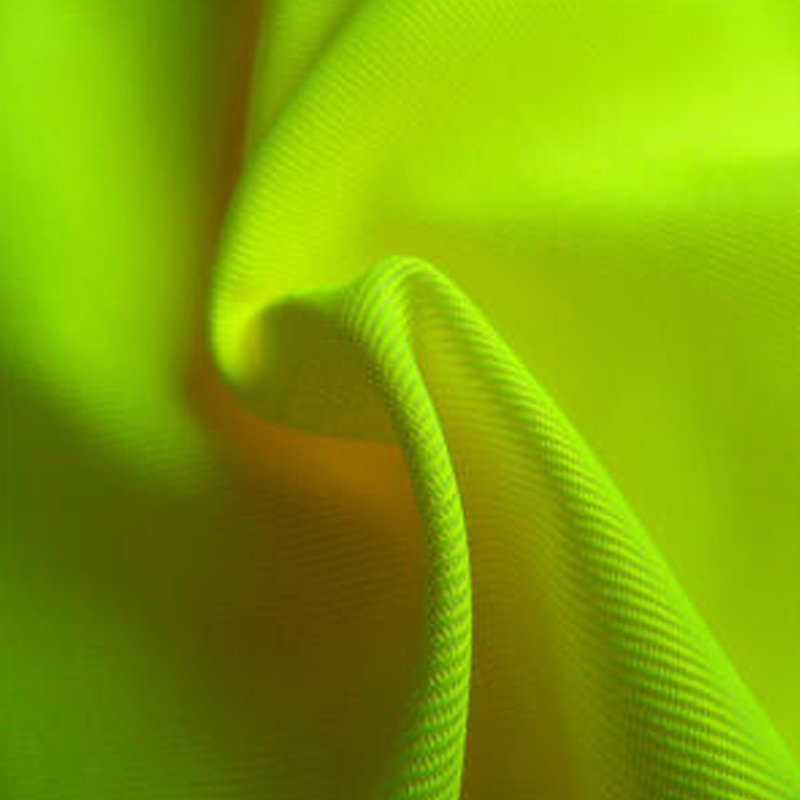
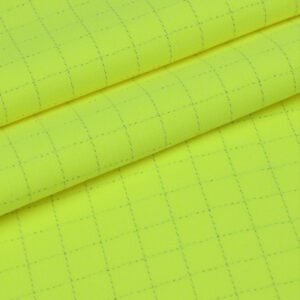
HV-NFR-260 is a 65/35 poly-cotton twill in fluorescent Orange and Yellow — engineered for hi-vis uniform programs where flame resistance is not required but EN ISO 20471 high-visibility certification is mandatory.
This is the fabric for the largest volume of hi-vis garments globally: construction vests, traffic control jackets, airport ground crew uniforms, and warehouse safety wear. Unlike HV-FR-300 (which combines hi-vis with FR and anti-static), HV-NFR-260 is a pure hi-vis fabric — no FR treatment, no added cost for protection that the application does not require.
≥20 washes maintaining minimum chromaticity and luminance (EN ISO 20471)
Retroreflective Compatibility
Compatible with EN ISO 20471 compliant reflective tape
Shrinkage
≤2.5% after 5 washes (ISO 6330)
Colorfastness to Washing
Grade 4 (ISO 105-C06)
Colorfastness to Light
Grade 4 (ISO 105-B02)
Colorfastness to Perspiration
Grade 4 (ISO 105-E04)
Pilling Resistance
Grade 4 (ISO 12945-2)
Tensile Strength (Warp)
≥900 N (ISO 13934-1)
Tear Strength (Weft)
≥20 N (ISO 13937-2)
Abrasion Resistance
≥25,000 Martindale cycles
Finishing
Fluorescent dyed, pre-washed, heat-set
When to Choose HV-NFR-260 vs. HV-FR-300
Factor
HV-NFR-260 (Non-FR)
HV-FR-300 (FR)
FR protection
❌ Not required
✅ EN ISO 11612
Hi-Vis standard
✅ EN ISO 20471 Class 2
✅ EN ISO 20471 Class 2
Anti-static
Optional
✅ Standard (EN 1149)
Cost per meter
Baseline
+25–35%
Typical user
Construction, traffic, airport, warehouse
Gas utility, rescue, oil & gas, welding
Weight
260 GSM — lighter, more comfortable
300 GSM — heavier, more durable
For every hi-vis program that does not involve fire, explosion, or chemical splash risk, HV-NFR-260 is the correct and cost-effective choice.
The 65/35 PC Advantage for Hi-Vis
Hi-vis garments face a unique challenge: they must maintain their fluorescent color through repeated industrial washing, UV exposure, and physical wear. Pure cotton absorbs fluorescent dye well but fades faster and shrinks more. 100% polyester fluoresces brightly but feels uncomfortable against skin in hot weather.
The 65/35 poly-cotton blend balances these competing requirements:
Polyester (65%) — provides color retention, UV resistance, and dimensional stability. The fluorescent dye bonds to both fibers, but the polyester component significantly extends the visual lifespan of the fluorescent effect.
Cotton (35%) — provides breathability and comfort against skin. Enough cotton to make the fabric comfortable for all-day wear without the clammy feel of 100% polyester.
Fabric Hand & Appearance
Hand feel: Standard PC twill hand — crisp, clean, comfortable. No treatment residue or stiffness.
Appearance: Bright, saturated fluorescent color. The twill surface provides a professional finish suitable for embroidered logos, badge attachment, and reflective tape application.
Breathability: Good — the 35% cotton content prevents heat buildup during active use.
Applications
Application
Why HV-NFR-260
Road construction & maintenance vests
EN ISO 20471 Class 2 hi-vis for traffic zone safety
Traffic control & flagging uniforms
High-visibility for directing traffic in all weather conditions
Airport ground crew (ramp, baggage, marshalling)
Hi-vis for apron operations — no FR requirement for non-fuel roles
Warehouse & logistics safety vests
Hi-vis for forklift and vehicle traffic areas
Event parking & security staff
Low-cost hi-vis for temporary and event staff
Railway maintenance (non-electrified)
Hi-vis for track-side visibility without arc flash requirements
Municipal public works uniforms
Street cleaning, parks, water utility — daily hi-vis requirement
School crossing guard vests
Hi-vis for roadside visibility during student crossing hours
Available Variants
Variant
Product Code
Description
Standard
HV-NFR-260
65/35 PC — no FR, no AS — lowest cost hi-vis
With Anti-Static
HV-NFR-260-AS
+ 1% conductive fiber — EN 1149
With Water-Repellent
HV-NFR-260-WR
+ DWR finish for wet weather
Color Options
Stock Colors (2 — held in continuous inventory):
Color
Application
Fluorescent Orange
Construction, traffic, airport — most specified globally
Fluorescent Yellow
Railway, some EU markets, mining
Fluorescent Color Performance
Property
Requirement (EN ISO 20471)
HV-NFR-260 Performance
Chromaticity (color coordinate limits)
Must fall within defined boundaries
✅ Passes at 0 and 20 washes
Luminance factor (brightness)
≥0.40 (Orange), ≥0.70 (Yellow) at 0 washes
✅ Exceeds minimum
Minimum luminance after 20 washes
≥0.25 (Orange), ≥0.40 (Yellow)
✅ Maintains compliance
Color change after 20 washes
Visual assessment — no excessive fading
✅ Grade 3–4
Ordering Information
Parameter
Details
Stock color MOQ
200 meters per color (Orange and Yellow held continuously)
HV-NFR-260 is designed for assembly with EN ISO 20471 compliant retroreflective tape. We supply the fabric only — tape application is performed by the garment manufacturer.
Minimum tape requirement for EN ISO 20471 Class 2:
≥0.13 m² retroreflective material (tape)
Tape width: ≥50mm
Typical configuration: 2 horizontal bands around torso
Care Instructions
Step
Instruction
Washing
Machine wash 60°C, normal cycle
Bleaching
Do not bleach — chlorine accelerates fluorescent dye fading
Drying
Tumble dry medium, or hang dry — avoid prolonged direct sunlight
Ironing
Medium iron (150°C) — do not iron directly over reflective tape
⚠️ Fluorescent care: EN ISO 20471 requires the fabric to maintain minimum chromaticity for 20 washes. After 20 washes, the fluorescent effect gradually fades but typically remains visually acceptable for 30–40 washes before replacement is recommended. To extend fluorescent life: wash at 40°C (not 60°C), hang dry in shade, and avoid bleach. The fluorescent dye fades faster than standard dyes — this is inherent to fluorescent chemistry, not a quality defect.
FAQ
Q: Why do I need EN ISO 20471 certification? A: In most countries, hi-vis garments used in road construction, traffic control, airport operations, and railway maintenance are legally required to meet EN ISO 20471 (or local equivalent). Without certified fabric, the garment does not meet safety regulations and the employer is liable for non-compliance.
Q: How is this different from standard fluorescent fabric sold at retail? A: Standard fluorescent fabric is not tested or certified. It may appear bright initially but can fade below regulatory minimums within a few washes. HV-NFR-260 is batch-tested for chromaticity and luminance compliance per EN ISO 20471 — certified to maintain minimum performance through 20 industrial washes.
Q: Can I use this fabric for FR hi-vis programs? A: No — this fabric has no FR treatment. For FR hi-vis, use HV-FR-300 (treated FR) or HV-IFR-300 (inherent FR). The fluorescent dye and FR treatment are separate processes — HV-NFR-260 is fluorescent only.
Q: Which color is more visible for road construction? A: Fluorescent Orange is the standard for road construction globally — it offers the highest contrast against natural environments (green, grey, brown). Fluorescent Yellow is preferred for railway, mining, and some European markets. Orange accounts for approximately 75% of global hi-vis fabric orders.
Q: Do you supply reflective tape to match? A: No — we supply the fluorescent fabric only. Reflective tape is applied by the garment manufacturer. We can recommend compatible tape specifications upon request.




Reviews
There are no reviews yet.