CN-300-FR is a cotton-nylon blend fabric treated with THPC (Proban) flame retardant finish — purpose-engineered for heavy industries where standard 100% cotton FR fabrics wear out too fast and need replacing mid-contract.
The 12% nylon content is the key differentiator. Nylon is one of the most abrasion-resistant textile fibers available — stronger than cotton, polyester, or aramid on a weight-for-weight basis. Adding 12% nylon to a cotton FR base increases tear strength by approximately 60% and abrasion resistance by approximately 33% compared to equivalent 100% cotton FR grades.
This translates to a simple financial equation for industrial uniform programs: CN-300-FR garments last 40–60% longer than equivalent 100% cotton FR garments in high-wear environments. The higher per-meter cost is offset by fewer garment replacements over the contract term.
FR efficacy retained after 50+ industrial washes (ISO 15797)
Afterflame Time
≤2 seconds (EN ISO 15025 / GB/T 14644)
Afterglow Time
≤2 seconds
Char Length
≤100 mm
Shrinkage
≤3% after 50 washes (ISO 6330)
Colorfastness to Washing
Grade 4 (ISO 105-C06)
Colorfastness to Light
Grade 4–5 — nylon content improves lightfastness
Tensile Strength (Warp)
≥1400 N (ISO 13934-1)
Tear Strength (Weft)
≥40 N (ISO 13937-2) — 60% higher than equivalent 100% cotton FR
Abrasion Resistance
≥40,000 Martindale cycles — 33% higher than 100% cotton FR
Finishing
Pre-washed, heat-set, FR treated
Standards & Certifications
Standard
Status
GB 8965.1-2020
✅ Class B — China FR mandatory
EN ISO 11612 (A1, B1)
✅ Heat & flame — EU general industrial
EN ISO 11611 (Class 1)
✅ Welding — molten metal spatter
NFPA 2112
✅ Flash fire — North America
EN 1149 (AS variant)
✅ Anti-static (when ordered with 1% conductive fiber)
OEKO-TEX Standard 100
✅ Available upon request
CN-300-FR vs. COT-300-FR — Side by Side
Property
COT-300-FR (100% Cotton)
CN-300-FR (88/12 Cotton/Nylon)
Composition
100% Cotton
88% Cotton / 12% Nylon
Tear strength
≥25 N
≥40 N — 60% higher
Abrasion resistance
≥25,000 Martindale
≥40,000 Martindale — 33% higher
Tensile strength
≥1000 N
≥1400 N
Colorfastness to light
Grade 4
Grade 4–5 — nylon resists UV fading
Cost per meter
Baseline
+15–20%
Garment lifespan
Baseline
40–60% longer in high-wear environments
Best for
General industrial
Mining, heavy machinery, metallurgy
Why Nylon?
Nylon outperforms cotton in three metrics that matter for FR workwear:
Tear strength — Nylon fibers are 3–4× stronger than cotton. A fabric that is 12% nylon by weight has tear strength approximately 60% higher than all-cotton. This means FR coveralls that do not rip open when snagged on mining equipment or sharp metal edges.
Abrasion resistance — Nylon resists surface wear from repeated contact with rough surfaces (rock, metal, concrete). Knees, elbows, and seat areas in FR trousers last measurably longer with nylon reinforcement.
Lightfastness — Nylon holds dye more effectively than cotton under UV exposure. FR workwear in outdoor mining and construction applications fades significantly slower than all-cotton equivalents.
Fabric Hand & Appearance
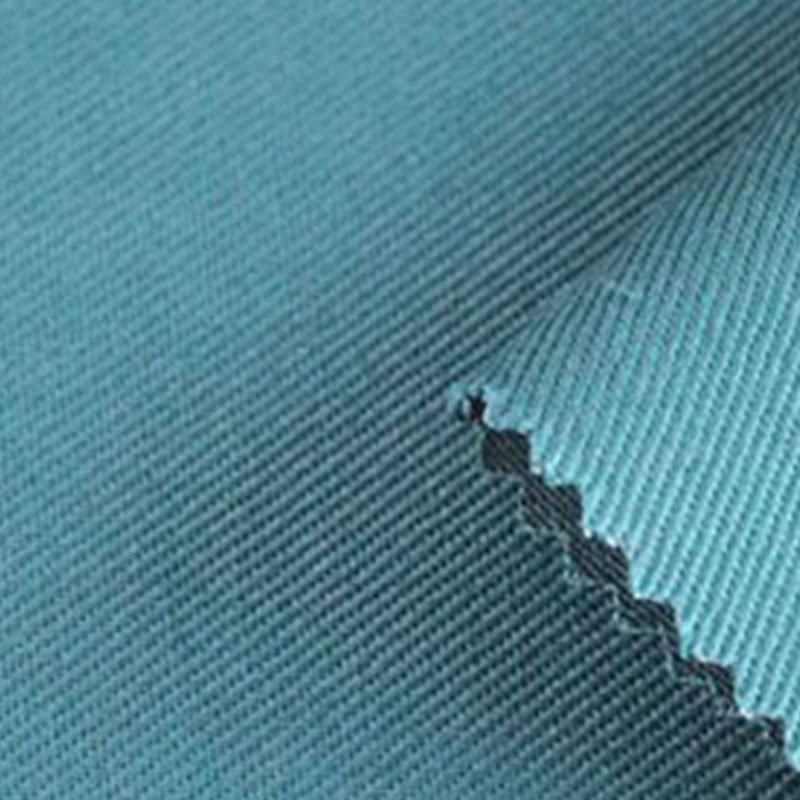
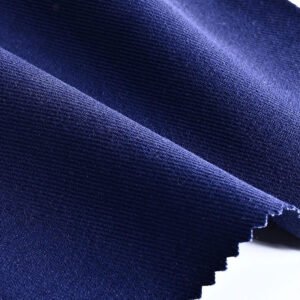
Hand feel: Slightly crisper than 100% cotton FR twill, with a smooth, dry finish. The nylon content adds body without stiffness.
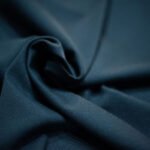
Appearance: Clean twill surface. The nylon is invisible in the fabric — no synthetic shine. Takes dye evenly. Colors appear slightly deeper and more saturated than equivalent cotton grades due to nylon’s dye affinity.
Breathability: Slightly lower than 100% cotton but still well within acceptable range for industrial workwear. The 88% cotton content dominates moisture management.
Applications
Application
Why CN-300-FR
Mining (underground & surface)
Abrasion from rock contact destroys 100% cotton FR in weeks — CN-300 lasts months longer
Heavy machinery manufacturing
Snag resistance on sharp metal edges — tear strength ≥40N prevents blowouts
Steel and metallurgy
High-temperature environment + abrasive surfaces — nylon withstands both better than cotton
Oil & gas extraction
Rig floor work destroys standard FR coveralls — CN-300 is the most commonly specified upgrade
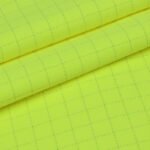
Same composition — Ripstop grid weave for maximum tear resistance
Water-Repellent
CN-300-FR-WR
+ DWR finish for wet environments
Color Options
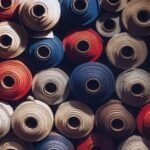
Stock Colors (6 — held in continuous inventory):
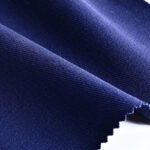
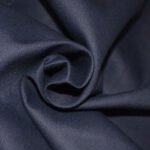
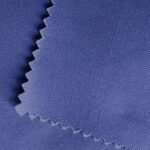
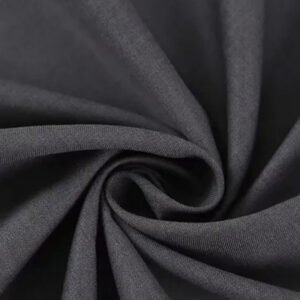
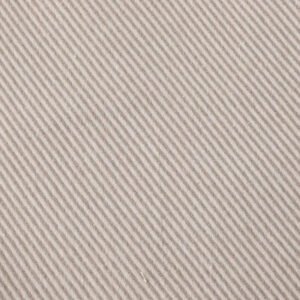
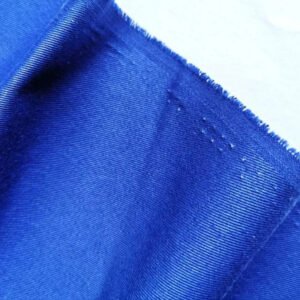
Navy, Royal Blue, Orange, Khaki, Grey, Black
Note: The 12% nylon content gives these colors a slightly deeper, richer appearance than equivalent 100% cotton FR fabrics. Sample swatch recommended for color matching against existing programs.
Machine wash 60°C, normal cycle — industrial wash compatible
Bleaching
Do not bleach — chlorine degrades both FR treatment and nylon fibers
Drying
Tumble dry medium, or hang dry
Ironing
High iron (200°C)
Industrial laundry
Compatible — 75°C max
⚠️ Nylon-specific care: Nylon is sensitive to prolonged high heat and chlorine bleach. Do not exceed 75°C wash temperature. Chlorine bleach will permanently degrade the nylon content and reduce tear strength. Use oxygen bleach only. The FR treatment itself is unaffected by these constraints — the care limit is set by the nylon fiber, not the finish.
FAQ
Q: Why not 100% nylon or higher nylon content? A: 12% nylon provides the optimal balance of durability improvement and cost. Higher nylon content (20%+) further improves tear strength but significantly increases cost and reduces breathability. 88/12 is the industry standard ratio proven across mining, oil & gas, and heavy industrial FR programs.
Q: How much longer does CN-300-FR last compared to 100% cotton FR? A: In controlled wear trials in mining environments, CN-300-FR garments lasted 50–60% longer than equivalent 100% cotton FR garments before failure at knees, elbows, or seam areas. The primary failure mode shifts from fabric abrasion to seam failure — indicating the fabric itself is no longer the weakest point.
Q: Is the nylon content visible or does it change the fabric appearance? A: No. The nylon fiber is spun together with cotton during the yarn-making process. The finished fabric looks and feels like cotton twill. The nylon is invisible to the naked eye. Dye uptake is more uniform than 100% cotton because nylon has higher dye affinity.
Q: Does the nylon content affect the FR performance? A: No. Nylon is a thermoplastic fiber — it melts rather than ignites. In FR blends, the nylon content does not negatively affect flame spread, afterflame time, or char length test results. CN-300-FR passes all the same certification standards as our 100% cotton FR grades.
Q: What is the most common application for this fabric? A: Mining is the single largest market for cotton-nylon FR. Most large mining operations globally specify 88/12 or 80/20 cotton-nylon as their minimum standard for underground FR coveralls. Oil & gas extraction (rig floor) is the second largest.
Q: Can I get this in a ripstop weave instead of twill? A: Yes. The Ripstop variant (CN-300-FR-RS) uses a reinforcing grid structure that further improves tear resistance. The ripstop grid is visible in the fabric and gives it a distinctive appearance. MOQ for ripstop: 500m per color.



Reviews
There are no reviews yet.