IFR-240-MC is an inherently flame resistant fabric — the flame retardancy is built into the modacrylic fiber at the polymer extrusion stage, not applied as a chemical finish. This is the fundamental difference between IFR-240-MC and treated FR fabrics like our COT and CN series.
The FR protection cannot wash out, wear off, or degrade. Not after 50 washes. Not after 500 washes. Not ever.
✅ Standard — included, not optional — no formaldehyde
ISO 15797
✅ Industrial wash — 50-cycle certified
Inherent FR vs. Treated FR — The Full Comparison
Factor
Treated FR (COT-300-FR / CN-300-FR)
Inherent FR (IFR-240-MC)
FR mechanism
Chemical finish bonded to fiber surface
FR properties built into fiber polymer
Wash durability
50–100 cycles — gradually declines
Permanent — unlimited
Formaldehyde
May contain trace levels (within OEKO-TEX limits)
Zero — 0 ppm
Anti-static
Optional — add conductive fiber
Standard — 2% carbon fiber built in
Arc flash rating
Not typically certified
ASTM F1506 — HRC 1 certified
Chemical splash
No
EN 13034 — limited splash certified
Fabric hand
Cotton-like, can stiffen with washing
Soft, breathable — stays consistent
Cost per meter
Baseline
+40–60%
Total cost of ownership
Baseline — replace when FR degrades
Lower over 2+ years — FR never degrades
Why Pay More for Inherent FR?
There are three specific scenarios where treated FR fabrics are the wrong choice and IFR-240-MC is the correct specification:
1. Chemical Processing & Refining Treated FR fabrics use chemical finishes that can react with or be degraded by exposure to certain industrial chemicals, acids, or solvents. Inherent FR has no chemical finish to react — the modacrylic fiber itself is flame resistant. Combined with EN 13034 limited chemical splash certification, this is the only appropriate choice for chemical plant environments.
2. Food-Grade & Pharmaceutical Treated FR fabrics use formaldehyde-based resin chemistry (even if within OEKO-TEX limits). In food processing or pharmaceutical cleanroom environments where zero formaldehyde off-gassing is required, only inherent FR fabrics are acceptable. IFR-240-MC contains 0 ppm formaldehyde.
3. Extended-Use Programs (2+ year garment life) In some industrial programs — particularly oil & gas and mining in remote locations — FR garments are expected to last 2–3 years. A treated FR fabric will lose its certification compliance somewhere between 50–100 washes, typically within 12–18 months. An inherent FR fabric remains FR-compliant for the entire garment life, making the total cost of ownership comparable or lower despite the higher upfront fabric cost.
Fabric Hand & Appearance
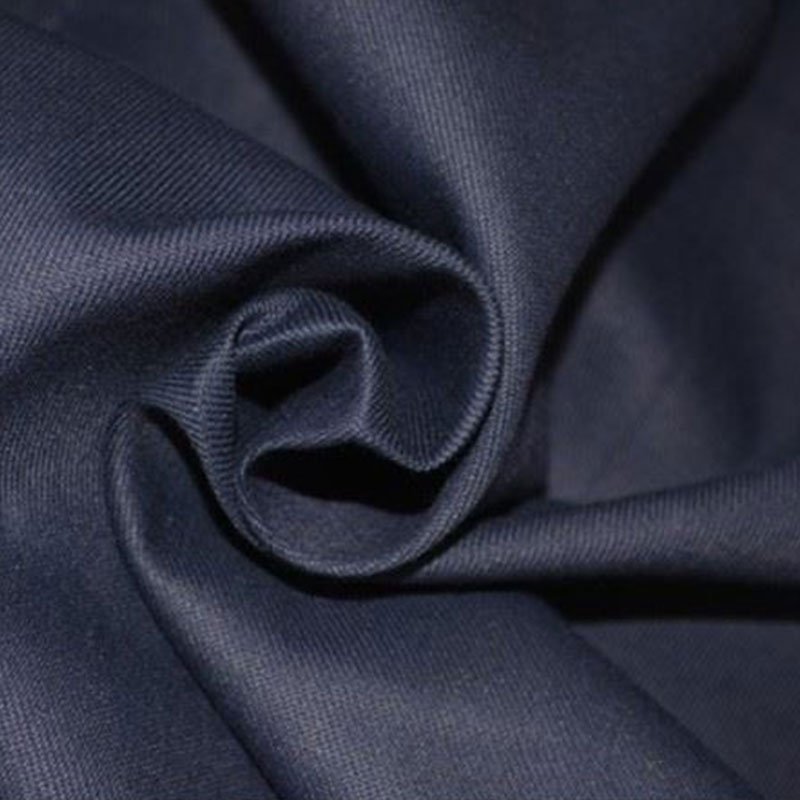
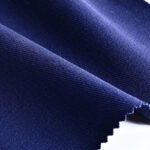
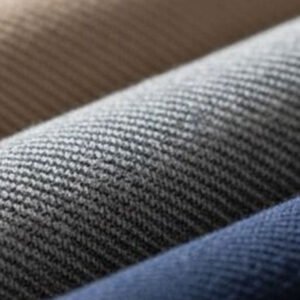
Hand feel: Soft, dry, cotton-like. The modacrylic fiber is naturally soft — no chemical stiffening. Many wearers cannot distinguish this from 100% cotton twill in blind touch tests.
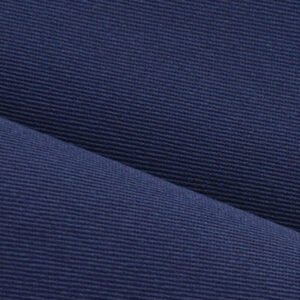
Appearance: Clean twill surface with a matte finish. The 2% conductive carbon fiber is visible as fine dark threads on close inspection — a visual indicator of permanent anti-static protection.
Breathability: Good — the 38% cotton content provides natural moisture management. Modacrylic fibers do not trap heat like aramid (Nomex®) alternatives, making this a preferred choice for warm-climate FR programs.
Applications
Application
Why IFR-240-MC
Chemical processing & refinery uniforms
FR cannot be degraded by chemical exposure — EN 13034 certified — zero formaldehyde
Petrochemical plant coveralls
Permanent FR + permanent anti-static in one fabric — no finish to fail
Pharmaceutical cleanroom FR garments
0 ppm formaldehyde — safe for controlled environments
Food processing FR workwear
No chemical finish — no risk of finish migrating to food products
Note: Due to the modacrylic fiber chemistry, color range is more limited than treated cotton FR fabrics. The available colors are deep and saturated but cannot match the full Pantone range of 100% cotton. For custom colors, minimum 1000m per shade.
Ordering Information
Parameter
Details
Stock color MOQ
200 meters per color
Custom color MOQ
1000 meters per color
A4 sample swatch
Free, 3 working days
Bulk lead time (stock)
20–25 days
Bulk lead time (custom dye)
35–40 days — modacrylic requires specialized dyeing
Machine wash 60°C, normal cycle — industrial wash compatible
Bleaching
Do not bleach — unnecessary (no FR finish to protect, but bleach damages modacrylic fiber)
Drying
Tumble dry medium, or hang dry
Ironing
Medium iron (150°C) — ironing does not affect inherent FR
Dry cleaning
Permitted (PCE) — FR is unaffected by dry cleaning chemicals
✅ Care advantage: Because the FR is inherent (not a finish), there is nothing to protect. No special washing protocol required. No chlorine bleach restrictions for stain removal. No dry cleaning concerns. The fabric can be laundered identically to standard non-FR workwear. The FR performance remains unchanged regardless of wash chemical or temperature.
FAQ
Q: What does “inherent” mean exactly? A: The modacrylic fiber is chemically formulated to be flame resistant at the polymer manufacturing stage. The flame retardant molecules are part of the fiber structure itself, not applied to the finished fabric. This means the FR property is permanent for the entire life of the garment — it cannot wash out, wear off, or degrade with chemical exposure.
Q: How many washes will IFR-240-MC maintain its FR certification? A: Unlimited. There is no wash cycle limit on inherent FR. The fabric will pass flame spread testing after 500+ washes exactly as it did on day one. This is the single most important difference between IFR and treated FR fabrics.
Q: Is this the same as Nomex®? A: No. Nomex® is a registered trademark of DuPont for meta-aramid fiber. Modacrylic (the fiber used in IFR-240-MC) is a different chemistry — it is softer, more breathable, less expensive, and more comfortable than aramid, while providing comparable FR performance for most industrial applications. For dedicated high-voltage arc flash or fire-fighting applications, aramid-based fabrics are still the standard. For general chemical, utility, and hazardous environment FR workwear, modacrylic-cotton is the optimal balance.
Q: Does the 2% conductive carbon fiber provide adequate anti-static performance? A: Yes. The carbon fiber is permanently embedded in the yarn structure — it cannot wash out. EN 1149 testing confirms surface resistance below the required threshold. Unlike topical anti-static finishes that degrade with washing, this anti-static is permanent.
Q: Why does this fabric cost more than treated FR? A: The modacrylic fiber itself is more expensive to manufacture than standard cotton or polyester. There is no way around this — the FR property is built into the raw material cost. However, because the FR never degrades, the cost-per-wear over a 2–3 year garment lifespan is comparable to treated FR fabrics that need replacement at 12–18 months when their finish degrades.
Q: Is this fabric comfortable for hot environments? A: Yes — significantly more comfortable than aramid (Nomex®) alternatives. The modacrylic-cotton blend breathes better than 100% synthetic FR fabrics and does not trap heat. For Middle East, Southeast Asia, and tropical-region FR programs, IFR-240-MC is a preferred specification.




Reviews
There are no reviews yet.