A buyer in Birmingham ordered 5,000 hi vis vest sets from a Chinese supplier. $3.20/meter fabric. Supplier sent a test report showing Class 3 retroreflection. All looked clean. Container shipped.
Rotterdam customs pulled a random sample. Tested the fabric's retroreflective coefficient — measured RA of 64 cd/(lx·m²) after 25 accelerated washes. EN ISO 20471 Class 3 requires ≥ 250 cd/(lx·m²) at 50 washes. The fabric barely passed Class 1 at 25.
Container seized. Demurrage: $850/day. Client cancelled the order. Supplier blamed 'washing conditions.'
He called me after the dust settled. 'The report they sent showed Class 3. How is this possible?'
Simple. The test they sent was on new fabric, never washed. EN ISO 20471 requires the fabric to perform after minimum 50 wash cycles. The supplier tested the easy test. The buyer paid the price.
I've seen this exact story play out in Rotterdam, Hamburg, Long Beach, and Melbourne. If you import hi vis workwear, this will happen to you eventually — unless you know what to check before the container leaves China.
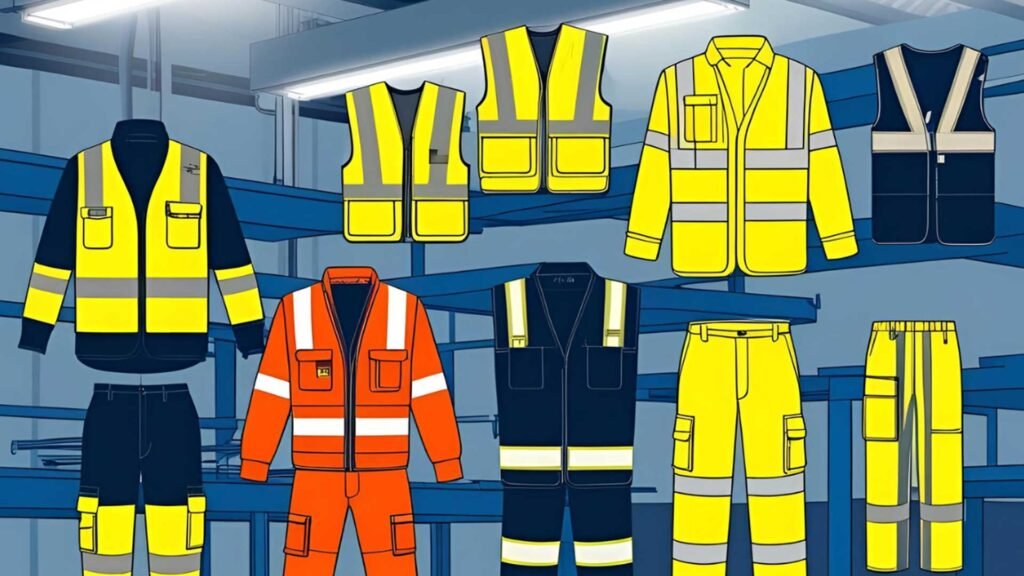
EN ISO 20471 Hi Vis Fabric
Three Types of Hi Vis Fabric Buyers. Two Get Burned.
Type 1: Buys the cheapest hi vis fabric on Alibaba
$3.00–$4.00/meter. Fluorescent dye looks bright in the showroom sample.
Problems you'll discover after the container lands:
The fluorescent pigment isn't formulated to the correct chromaticity coordinates. Under a lab spectrophotometer, the fabric's yellow shifts toward olive-green — outside the EN ISO 20471 allowable zone. The customs test reads: FAIL.
The retroreflective performance looks good on new fabric. But the glass beads (or microprismatic coating) aren't properly bonded to the fabric substrate. After 25 washes, half the beads have fallen off. Retroreflective coefficient drops from 350 to 60.
And the base fabric? Often 100% cotton or a high-cotton blend. Cotton shrinks 3–5% in the first industrial wash. The garment no longer fits. The reflective tape pulls away from the fabric. The whole set is scrap.
What this costs: 5,000 vests at $2.80 landed vs. $4.50 landed is $8,500 'saved.' One detained container costs $3,000–$8,000 in demurrage, forwarding fees, and retesting. A cancelled client order costs $20,000+. You don't save. You lose.
Type 2: Buys from a trader who sources from multiple mills
$4.50–$6.00/meter. The trader has a valid EN ISO 20471 test report from one batch.
Problems:
The test report is for a specific fabric construction — specific weight, specific dye recipe, specific reflective trim supplier. If the trader changes mills (because Mill A ran out of capacity and Mill B is cheaper this month), the new fabric is different. The old test report is now worthless.
Traders don't control production. They can't guarantee chromaticity consistency across dye lots 18 months apart. Your reorder comes in looking slightly more greenish than the first batch. Client rejects it.
What this costs: You don't lose the whole container. You lose the trust of your customer when the reorder doesn't match. Or worse — customer audits spot the color shift, rejects the delivery, and you scramble for replacement fabric under time pressure.
Type 3: Buys mill-direct with documented EN ISO 20471 testing at 50 washes
$6.00–$8.50/meter. Higher unit price.
What you get:
The mill tests every production batch — not just once a year. They test chromaticity coordinates (CIE 1931 x,y values) against the EN ISO 20471 standard gamut. They test retroreflective coefficient at 0 washes, 25 washes, and 50 washes. The test report is from an accredited lab (CNAS, UKAS, or SATRA — not the mill's in-house tester).
The base fabric is 100% polyester or a polyester-rich T/C blend. Polyester doesn't shrink more than 1% in industrial wash. The fluorescent dye is locked in with disperse dye chemistry that survives 50+ washes without measurable fading.
The reflective trim is ultrasonically bonded or sewn with ECE-compliant thread. It stays put through the full wash cycle.
This fabric clears customs. Every time.
What EN ISO 20471 Actually Checks — The Three Numbers That Matter
Procurement managers don't need to be textile engineers. You need to know three things:
1. Chromaticity (Daytime visibility — the color)
EN ISO 20471 specifies the exact shade of fluorescent yellow, orange, or red that qualifies. Measured using the CIE 1931 color space coordinates.
If the fabric's x,y coordinate falls outside the specified polygon on the chromaticity diagram, it fails — even if it looks 'bright enough' to the naked eye.
The trap: Many cheap fluorescent yellows look bright in sunlight but drift toward green when measured. The human eye can't reliably tell. The spectrophotometer catches it every time.
What to ask: 'Send me the CIE 1931 x,y coordinates for your fluorescent yellow, tested at 0 and 50 washes.'
2. Retroreflective coefficient RA (Night visibility — the brightness)
This measures how much light bounces back toward the source (car headlights → driver's eyes).
The minimums:
- Class 2: RA ≥ 150 cd/(lx·m²)
- Class 3: RA ≥ 250 cd/(lx·m²)
- (Both measured at 5° observation angle, 12' entrance angle)
The trap 1: Testing only at 0 washes. Most fabrics start with RA 300+. After 50 washes, the cheap stuff drops to 50–80. The legitimate stuff stays above 200.
The trap 2: Testing at a narrower entrance angle (e.g., 5') gives a higher reading. The standard requires 12'. Some suppliers test at 5' and claim 'Class 3+' — the reading is valid, but not comparable to the standard condition.
What to ask: 'Send me the RA test report at 5° observation angle, 12' entrance angle — at 0, 25, and 50 wash cycles.'
3. Wash durability — 50 cycles minimum
This is the killer. EN ISO 20471 requires testing after 50 wash cycles according to ISO 6330 (standard domestic or industrial washing). Not 10. Not 20. Fifty.
| Cheap fabric ($3.20/m) | Certified fabric ($6.50/m) | |
|---|---|---|
| RA at 0 washes | 360 cd/(lx·m²) | 410 cd/(lx·m²) |
| RA at 25 washes | 98 cd/(lx·m²) | 310 cd/(lx·m²) |
| RA at 50 washes | 52 cd/(lx·m²) | 230 cd/(lx·m²) |
| Pass/Fail @ 50 washes | FAIL (Class 1) | PASS (Class 2/3) |
| Chromaticity after 50 washes | Shifted outside gamut | Within spec |
| Customs clearance risk | High — random testing will fail | Near zero |
The certified fabric costs double per meter. It also clears customs every time, keeps your customers happy, and doesn't leave you paying demurrage while your container sits in the port holding area.
The Three-Year Cost of Cheap vs. Certified Hi Vis Fabric
For a program supplying 2,000 hi vis vests per year to a road construction or utility client:
| Cheap commodity ($3.20/m) | Certified EN 20471 ($6.50/m) | |
|---|---|---|
| Garment cost landed | $4.80–$6.50/vest | $9.50–$12.00/vest |
| Service life (washes) | 20–30 washes (fails retroreflection) | 80–100 washes |
| Annual replacement rate | 4 sets/worker/year | 1.5 sets/worker/year |
| Annual garment cost (2,000 workers) | $38,400–$52,000 | $28,500–$36,000 |
| Customs / compliance risk | Medium-High ($3K-$8K per incident) | Low |
| 3-year total | $115,200–$168,000 + compliance costs | $85,500–$108,000 |
The certified fabric costs less over three years. And you don't have to explain to your biggest client why their workers' hi vis vests fail the site safety audit.
One Sentence to Sound Like You've Done This Before
Amateur: 'Send me your hi vis fabric price list.'
Pro: 'I need 300gsm T/C fluorescent yellow, Class 2 retroreflection per EN ISO 20471, tested at 50 washes per ISO 6330, with a UKAS-accredited lab report showing CIE 1931 chromaticity coordinates at 0 and 50 washes, RA at 5°×12'. MOQ and FOB price, please.'
The first call gets you a list of SKUs — most of which are decorative poly-cotton that looks hi vis but fails the test.
The second call tells the sales rep: 'This buyer already knows which test numbers to check. Don't send him the cheap stuff.'
Five Checks Before You Wire the Deposit
1. Test report must be from an accredited third-party lab.
CNAS (China), UKAS (UK), SATRA, TÜV, or SGS. In-house testing from the mill's own lab is not valid for customs clearance. If the report says 'tested by [Mill Name] Quality Control Department,' it's not worth the paper it's printed on.
2. Look at the washing conditions on the report.
EN ISO 6330 specifies the wash cycle. Some suppliers test at 40°C home laundry instead of 60°C industrial. The results are better at 40°C but don't match real-world use. Make sure the wash protocol matches your customer's expected laundry process.
3. Check the retroreflective trim separately.
The fabric is one component. The reflective tape is another. Many containers get cleared on fabric but flagged on trim. The trim must meet EN ISO 20471 Class 2 or 3 — not just the fabric. If you source fabric from one supplier and tape from another, you need compatibility testing (adhesion, wash shrinkage match).
4. Verify lot-to-lot consistency.
Request test data from two different production lots, ideally 3+ months apart. If the CIE coordinates shift more than 3 units ΔE between lots, your reorders will look different from the original shipment. Your client will notice.
5. Ask about the adhesive and application method.
Reflective tape can be:
- Sewn on: Most durable, most common for industrial wash
- Heat-pressed with adhesive: Faster production, but adhesive can yellow or debond after 25+ washes
- Ultrasonically welded: Best for seam integrity, higher cost
If your client requires 50+ wash durability, sewn-on or ultrasonic is the only reliable option.
What to Do If You're Tired of Customs Surprises
Here's a workflow that costs you nothing:
- Email fabricforuniform.com. Say 'I need EN ISO 20471 hi vis fabric for [your application].'
- We send you a 30-meter cutting sample in your color — fluorescent yellow, orange, or two-tone.
- You have it tested at your preferred lab: 50 wash cycles, RA measurement, chromaticity.
No charge for the sample. No minimum order pressure.
If the fabric doesn't pass at 50 washes with verified third-party data, we don't want your business.
XINGYE TEXTILE produces EN ISO 20471 certified hi vis fabrics — 100% polyester and T/C blends, fluorescent yellow and orange, Class 2 and Class 3 retroreflection, 200–320gsm. Tested at 50 washes with UKAS-accredited lab reports. Mill-direct from Hebei, China. Contact fabricforuniform.com for samples and FOB pricing.