If you're buying scrubs — whether for yourself, a hospital unit, or a full healthcare facility — the first question is always the same: polyester or cotton?
The answer isn't as simple as 'cotton is better' or 'polyester lasts longer.' Each fabric has tradeoffs, and the right choice depends on who's wearing them, how they're washed, and what kind of healthcare environment they're used in.
This guide compares polyester and cotton scrubs across 12 key factors — durability, comfort, cost, infection control, and more — so you can make an informed decision.
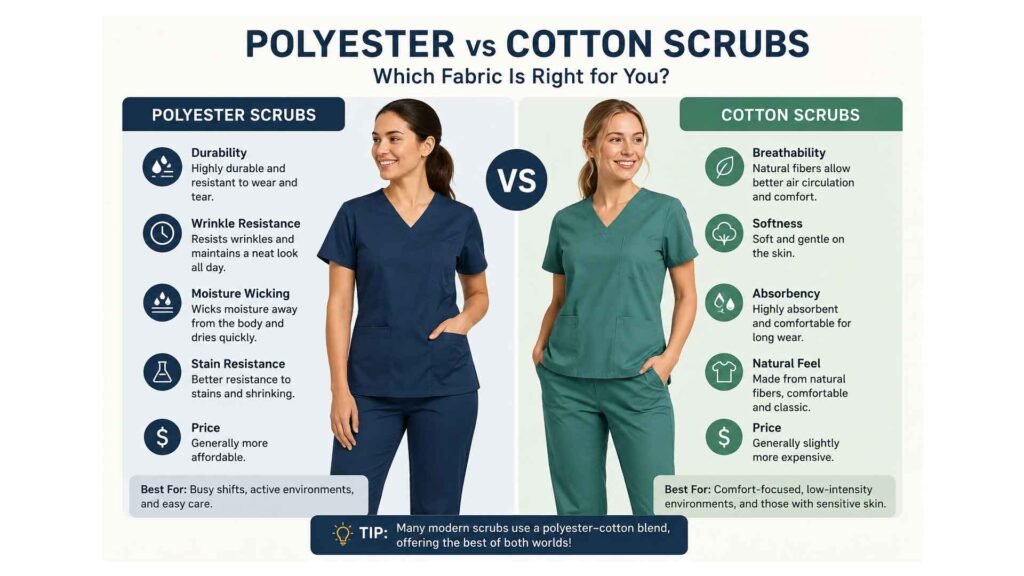
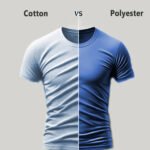
Polyester vs Cotton Scrubs
First, a Quick Clarification
Most scrubs sold today are not 100% polyester or 100% cotton. They're blends. The two most common are:
| Blend | Composition | Nickname |
|---|---|---|
| TC (Terylene-Cotton) | 65% polyester / 35% cotton | The industry standard for hospital-laundered scrubs |
| CVC (Chief Value Cotton) | 60% cotton / 40% polyester (or 55/45) | 'Cotton-rich' — more comfort, still durable |
| 100% Cotton | 100% cotton | Premium feel, high maintenance |
| 100% Polyester | 100% polyester | Rare in scrubs — cheap, hot, no breathability |
So when we say 'polyester vs. cotton scrubs,' we're really comparing polyester-dominant blends (TC) against cotton-dominant blends (CVC) and 100% cotton.
1. Comfort & Breathability
| Factor | Polyester-Dominant (TC 65/35) | Cotton-Dominant (CVC) | 100% Cotton |
|---|---|---|---|
| Breathability | ★★☆☆☆ | ★★★★☆ | ★★★★★ |
| Moisture absorption | 0.4% (doesn't absorb — sweat stays on skin) | 6–8% (absorbs, feels damp but cool) | 8–10% (absorbs fully, heavy when wet) |
| Skin feel | Smooth, slightly 'plasticky' | Soft, natural | Softest, most natural |
| Best climate | Cool / air-conditioned | Moderate / all-climate | Hot / humid |
Verdict: Cotton wins for comfort. CVC (60/40 cotton-poly) is the best compromise — 80% of the cotton feel with 90% of the poly durability.
What nurses say: In surveys of healthcare workers, comfort ranks as the #1 priority for scrubs (above durability and price). Cotton-rich fabrics score significantly higher in all-day-wear satisfaction.
2. Durability & Lifespan
| Factor | Polyester-Dominant (TC 65/35) | Cotton-Dominant (CVC) | 100% Cotton |
|---|---|---|---|
| Tear strength | ★★★★★ | ★★★★☆ | ★★★☆☆ |
| Abrasion resistance | ★★★★★ | ★★★★☆ | ★★★☆☆ |
| Expected lifespan (home wash) | 2–3 years | 1.5–2.5 years | 1–2 years |
| Expected lifespan (industrial laundry) | 1–2 years | 6–12 months | 3–6 months |
| Pilling resistance | ★★★★☆ | ★★★☆☆ | ★★★★★ (no pilling) |
| Shrinkage | ★★★★☆ (< 2%) | ★★★☆☆ (3–5%) | ★★☆☆☆ (5–8%) |
Verdict: Polyester wins for durability — especially in industrial laundry environments. TC 65/35 is the most durable scrub fabric available.
The industrial laundry factor: Hospital-grade industrial washers use:
- Water temperature: 71–85°C (160–185°F)
- High alkalinity detergents (pH 10–12)
- Chlorine bleach (in many facilities)
- Mechanical agitation far stronger than home machines
100% cotton scrubs degrade rapidly under these conditions — typically 3–6 months before they're thin, faded, and shrunken. TC 65/35 routinely lasts 12–18 months under the same conditions.
3. Wrinkle Resistance
| Fabric | Wrinkle Resistance | Right Out of Dryer | After 8-Hour Shift |
|---|---|---|---|
| Polyester-dominant (TC) | ★★★★★ | Crisp, no ironing needed | Still presentable |
| CVC (60/40 cotton) | ★★★★☆ | Good, minor wrinkles | Slightly rumpled |
| 100% Cotton | ★★☆☆☆ | Needs ironing | Wrinkled and worn-looking |
Verdict: Polyester blends win — no ironing, professional appearance through a full shift.
This is why most hospitals that supply scrubs to staff choose TC 65/35. Scrubs come out of the industrial dryer ready to wear. No pressing, no steaming, no individual folding to prevent wrinkles.
4. Stain Resistance & Cleaning
| Fabric | Oil/Grease Stains | Blood/Biofluid Stains | Coffee/Food Stains | Bleach Response |
|---|---|---|---|---|
| Polyester-dominant | ★★★★☆ (resists absorption, wipes off) | ★★★★☆ (washes out cleanly) | ★★★★☆ (resists) | ❌ Chlorine bleach yellowes polyester |
| CVC (60/40) | ★★★☆☆ | ★★★☆☆ | ★★★☆☆ | ⚠️ Cotton absorbs bleach, may fade |
| 100% Cotton | ★★☆☆☆ (absorbs oils) | ★★★☆☆ (stains set if not washed immediately) | ★★☆☆☆ | ✅ Bleach-safe, but weakens fibers |
Verdict: Polyester-dominant resists stains better. But cannot tolerate chlorine bleach — use oxygen bleach (peroxide-based) instead.
Practical note for hospitals: If your laundry uses chlorine bleach (common in many hospitals), cotton or CVC scrubs will fade rapidly. TC 65/35 yellowes under chlorine bleach but doesn't fade unevenly. The best solution: specify oxygen bleach (peroxide) for all colored scrubs regardless of fabric.
5. Color Fading & Colorfastness
| Factor | Polyester-Dominant | CVC | 100% Cotton |
|---|---|---|---|
| Dye type used | Disperse dye (color locked inside fiber) | Reactive / vat dye (bonded to fiber surface) | Reactive / vat dye |
| Fade resistance (UV) | ★★★★★ | ★★★★☆ | ★★★☆☆ |
| Fade resistance (washing) | ★★★★★ | ★★★☆☆ | ★★★☆☆ |
| Color consistency (batch to batch) | ★★★★★ | ★★★★☆ | ★★★☆☆ |
| Indigo/crocking (color rub-off) | None | Low with quality dye | Low with quality dye |
Verdict: Polyester-dominant wins for color retention. Disperse dyes are 'dope-dyed' into the polyester fiber during extrusion — the color is part of the fiber, not a surface coating.
For healthcare facilities that want consistent scrub color across hundreds of employees over years, TC 65/35 is the most reliable choice. Cotton-dominant scrubs from different production batches will show visible color variation.
6. Breathability & Heat Management
| Condition | Polyester-Dominant | CVC | 100% Cotton |
|---|---|---|---|
| Air-conditioned hospital (20–23°C) | Comfortable | Comfortable | Comfortable |
| Warm unit (25–28°C) | Warm, slightly clammy | Comfortable | Comfortable |
| Hot / humid (30°C+, no AC) | Uncomfortable | Tolerable | Best |
| Outdoor / emergency scene (35°C) | Poor — sweat trapped against skin | Moderate — absorbs sweat | Best — breathes, absorbs |
Verdict: Cotton wins in heat. CVC is the practical compromise for most hospital environments.
Workaround for polyester-dominant scrubs: If you need the durability of TC but work in a hot environment, choose lighter-weight fabric (180–200 GSM instead of 220–250 GSM) and look for moisture-wicking finishes.
7. Antimicrobial Properties
| Fabric | Inherent Antimicrobial | Can Be Treated? |
|---|---|---|
| Polyester-dominant | No | ✅ Silver-ion, quaternary ammonium, or copper treatments bond well to polyester |
| CVC | No | ✅ Treated CVC scrubs are common |
| 100% Cotton | No | ✅ Can be treated, but treatment washes off faster |
Verdict: No fabric has inherent antimicrobial properties — they all require treatment. Polyester-dominant fabrics retain antimicrobial treatments longer because the fibers don't swell and degrade like cotton in washing.
8. Stretch & Mobility
| Factor | Polyester-Dominant (TC) | CVC | Performance Stretch (poly-cotton-spandex) |
|---|---|---|---|
| Natural stretch | None — rigid woven | None — rigid woven | ★★★★★ (2–5% spandex) |
| Mobility | Limited by cut/design | Limited by cut/design | Excellent — bends, reaches, squats |
Important: Standard TC and CVC scrubs are both rigid wovens — neither stretches on its own. If mobility is a priority (ER, surgery, cath lab), the best choice is performance stretch fabric — a poly-cotton-spandex blend (typically 62% polyester, 33% cotton, 5% spandex).
Stretch fabric is a separate category from the polyester vs. cotton debate. It adds cost but is increasingly preferred by nurses who want mobility without sacrificing durability.
9. Price Comparison
| Fabric | Typical Cost (Top + Pant) | Cost Per Year (Home Wash) | Cost Per Year (Industrial Laundry Service) |
|---|---|---|---|
| Polyester-dominant (TC) | $12–18 | $6–9/year (2 year life) | $12–18/year (replaced at 12–18 months) |
| CVC (60/40) | $15–22 | $7–11/year | $22–44/year (6–12 month life) |
| 100% Cotton | $18–28 | $9–14/year (2 year life if home-washed) | $36–56/year (3–6 month life) |
| Performance stretch | $25–40 | $12–20/year | Not recommended (spandex degrades in industrial wash) |
Verdict: TC 65/35 is the lowest cost-per-wear option, especially for industrial laundry programs.
10. Environmental Impact
| Factor | Polyester-Dominant | Cotton-Dominant |
|---|---|---|
| Raw material source | Petroleum-based (non-renewable) | Plant-based (renewable) |
| Water usage in production | Low | Very high — cotton is water-intensive |
| Carbon footprint | Moderate | Moderate |
| Microplastic shedding | ★☆☆☆☆ (sheds microplastics in wash) | ★★★★★ (natural fiber, biodegradable) |
| Recyclability | Recyclable (rPET options available) | Biodegradable |
| End of life | Not biodegradable | Biodegradable in 3–6 months |
Verdict: Cotton wins on biodegradability and microplastic shedding. Polyester wins on water usage in production. Recycled polyester (rPET) scrubs are becoming available — these reduce petroleum dependency.
11. Fire & Safety Regulations
| Factor | Polyester-Dominant | CVC | 100% Cotton |
|---|---|---|---|
| Melt/drip risk | ★☆☆☆☆ — polyester melts and drips | ★★★★☆ — cotton chars, doesn't melt | ★★★★★ — no melt, no drip |
| Flame resistance (inherent) | No (melts) | No, but safer than pure poly | No, but safer than poly |
| FR treatment possible | Yes (FR polyester exists) | Yes (FR cotton treatment) | Yes (FR treatment — Proban, Pyrovatex) |
Verdict: For standard medical environments, any fabric is acceptable. For OR environments with electrosurgery or laser risk, cotton or CVC is preferred — polyester's melt/drip risk is a safety concern.
12. Quick Reference Decision Matrix
| If You Need... | Best Choice | Why |
|---|---|---|
| Maximum durability (industrial laundry) | TC 65/35 (polyester-dominant) | Survives 85°C wash, strong chemicals, high agitation |
| Maximum comfort (home wash) | CVC (60/40 cotton-poly) or 100% cotton | Breathable, soft, natural feel |
| Best value (cost per wear) | TC 65/35 | Lowest cost per year in any laundry system |
| Best for hot climates | 100% cotton or CVC | Breathable, absorbs sweat |
| Best color retention (hospital system) | TC 65/35 | Disperse dyes, consistent batch-to-batch |
| Best stain resistance | TC 65/35 | Polyester resists absorption, washes clean |
| Best for ER / high-mobility | Performance stretch (poly-cotton-spandex) | Stretch, recovery, mobility |
| Best for OR / laser environment | 100% cotton or CVC | No melt/drip risk |
| Best for sustainability | 100% cotton (biodegradable) or rPET scrub | Renewable or recycled |
| Best all-around choice (hospital) | CVC 60/40 (260–300 GSM) | Best balance of comfort + durability + cost |
The Bottom Line
For hospitals and healthcare facilities (industrial laundry): Choose TC 65/35 or CVC 60/40. TC is more durable; CVC is more comfortable. Both survive industrial laundry. Your choice depends on staff comfort priorities vs. budget priorities.
For individual nurses (home wash): Choose CVC 60/40 or performance stretch. Home washing is gentler, so you don't need the industrial-grade durability of TC. Cotton-rich fabrics breathe better and feel better for 12-hour shifts.
For OR / procedural areas: Choose 100% cotton or high-cotton CVC. No melt/drip risk around electrosurgery.
For hot / outdoor / emergency environments: Choose CVC or 100% cotton — breathability matters most when the AC isn't nearby.
Polyester vs. Cotton Scrubs — Quick Comparison Table
| Factor | TC 65/35 (Poly-Dominant) | CVC (Cotton-Dominant) | 100% Cotton |
|---|---|---|---|
| Durability | ★★★★★ | ★★★★☆ | ★★★☆☆ |
| Comfort | ★★☆☆☆ | ★★★★☆ | ★★★★★ |
| Wrinkle resistance | ★★★★★ | ★★★★☆ | ★★☆☆☆ |
| Stain resistance | ★★★★★ | ★★★☆☆ | ★★☆☆☆ |
| Color retention | ★★★★★ | ★★★☆☆ | ★★★☆☆ |
| Breathability | ★★☆☆☆ | ★★★★☆ | ★★★★★ |
| Industrial laundry | ★★★★★ | ★★★☆☆ | ★★☆☆☆ |
| Cost per year | $6–18 | $7–44 | $9–56 |
| Best climate | Cool/AC | Moderate/all | Hot/humid |
About Xingye Textile — Medical Scrub Fabric Manufacturer
XINGYE TEXTILE manufactures medical scrub fabrics and finished scrubs for healthcare facilities, scrub brands, and medical uniform programs. With 30 years in textile manufacturing, we supply both TC 65/35 and CVC scrub fabrics to customers in 50+ countries.
Our scrub fabric range:
| Fabric | Composition | Weight | Best For |
|---|---|---|---|
| TC 65/35 Twill | 65% polyester / 35% cotton | 200–250 GSM | Hospital programs — maximum durability, industrial laundry, colorfast |
| CVC 60/40 Twill | 60% cotton / 40% polyester | 220–280 GSM | Premium scrubs — cotton-rich comfort with wrinkle resistance |
| 100% Cotton Twill | 100% cotton | 260–360 GSM | OR scrubs, premium uniforms, hot climates |
| Cotton Jersey Knit | 100% cotton or CVC | 180–220 GSM | Comfort scrubs, home health, private practice |
| Performance Stretch Woven | Poly-cotton-spandex | 180–220 GSM | Modern stretch scrubs — ER, cath lab, high-mobility |
Our capabilities:
- ✅ Custom Pantone color matching
- ✅ Antimicrobial treatment (silver-ion / quaternary ammonium)
- ✅ Moisture-wicking finish available
- ✅ AATCC washfastness Grade 4+
- ✅ Single-dye-lot production for healthcare systems
- ✅ Finished garment manufacturing — scrub tops, pants, lab coats
- ✅ Private labeling for scrub brands
Looking for scrub fabric for a hospital program or scrub line? [Contact us] for samples, spec sheets, and bulk pricing.