In industries where fire hazards, electrical arcs, and molten metal splashes are everyday risks, flame resistant (FR) fabrics play a crucial role in protecting workers from severe injuries. Whether you’re a safety manager, garment manufacturer, or end-user, understanding the difference between FR treated vs inherently FR fabric is essential for selecting the right protective clothing. Both types offer certified flame resistance but achieve it through distinct technologies, each with unique benefits and limitations. This article unpacks these differences, supported by insights from industry leaders and standards, helping you make informed decisions for workplace safety.
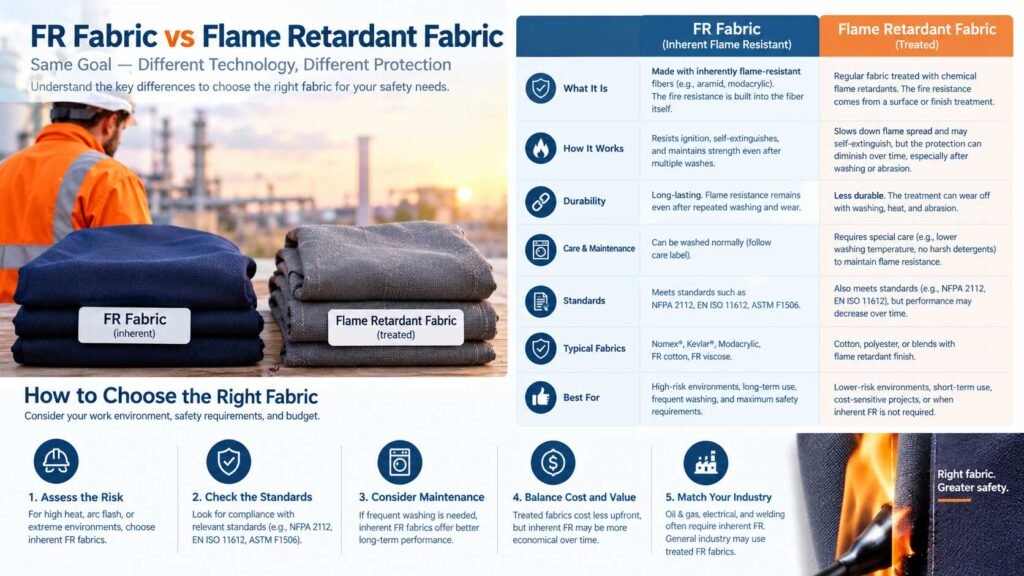
FR Treated vs Inherently FR Fabric
What Are Flame Resistant Fabrics?
Flame resistant fabrics are specially engineered textiles designed to resist ignition and self-extinguish when exposed to flames. Unlike ordinary fabrics, FR materials minimize burn injuries by preventing the fabric from continuing to burn once the heat source is removed. These fabrics are integral to personal protective equipment (PPE) in hazardous sectors such as oil and gas, electrical utilities, welding, and emergency response.
Understanding FR Treated vs Inherently FR Fabric
1. Inherently Flame Resistant Fabrics
Inherent FR fabrics are made from fibers whose flame resistance is built into their molecular structure. This intrinsic property means the fabric naturally resists burning without any additional chemical treatment.
- Common Fibers: Aramids (e.g., Nomex®, Kevlar®), modacrylics, FR viscose/rayon, and polybenzimidazole (PBI).
- Protection Mechanism: These fibers char and carbonize at high temperatures, creating a protective barrier that insulates the wearer and prevents melting or dripping.
- Durability: The flame resistance is permanent and cannot be washed or worn out, ensuring consistent protection throughout the garment’s life.
- Typical Applications: High-risk environments such as electrical utilities, firefighting, welding, and oil & gas industries.
- Advantages:
- Permanent flame protection.
- Excellent thermal stability.
- High durability through repeated industrial laundering.
- Multi-risk protection (arc flash, welding, chemical splash).
- Disadvantages:
- Generally higher initial cost.
- May have lower comfort or breathability compared to cotton blends.
- Some fibers can be difficult to dye or less flexible.
2. FR Treated Fabrics
Treated FR fabrics start as conventional textiles, typically cotton or cotton blends, that undergo a chemical treatment process to impart flame resistance.
- Base Materials: 100% cotton or blends like 88% cotton / 12% nylon.
- Protection Mechanism: Chemicals such as phosphorus-based compounds are bonded to the fibers, promoting char formation and flame self-extinguishing when exposed to heat.
- Durability: The treatment is designed to last the garment's lifetime if proper care is followed, but it can degrade with improper laundering, harsh chemicals, or prolonged UV exposure.
- Typical Applications: Industries with lower thermal risk or where garments are frequently replaced, such as general industrial workwear, utilities, and metal fabrication.
- Advantages:
- Cost-effective solution.
- Natural comfort and breathability of cotton.
- Good protection against flash fires and arc flashes.
- Flexibility in fabric weights and constructions.
- Disadvantages:
- Flame resistance may diminish over time or with improper care.
- Lower durability compared to inherent FR fabrics.
- Higher shrinkage and less colorfastness.
Key Differences at a Glance
| Feature | Inherently FR Fabric | FR Treated Fabric |
|---|---|---|
| Flame Resistance Source | Molecular fiber structure | Chemical treatment on fibers |
| Durability | Permanent, does not wash out | Durable if cared for properly; can degrade |
| Typical Fibers | Aramid, modacrylic, PBI | Cotton, cotton blends |
| Cost | Higher upfront cost | More economical |
| Comfort | May be less breathable, heavier | Natural cotton comfort, breathable |
| Maintenance | Less sensitive to laundering | Requires strict laundering guidelines |
| Applications | High-risk, long-term protection needed | Lower-risk, consumable garment environments |
Why Does the Difference Matter?
Choosing between FR treated vs inherently FR fabric is not just a matter of cost or comfort; it directly impacts worker safety and compliance with industry standards like NFPA 2112, NFPA 70E, and ASTM F1506.
- Protection Consistency: Inherent fabrics provide reliable protection throughout the garment's life, ideal for high-risk, long-duration exposure.
- Cost Efficiency: Treated fabrics offer a budget-friendly option for environments where garments are replaced frequently or exposure risk is intermittent.
- Compliance: Both fabric types can meet stringent certifications, but it’s critical to verify third-party testing and labeling for the specific hazard (flash fire, arc flash, welding).
- Garment Lifecycle: Treated fabrics need careful maintenance to preserve FR properties, including avoiding bleach, fabric softeners, and using proper washing temperatures.
Industry Insights and Standards
From Industry Leaders:
-
TenCate Protective Fabrics emphasizes that inherent FR fabrics like aramids and modacrylic blends provide permanent protection and durability, making them suitable for continuous wear in hazardous environments. Treated fabrics are valued for their comfort and cost-effectiveness in lower-risk settings.
-
Klopman highlights the importance of selecting FR fabric based on operational environment and risk assessment. Their K-Flame® range exemplifies inherent FR fabrics offering permanent protection, while their Megatec® line represents advanced treated FR fabrics with lifetime warranties under proper care.
-
Fumao Fabric stresses that inherent FR fibers are “forged from hardened steel,” providing permanent flame resistance, whereas treated FR fabrics are “a coat of armor painted on,” requiring lifecycle management.
Relevant Standards:
- NFPA 2112: Specifies performance requirements for FR fabrics protecting against short-duration thermal exposures (flash fires).
- NFPA 70E: Focuses on electrical safety, requiring arc-rated FR fabrics with defined arc thermal performance values (ATPV).
- ASTM F1506: Defines performance specs for FR and arc-rated textiles.
- ANSI/ISEA 107: Applies when high-visibility and FR properties are combined.
How to Choose the Right FR Fabric for Your Needs
Selecting the appropriate FR fabric depends on several factors:
- Hazard Assessment: Identify the primary risks—flash fire, electric arc, welding sparks, molten metal splash.
- Exposure Duration: Continuous exposure favors inherent FR fabrics; intermittent or short-term exposure may suit treated fabrics.
- Budget Considerations: Balance initial investment with garment lifecycle costs.
- Comfort and Compliance: Ensure fabrics meet comfort expectations to encourage proper wear and comply with all relevant standards.
- Maintenance Capability: Confirm that laundering facilities can manage treated FR fabrics properly to maintain protection.
Best Practices for FR Garment Care
- Follow manufacturer laundering instructions meticulously.
- Avoid bleach, fabric softeners, and harsh chemicals.
- Wash FR garments separately from regular clothing.
- Inspect garments regularly for wear or damage.
- Replace garments that show signs of diminished protection.
Conclusion
Understanding the differences between FR treated vs inherently FR fabric is vital for ensuring workplace safety in hazardous environments. Inherent FR fabrics offer permanent, durable protection suitable for high-risk, long-term applications, while treated FR fabrics provide cost-effective comfort and protection where frequent garment turnover is expected. Both types must meet rigorous safety standards and be properly maintained to deliver reliable performance.
Investing in the right flame resistant fabric not only complies with regulations but also protects lives. Whether you prioritize durability, comfort, or budget, informed decisions backed by industry standards and expert insights will ensure your workforce stays safe.