Choosing the right fabric for school uniforms is a crucial decision that impacts students’ comfort, school identity, and the overall durability of the garment. Unlike everyday clothing, school uniforms undergo rigorous daily wear, frequent washing, and must accommodate a wide range of activities—from classroom learning to outdoor play. Therefore, understanding how to choose fabric for school uniforms is essential for school administrators, parents, and uniform suppliers alike.
In this article, we explore the key factors that influence fabric choice, incorporating insights from recent studies and industry experts to help you make an informed decision. Whether you’re selecting uniforms for primary school children or older students, this guide will provide you with practical advice to balance comfort, durability, appearance, and cost.
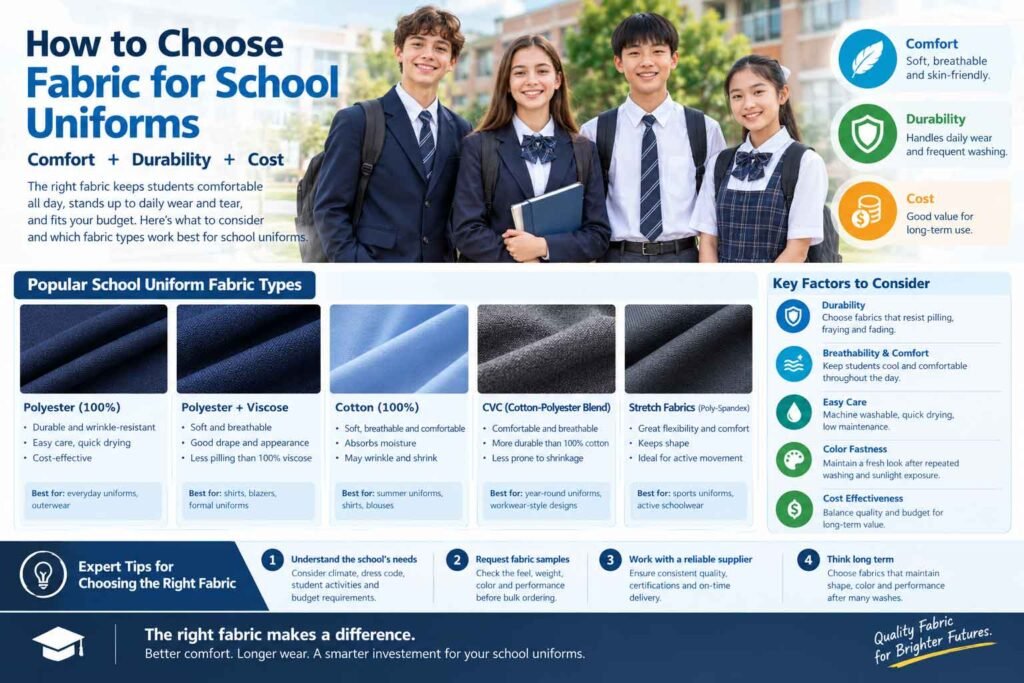
How to Choose Fabric for School Uniforms
Why Fabric Choice Matters for School Uniforms
School uniforms are among the most demanding garments due to their extensive daily use and the physical activities students engage in. The fabric not only defines the uniform’s look but also directly affects:
- Student Comfort: Breathability, softness, and moisture management influence concentration and well-being.
- Durability: Resistance to wear, tear, and fading ensures uniforms last through multiple academic years.
- Maintenance: Easy-care fabrics reduce the burden on parents and school laundry services.
- Safety: Non-toxic materials and proper construction prevent skin irritation and hazards.
Poor fabric selection can lead to discomfort, frequent replacements, and dissatisfaction among students and parents, ultimately affecting the school’s reputation.
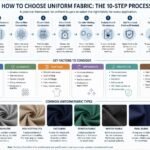
Key Factors to Consider When Choosing Fabric for School Uniforms
1. Comfort and Breathability
Primary school children are highly active, requiring uniforms that allow freedom of movement and regulate body temperature. According to a study conducted among primary school children in Hyderabad, India, children preferred cotton fabrics due to their light weight, excellent moisture absorption, and comfort during physical activities.
Recommendations:
- Choose 100% cotton or cotton-rich blends for superior breathability.
- Avoid high polyester content fabrics in hot climates as they trap heat and moisture.
- Opt for lightweight fabrics (110–160 gsm) for shirts and blouses to enhance comfort.
2. Durability and Longevity
Uniforms must withstand frequent washing and rough use. The fabric should resist pilling, tearing, and color fading.
Industry standards suggest:
- Fabrics should endure at least 50 wash cycles without significant degradation.
- Polyester-cotton blends (e.g., 65/35) offer a good balance between durability and comfort.
- Heavier fabrics like drill or twill (200–300 gsm) are suitable for trousers and skirts due to their structural strength.
3. Easy Care and Maintenance
Parents and schools prefer uniforms that are wrinkle-resistant and quick-drying to minimize ironing and drying time.
- Polyester blends provide better wrinkle resistance than pure cotton.
- Durable press cotton fabrics reduce ironing needs while maintaining comfort.
- Fabrics with good color fastness maintain a neat appearance throughout the school year.
4. Safety and Compliance
Uniform fabrics must meet safety standards, especially for children under 14 years:
- Use certified non-toxic dyes and hypoallergenic materials.
- Avoid loose strings or drawstrings that pose choking hazards.
- Ensure compliance with regional textile safety standards such as Oeko-Tex Standard 100 and flammability regulations.
Popular Fabric Types for School Uniforms
| Fabric Type | Pros | Cons | Best Use Case |
|---|---|---|---|
| 100% Cotton | Highly breathable, soft, hypoallergenic | Wrinkles easily, moderate durability | Hot climates, sensitive skin |
| 65/35 Polyester-Cotton Blend | Durable, wrinkle-resistant, moderate breathability | Slightly less breathable than cotton | General use, balanced climates |
| 80/20 Polyester-Cotton Blend | Very durable, excellent wrinkle resistance | Less breathable, may trap heat | Cooler climates, heavy wear |
| 100% Polyester | Extremely durable, colorfast, wrinkle-free | Poor breathability, synthetic feel | Cool climates, blazers, ties |
| Terry Cotton | Soft, stretchy, moisture-absorbing | Less formal appearance, prone to pilling | Polo shirts, PE uniforms |
| Drill/Twill Fabric | Strong, structured, wear-resistant | Heavier, less breathable | Trousers, skirts, structured garments |
Insights from Research: Preferences of Primary School Children
A detailed survey from Hyderabad highlights important preferences and issues:
- Fabric Preference: 60% of children and parents preferred cotton or cotton blends for comfort.
- Color Choices: Shades of green and blue were favored for their aesthetic appeal and cooling effect.
- Design Elements: Children preferred short sleeves, left-side shirt pockets, and adjustable waistbands for ease of movement.
- Comfort Issues: 60% of children reported discomfort in current uniforms, often due to polyester blends and poor fit at sleeves and waist.
- Durability Concerns: Collars and sleeves tend to wear out faster due to physical activity.
Takeaway: Selecting soft, breathable cotton or cotton-rich fabrics with thoughtful construction can significantly enhance satisfaction and comfort.
How Climate Influences Fabric Choice
- Hot and Humid Climates: Prioritize 100% cotton or 50/50 poly-cotton blends with moisture-wicking finishes. Avoid heavy fabrics above 180 gsm.
- Temperate Climates: 65/35 poly-cotton blends balance durability and comfort.
- Cold Climates: Use heavier polyester blends, wool blends, or fleece for warmth and structure.
Construction and Functional Features to Complement Fabric Choice
- Use flat seams and narrow seam allowances to prevent skin irritation.
- Incorporate adjustable waistbands and raglan sleeves for unrestricted movement.
- Choose functional fasteners such as small buttons for shirts and zippers or elastic for shorts.
- Ensure ample seam allowance for alterations as children grow.
Practical Tips for Selecting School Uniform Fabric
- Request Fabric Samples: Evaluate hand feel, weight, and color accuracy before bulk ordering.
- Check Certifications: Ask for Oeko-Tex, ISO, or ASTM certification to ensure safety and quality.
- Consider Total Cost of Ownership: Higher quality fabrics may have a higher upfront cost but save money by lasting longer.
- Engage Stakeholders: Include feedback from students, parents, and teachers to select suitable fabrics and designs.
- Plan for Maintenance: Provide clear washing and care instructions to prolong fabric life.
Conclusion
Choosing the right fabric for school uniforms is a balancing act between comfort, durability, appearance, and cost. Prioritizing breathable, soft, and durable fabrics like 100% cotton or 65/35 polyester-cotton blends can significantly improve student satisfaction and uniform longevity. Incorporating thoughtful design features and adhering to safety standards ensures uniforms support students’ active lifestyles and diverse needs.
By following this comprehensive guide on how to choose fabric for school uniforms, schools and parents can make informed decisions that enhance comfort, reduce replacement costs, and maintain a polished school image.
Call to Action
Ready to select the perfect fabric for your school uniforms? Start by requesting samples from trusted suppliers, involve your school community in the decision-making process, and prioritize fabrics that balance comfort and durability. Share this guide with fellow educators and parents to help everyone make smarter uniform choices!