Why Dental Uniforms Are Different from Medical Scrubs
If you walk into a dentist's office and compare what the staff is wearing to what you see in a hospital, you'll notice a difference. The colors are often different. The fit is often different. And many dental professionals wear a lab coat over their scrubs in a way that's less common in general medicine.
That's because dental uniforms have requirements that hospital scrubs don't:
- Protection from airborne particles — drilling, scaling, and polishing create aerosol spray
- Protection from chemical exposure — dental adhesives, etching agents, and disinfectants
- A professional, calming appearance — patients are already anxious; the uniform shouldn't add to it
- Frequent laundering — dental uniforms are typically washed after every shift, sometimes more often
This guide covers what dentists wear, what dental assistants wear, what hygienists wear, the fabrics that work best for dental environments, and how to choose uniforms for a dental practice.
What Do Dentists Wear
Who Wears What in a Dental Practice
A dental office has several roles, each with a slightly different uniform:
| Role | Typical Uniform | Why This Difference |
|---|---|---|
| Dentist | Scrubs or button-up + trousers + lab coat (optional) | Needs range of motion for procedures. Lab coat adds professionalism and pocket space |
| Dental hygienist | Scrubs (top + pants) + sometimes a lab coat | Closest patient contact — needs maximum protection from aerosol spray |
| Dental assistant | Scrubs (top + pants) + protective eyewear + mask | Works chairside — needs functional pockets for instruments |
| Front desk / reception | Button-up shirt or blouse + trousers, or uniform scrubs | Patient-facing but not clinical — focus on professional appearance |
| Dental lab technician | Lab coat or apron over casual clothes | Works with materials — plaster, wax, acrylic. Apron protects clothing |
What Do Dentists Wear?
The short answer: most dentists wear medical scrubs, sometimes with a lab coat over them.
The image of a dentist in a white lab coat over a dress shirt and tie is largely a thing of the past. Modern dentists overwhelmingly wear scrubs — for comfort, practicality, and infection control.
| Garment | Typical Style | Why |
|---|---|---|
| Scrub top | V-neck or round-neck, short sleeve, 2-4 pockets | Range of motion for procedures, easy to wash, professional |
| Scrub pants | Straight-leg or jogger-style with elastic waist | Comfort for long procedures, no restrictive waistband |
| Lab coat (optional) | Short or long sleeve, hip or knee length | Adds professionalism for patient-facing interactions, extra pocket space, protection for the scrub underneath |
| Closed-toe shoes | Clogs or athletic-style with non-slip sole | Standing for long procedures, protection from dropped instruments or chemicals |
| Protective eyewear | Prescription or over-glasses safety glasses | Mandatory — protection from aerosol spray and flying debris |
Scrubs vs Lab Coats — When Does a Dentist Wear Which?
The choice between scrubs alone and scrubs + lab coat depends on the practice type and personal preference.
| Practice Type | Typical Attire | Why |
|---|---|---|
| General dentistry | Scrubs — most common | Comfortable, practical, easy to clean |
| Cosmetic dentistry | Scrubs + white lab coat | More formal appearance, patient-facing polish |
| Pediatric dentistry | Colorful or printed scrubs | Less intimidating for children |
| Oral surgery | Surgical scrubs + cap + mask | Higher biohazard exposure, stricter protocol |
| Orthodontics | Scrubs or polo + pants | Less aerosol exposure than general dentistry |
Lab coats add a layer of credibility and protection. Many dentists wear a clean lab coat over their scrubs when greeting patients and consulting, then remove it for procedures where it would restrict movement.
What Fabric Is Best for Dental Uniforms?
Dental uniforms face specific challenges that general medical scrubs don't:
| Challenge | What Happens | What Fabric Works |
|---|---|---|
| Aerosol spray | Fine particles of saliva, blood, and drilling debris land on the uniform | A hydrophobic finish causes liquids to bead and roll off |
| Chemical exposure | Bonding agents, etchants, disinfectants can stain or degrade fabric | Polyester-rich fabrics resist chemical damage better than cotton |
| Frequent washing | Dental uniforms are washed after every shift — 5-7 times per week | TC 65/35 or TR 65/35 — survive 80-100 industrial wash cycles |
| Heat | Procedure rooms can be warm under bright lights and PPE | Moisture-wicking performance fabrics keep the wearer cool |
| Stain visibility | Blood, saliva, contrast materials — some stains are inevitable | Darker colors or prints hide stains. White lab coats can be bleached |
| Fabric | Best For | Performance |
|---|---|---|
| TC 65/35 (poly-cotton) | General scrubs, lab coats | Wrinkle-resistant, breathable, durable, affordable. Good for daily use |
| TR 65/35 (poly-viscose) | Premium scrubs, dressier lab coats | Better drape, sharper appearance, softer hand feel. Less breathable than TC |
| Performance polyester with spandex | Stretch scrubs for active practitioners | 4-way stretch, moisture-wicking, lightweight. Higher cost |
| 100% Cotton — treated | Lab coats (bleachable) | Can be washed hot with bleach, professional appearance. Wrinkles more than blends |
| Fluid-resistant fabric | Oral surgery, high-aerosol procedures | Liquid barrier protection, often reusable or disposable |
Key Features a Dental Uniform Needs
Pockets that hold instruments. Dentists and assistants carry instruments, gloves, masks, pens, a phone, and sometimes a loupe case.
| Where | What For | |
|---|---|---|
| 2 chest pockets (scrub top) | Left and right chest | Pen slot, small instruments, phone, glasses |
| Cargo pockets (pants) | Thigh level | Gloves, mask, instrument case, phone |
| Hidden / zippered pocket | Inside scrub top | Keys, personal items |
| Instrument loop | Chest or shoulder | Some scrubs have a loop for holding an instrument temporarily |
Stain resistance. Dental materials stain — bonding agents, temporary cements, disclosing solution, and blood. A stain-resistant finish (hydrophobic treatment) is highly recommended for dental uniforms.
Range of motion. Dental procedures require leaning over patients, reaching for instruments, and maintaining awkward postures for extended periods. A snug scrub top that binds at the shoulders will cause fatigue. Look for:
- Set-in sleeves with room in the armhole
- Fabric with 2-5% spandex for stretch
- Straight or slightly tapered leg (not tight)
Wrinkle resistance. Dental scrub uniforms are washed frequently and worn directly out of the dryer. Wrinkle-resistant poly-cotton blends require no ironing and look professional through an entire day.
Fluid resistance (for high-exposure roles). Oral surgeons and hygienists working in high-aerosol environments benefit from fluid-resistant fabric treatments or wearing a fluid-resistant lab coat as a barrier.
Colors in Dentistry — What Different Colors Signal
| Color | Typical Use | Why |
|---|---|---|
| White | Dentists (traditional), lab coats | Cleanliness, professionalism, formality — but difficult to keep clean |
| Navy | All roles — most common modern color | Professional, hides stains, looks good on all body types |
| Royal blue | Hygienists, dental assistants | Clean, bright, approachable |
| Ceil blue / light blue | General dental uniform color | Calming for patients, traditional medical color |
| Burgundy / wine | Dentists, practice owners | Distinctive, premium look |
| Charcoal / grey | All roles | Modern, professional, hides stains |
| Prints / patterns | Pediatric dentistry | Less intimidating for children, hides stains effectively |
What Do Hygienists Wear?
Dental hygienists typically wear scrubs — similar to dentists but often in a different color to distinguish roles within the practice.
- Scrub top + scrub pants — standard across most practices
- Lab coat — optional — some practices require it, some don't
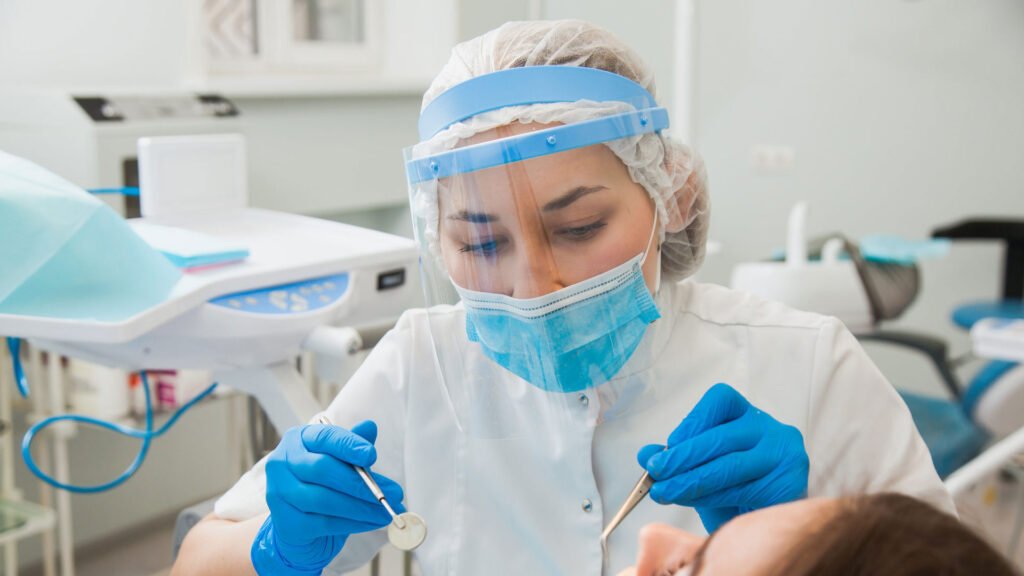
- Protective eyewear + mask — mandatory for all patient care
- Face shield (optional) — added protection during ultrasonic scaling
Hygienists spend more time than dentists in direct contact with aerosol spray (ultrasonic scaling creates significant aerosol). Fluid-resistant scrubs or a fluid-resistant lab coat is more important for hygienists than for any other role in the practice.
What Do Dental Assistants Wear?
Dental assistants wear scrubs designed for functionality and movement:
- Scrub top with multiple pockets — holds instruments, gauze, suction tips, and other chairside tools
- Scrub pants with cargo pockets — extra storage for frequently needed items
- Protective eyewear + mask — mandatory
- Loupes (optional) — some assistants wear magnification loupes for procedure assistance
Lab Coats — The Over Layer That Completes the Uniform
Many dentists wear a lab coat over their scrubs. The lab coat serves several functions:
| Function | Why It Matters |
|---|---|
| Protection | The lab coat takes the brunt of aerosol spray, chemical splashes, and debris. It protects the scrub underneath and extends garment life |
| Professionalism | A clean white lab coat instantly signals 'medical professional' to patients |
| Pocket space | Lab coats have more and larger pockets than scrub tops |
| Easy change | Remove the lab coat at the end of the day — the scrub underneath is still clean |
| Layer | Adds warmth in air-conditioned offices, removable during procedures |
Lab coat fabrics:
- TC 65/35 twill (200-240 GSM) — most common. Wrinkle-resistant, affordable, professional
- TR 65/35 gabardine — premium option. Sharper drape, better appearance
- 100% Cotton poplin — traditional. Can be bleached. Wrinkles more than blends
How to Choose Dental Uniforms for a Practice
If you're buying uniforms for a dental practice, here's what to specify:
| For | Recommended Spec | Why |
|---|---|---|
| Scrub top | TC 65/35 or stretch performance fabric, 180-220 GSM, v-neck, 2 chest pockets, pen slot | Comfortable, wrinkle-resistant, professional |
| Scrub pants | TC 65/35 twill or stretch poplin, 200-240 GSM, elastic waist, cargo pockets | Durable, comfortable for long procedures, functional storage |
| Lab coat | TC 65/35 twill, 200-240 GSM, white, knee-length, 2 chest pockets + 2 lower pockets, side vents | Professional, protective, easy to clean |
| Colors | Practice-specific color scheme. Stock colors for easy re-order | Visual consistency across the team |
| Sizing | XS to 3X minimum. Unisex or women's specific fit | Diverse body types in any practice |
| Care | Industrial laundry compatible. Bleach-safe for white items | Dental uniforms are washed frequently and aggressively |
How Many Uniforms Does a Dental Professional Need?
| Items Per Person | Scenario |
|---|---|
| 5-7 scrub sets | Standard — one per day per week, plus backup |
| 2-3 lab coats | Rotate between washes. Lab coats need frequent laundering |
| 3-4 pairs of pants | Pants wear faster than tops — order extras |
Frequently Asked Questions
Q: Why do dentists wear scrubs instead of white coats? A: Scrubs are more comfortable, easier to wash, and allow better range of motion during procedures. Many dentists wear both — scrubs under a lab coat for consulting, removing the coat for procedures.
Q: Do dentists wear white coats anymore? A: Yes — but usually as an over-layer rather than their primary uniform. A white lab coat over scrubs is common in cosmetic dentistry and for patient consultations. Pure white coat without scrubs underneath is increasingly rare.
Q: Why do dental scrubs come in so many colors? A: Color helps distinguish roles within the practice (dentist in navy, hygienist in royal blue, assistant in ceil blue) and creates a less clinical, more welcoming environment than hospital-style whites.
Q: What shoes do dentists wear? A: Closed-toe, non-slip, comfortable for standing. Dental clogs or athletic-style shoes with slip-resistant soles are standard. Many dentists change into clinical-only shoes at the practice.
Q: How often should dental uniforms be replaced? A: With quality TC fabric and daily washing: scrub sets every 12-18 months, lab coats every 18-24 months, or when visible staining or fabric thinning occurs.
Get a Quote — Dental Uniforms and Lab Coats
XINGYE TEXTILE manufactures dental uniforms for dentists, hygienists, assistants, and reception staff. Scrubs in TC 65/35, stretch performance fabric, and antimicrobial-treated options. Lab coats in poly-cotton twill and TR gabardine. Custom color matching for practice-specific uniform programs. Stain-resistant and fluid-resistant finishes available. Industrial laundry rated.
Minimum order: 500 pieces per color/size. Sample-first ordering.