When it comes to flame resistant (FR) clothing, selecting the right fabric can be a matter of safety, comfort, and cost-efficiency. Two primary types of flame resistant fabrics dominate the market: FR treated cotton and inherently FR fabric. Understanding the differences between these materials is crucial for safety managers, procurement specialists, and workers who rely on protective clothing to mitigate fire and arc flash hazards.
This article explores the distinctions between FR treated cotton and inherently FR fabric, diving into their properties, performance, durability, and applications. Whether you’re outfitting a team in the oil and gas industry, electrical utilities, or manufacturing, this guide will help you make an informed decision.
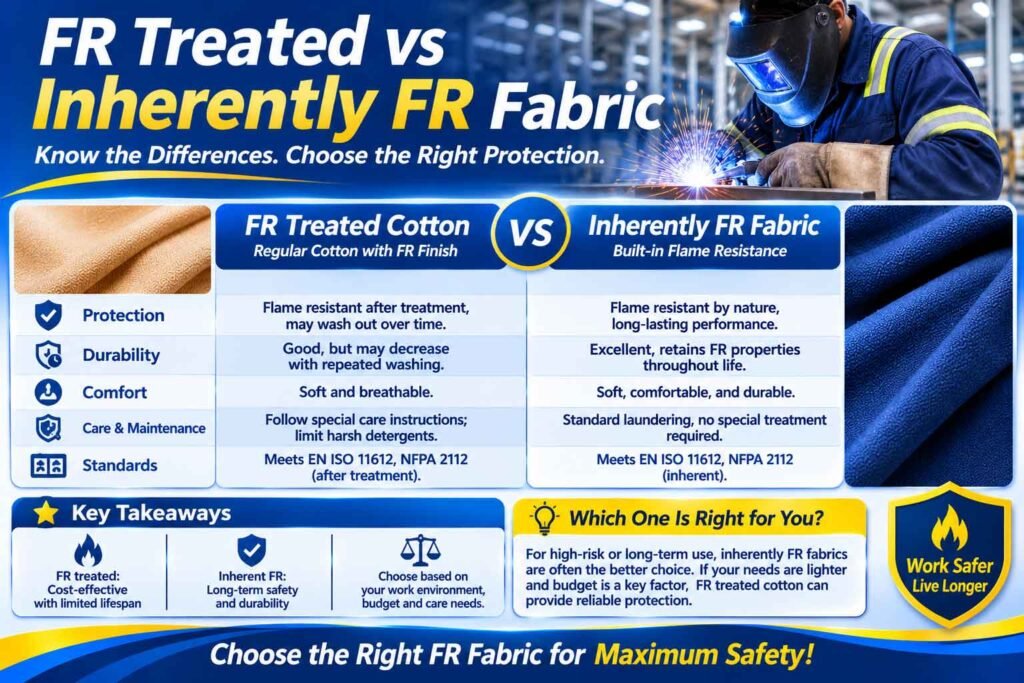
FR Treated Cotton vs Inherently FR Fabric
What Are FR Treated Cotton and Inherently FR Fabric?
FR Treated Cotton refers to natural cotton fabric that has undergone a chemical treatment process to impart flame resistance. The treatment bonds flame retardant chemicals to the cotton fibers, enabling the fabric to resist ignition and self-extinguish when exposed to flame. However, the cotton fibers themselves are not inherently flame resistant.
Inherently FR Fabric, on the other hand, is made from fibers that possess flame resistance at the molecular level. Examples include aramid fibers (such as meta-aramid and para-aramid) and modacrylic fibers. The flame resistant properties are built into the fiber’s chemical structure, making them permanent and unable to wash out or wear away.
Key Differences Between FR Treated Cotton and Inherently FR Fabric
| Feature | FR Treated Cotton | Inherently FR Fabric |
|---|---|---|
| Flame Resistance Source | Chemical treatment applied after fabric production | Built into fiber’s molecular structure |
| Durability of FR Properties | Can diminish over time with improper laundering or exposure to chemicals | Permanent; cannot be washed out or worn away |
| Comfort | Soft, breathable, natural cotton feel | Varies; aramid fabrics can be stiffer, modacrylic blends softer |
| Weight | Generally heavier for equivalent protection | Typically lighter for the same level of protection |
| Cost | More affordable upfront | Higher initial cost but longer lifespan |
| Laundering Sensitivity | Sensitive to chlorine bleach and harsh chemicals | Resistant to laundering effects, including bleach |
| Typical Applications | General industrial wear, utility workers, oil and gas | High-heat environments, electrical arc flash, petrochemical, welding |
Durability and Protection: Why Inherent FR Fabric Excels
One of the most critical factors in choosing FR fabric is how well it maintains protection over time. According to the DuPont Thermal Technical Bulletin, inherently FR fabrics like Nomex® IIIA and Protera™ provide flame resistance that lasts the life of the garment. Their protection cannot be washed out or worn away, regardless of laundering practices, making them highly reliable in demanding environments.
In contrast, FR treated cotton fabrics rely on chemical treatments that can degrade with repeated washing, especially if chlorine bleach or oxidizing agents are used. Studies have shown that after as few as 10 washes with chlorine bleach, FR treated cotton/nylon blends may fail to meet the NFPA 2112 char length requirements, compromising wearer safety without visible signs of damage.
Comfort and Performance: Balancing Protection and Wearability
Comfort plays a vital role in ensuring compliance with safety protocols. Workers are more likely to consistently wear protective clothing that feels comfortable throughout long shifts.
-
FR Treated Cotton offers the familiar softness, breathability, and moisture absorption of natural cotton. It is widely favored for daily wear garments like shirts, jeans, and coveralls, especially in moderate hazard environments.
-
Inherently FR Fabrics such as aramid blends provide excellent thermal protection at lighter weights but may feel stiffer or less breathable. Modacrylic blends offer a softer hand feel and good moisture management, making them suitable for base layers and garments worn close to the skin.
The choice often comes down to the specific work environment and wearer preferences. For example, in hot climates or situations requiring extended wear, lighter inherent fabrics can reduce heat stress, enhancing overall safety.
Compliance and Standards: Meeting NFPA 2112 and NFPA 70E
Understanding the relevant safety standards is essential when selecting FR fabrics.
-
NFPA 2112 governs flash fire protection and requires garments to meet strict criteria for flame resistance, heat transfer, and durability. Both FR treated cotton and inherently FR fabrics can be certified to NFPA 2112, but inherent fabrics generally maintain compliance longer due to their permanent flame resistance.
-
NFPA 70E addresses arc flash hazards with arc rating requirements measured in calories per square centimeter (cal/cm²). Inherently FR fabrics, especially aramid blends, are commonly used for arc-rated clothing because they offer consistent protection through multiple washes.
It’s important to note that while both fabric types can meet these standards, only inherently FR fabrics guarantee permanent flame resistance regardless of laundering or environmental exposure.
Maintenance and Care: Protecting Your Investment
Proper laundering is critical for preserving flame resistance, particularly with FR treated cotton.
Do’s for FR Treated Cotton:
- Follow manufacturer care instructions precisely.
- Avoid chlorine bleach and hydrogen peroxide.
- Use mild detergents and soft water when possible.
- Wash FR garments separately from regular clothing.
- Inspect garments regularly for damage or contamination.
Do’s for Inherently FR Fabrics:
- Follow care instructions to maintain fabric integrity.
- Chlorine bleach may be used cautiously but can affect fabric color and strength.
- Avoid fabric softeners and dryer sheets that may introduce flammable residues.
Industrial laundering services familiar with FR garment care can extend the life of both fabric types, but inherent FR fabrics generally require less stringent handling to maintain protection.
Cost Considerations: Initial vs. Lifecycle Investment
FR treated cotton garments typically have a lower upfront cost, making them attractive for large uniform programs or applications with frequent garment turnover.
Inherently FR fabrics, though more expensive initially, often provide better lifecycle value due to their durability and sustained protection. This can translate into fewer replacements and reduced safety risks over time.
When to Choose FR Treated Cotton vs. Inherently FR Fabric
| Scenario | Recommended Fabric Type |
|---|---|
| Budget-conscious programs requiring comfortable daily wear | FR Treated Cotton |
| High-risk environments with flash fire or arc flash hazards | Inherently FR Fabric |
| Workplaces with industrial laundry facilities and strict garment maintenance | Either, but inherent preferred for longevity |
| Hot climates requiring lightweight, breathable garments | Inherently FR Fabric (modacrylic blends) |
| Jobs involving exposure to oxidizing chemicals or harsh laundering | Inherently FR Fabric |
Conclusion
Choosing between FR treated cotton vs inherently FR fabric is not a simple matter of better or worse—it depends on the specific hazards, work environment, comfort needs, and budget. Inherently FR fabrics offer permanent, reliable protection that withstands harsh conditions and repeated laundering, making them ideal for high-risk applications. FR treated cotton provides comfortable, cost-effective protection suitable for many industrial settings where laundering can be carefully controlled.
For safety managers and workers alike, understanding these differences ensures informed decisions that protect lives without compromising comfort or compliance.