Welding is a demanding profession that exposes workers to intense heat, sparks, molten metal splatter, and harmful UV radiation. Choosing the best fabric for welding uniforms is crucial not only for protection but also for comfort during long hours on the job. With advancements in textile technology, welding apparel now combines safety, ergonomics, and durability like never before.
In this article, we explore the top fabrics used in welding uniforms, their safety certifications, and why flame retardant materials like premium cotton blends and leather reinforcements stand out. Whether you’re a professional welder, safety manager, or purchasing agent, this guide will help you make informed decisions to enhance workplace safety and efficiency.
Best Fabric for Welding Uniforms
Why Fabric Choice Matters in Welding Uniforms
Welding uniforms serve as the first line of defense against hazards such as:
- Flame and spark exposure
- Molten metal splatter
- Electric arc flashes
- Heat and radiant energy
The fabric used must not only resist ignition but also self-extinguish quickly to prevent burns. Additionally, breathability and durability are key for all-day comfort and long service life.
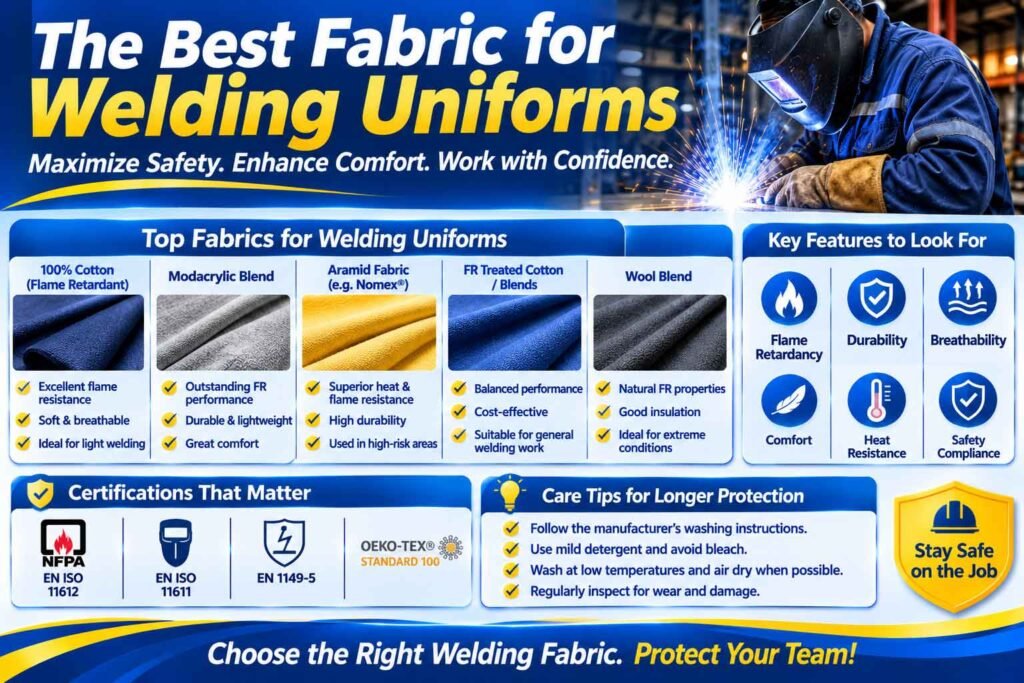
Top Fabrics for Welding Uniforms
1. Flame Retardant (FR) Cotton Fabrics
FR cotton is the industry standard for welding uniforms due to its natural comfort and flame-resistant properties. Treated with flame retardant finishes, these fabrics comply with stringent safety standards such as ASTM D6413, EN ISO 11611, and EN ISO 11612.
- Benefits:
- Self-extinguishing when exposed to flames or sparks.
- Breathable and soft, reducing heat stress.
- Durable through multiple wash cycles (up to 50 washes retaining FR properties).
- Anti-static and anti-microbial coatings available for enhanced safety and hygiene.
- Popular Variants:
- Madeira 260/320 gsm: Long staple cotton with twill weave, ideal for medium-weight garments like jackets and overalls.
- Gefest 420/480 gsm: Heavyweight pure cotton satin weave, suitable for extreme conditions such as offshore oil rigs and shipyards.
- Volcano 260 gsm: A cotton-nylon blend offering enhanced tear resistance and multi-risk protection including acids and oils.
Insight from XM Textiles: Fabrics like Madeira and Gefest are certified to ISO 11611 and ISO 11612, ensuring protection against welding spatter, flash fires, and electric arcs. Their natural fibres provide superior moisture absorption, enhancing wearer comfort.
2. Leather Reinforced Fabrics
Leather, particularly split cowhide, is often combined with FR cotton to reinforce high-wear and high-risk areas such as sleeves, shoulders, and chest.
- Advantages:
- Exceptional resistance to sparks, molten metal, and abrasion.
- Adds durability without compromising flexibility.
- Used in heavy-duty welding jackets and gloves.
From Lincoln Electric’s Welding Apparel Catalogue: Jackets with split leather sleeves and flame retardant cotton bodies offer a balanced solution—keeping welders cool while maximizing protection where it’s needed most.
3. Advanced Arc-Rated Fabrics (e.g., PYRAD® by Gore-Tex Labs)
For welders exposed to electric arc flash hazards, arc-rated fabrics provide certified protection with lightweight comfort.
- Features:
- Single-ply laminate weighing less than 320 g/m².
- Class 2 arc flash protection per IEC 61482 standards.
- High breathability and freedom of movement.
- Made with recycled polyester and carbon fibers for sustainability.
Gore-Tex Labs’ PYRAD® Uniform represents the future of welding protective clothing by combining multi-norm compliance with minimal bulk, ideal for electrical utility workers.
Essential Certifications to Look For in Welding Fabrics
When selecting the best fabric for welding uniforms, ensure compliance with these standards:
| Certification | Description |
|---|---|
| ASTM D6413 | Vertical flame resistance test for FR fabrics. |
| EN ISO 11611 | Protective clothing for welding and allied processes. |
| EN ISO 11612 | Protection against heat and flame. |
| EN 1149 | Electrostatic dissipative protective clothing. |
| IEC 61482 | Arc flash protection standards. |
| Oeko-Tex 100 | Certification for harmful substances and skin safety. |
These certifications guarantee that the fabric has been rigorously tested for flame retardancy, durability, and wearer safety.
Key Features to Consider When Choosing Welding Fabrics
- Flame Retardancy: Self-extinguishing properties that prevent the spread of fire.
- Durability: Resistance to tearing, abrasion, and multiple wash cycles.
- Comfort: Breathability, moisture management, and ergonomic design.
- Anti-Static Properties: Reduce risk of ignition in explosive atmospheres.
- Weight & Thickness: Balance between protection and flexibility.
- Reinforcements: Leather panels or multi-layered constructions in critical areas.
Caring for Your Welding Uniform Fabric
Proper care extends the life and protective qualities of welding uniforms:
- Wash separately using standard detergents at temperatures up to 50°C (120°F).
- Turn garments inside out to reduce abrasion.
- Avoid overloading the washing machine (max 2/3 full).
- Use conditioned or soft water for better contaminant removal.
- Hang dry or tumble dry as per manufacturer’s instructions.
- Note: FR properties typically last up to 50 washes.
Following these guidelines ensures that flame retardant treatments remain effective and the fabric maintains its integrity.
Additional Protective Gear Complementing Welding Fabrics
- Welding Gloves: Made of premium split cowhide or goatskin with Kevlar stitching for heat resistance and durability.
- Helmet Bibs & Head Covers: Flame retardant cotton with Kevlar thread to protect the neck and head.
- Welding Jackets & Aprons: Combining FR cotton with leather reinforcements for full upper body protection.
- Welding Screens & Curtains: Vinyl or fiberglass materials that shield others from UV rays and sparks.
Source: Weldas and Lincoln Electric product catalogs.
Conclusion
Selecting the best fabric for welding uniforms is a critical decision that impacts safety, comfort, and productivity. Flame retardant cotton fabrics like Madeira and Gefest, enhanced with leather reinforcements, offer an optimal balance of protection and wearability. For specialized applications, advanced arc-rated fabrics such as Gore-Tex Labs’ PYRAD® provide superior arc flash protection with lightweight comfort.
Always prioritize certified fabrics that meet or exceed industry standards and follow proper garment care to maintain protective qualities. Investing in quality welding uniforms not only safeguards welders against hazards but also boosts confidence and efficiency on the job.
Take Action
Explore trusted suppliers like Lincoln Electric, Weldas, and XM Textiles to find welding uniforms made from the best fabrics tailored to your specific needs. Share this guide with your safety team and ensure your welding apparel meets the highest standards for protection and comfort.