Antibacterial Fabric vs Antimicrobial Fabric
What Is Antibacterial Fabric?
How Does Antibacterial Fabric Work?
- Embedded at the fiber level: The antibacterial agents are spun directly into the fiber during manufacturing, providing permanent, wash-durable protection.
- Surface-applied treatments: Agents are coated or finished onto the fabric surface, offering initial effectiveness but generally degrading after multiple washes.
Common Antibacterial Agents
- Silver ions: Penetrate bacterial cell walls, disrupt DNA replication, and inhibit respiration.
- Copper ions: Disrupt bacterial membranes and enzymes; also promote skin health.
- Zinc oxide: Generates reactive oxygen species that damage bacterial structures and offers UV protection.
What Is Antimicrobial Fabric?
How Does Antimicrobial Fabric Work?
- Contact-killing agents: Metals like silver and copper disrupt microbial cells on contact.
- Barrier agents: Create physical or chemical environments hostile to microbial colonization.
- Natural fiber structures: Some fibers like merino wool inherently resist microbial growth by managing moisture effectively.
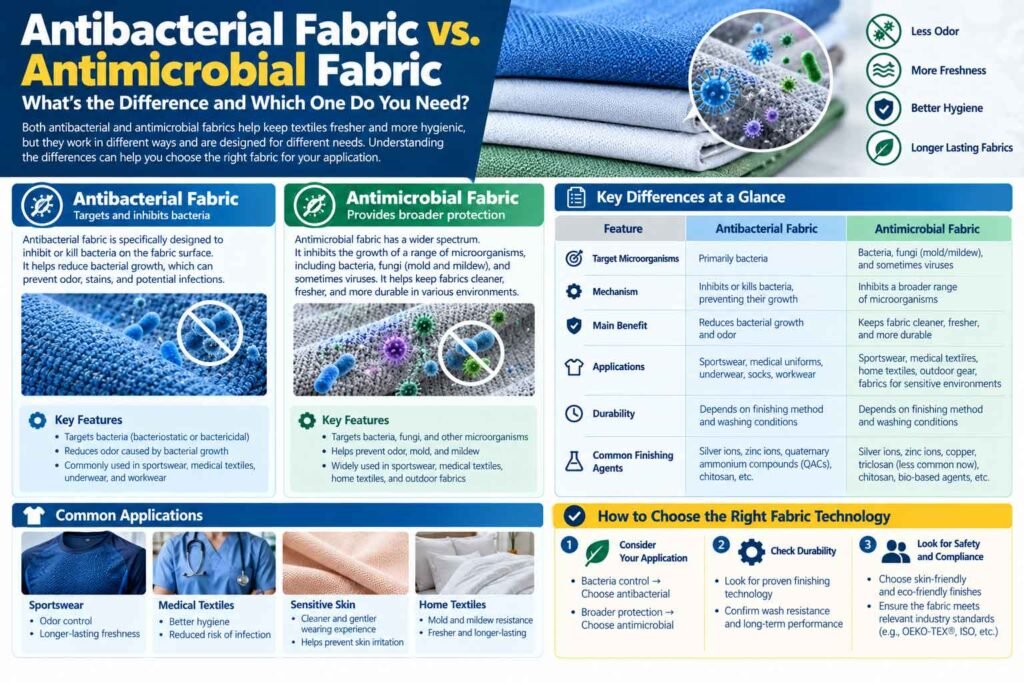
Antibacterial Fabric vs Antimicrobial Fabric: Key Differences
| Feature | Antibacterial Fabric | Antimicrobial Fabric |
|---|---|---|
| Target Microorganisms | Specifically targets bacteria | Targets bacteria, fungi, mold, and sometimes viruses |
| Scope of Protection | Narrower, focused on bacteria | Broader, covers multiple microbial types |
| Common Applications | Sportswear, underwear, medical textiles | Medical textiles, sportswear, home textiles, activewear |
| Testing Standards | AATCC 100, ISO 20743, GB/T 20944 | Same as antibacterial, plus antifungal tests like AATCC 30 |
| Terminology Usage | More precise in medical and regulatory contexts | Often used interchangeably with antibacterial in consumer markets |
| Durability | Depends on treatment method; embedded is permanent | Same as antibacterial; embedded treatments preferred |
| Additional Benefits | May include skin health support (e.g., copper peptides) | May include odor control, UV protection, antifungal effects |
Types of Antibacterial and Antimicrobial Fabrics
Metal-Based Technologies
-
Nano Silver Yarn (e.g., iSilvery®)
Offers broad-spectrum antibacterial and antifungal efficacy with over 99% bacterial reduction. Ideal for medical textiles, hospital linens, and premium sportswear. Maintains performance for 50+ wash cycles.
-
Nano Copper Yarn (e.g., Nacu X®)
Multi-target antibacterial action with added skin health benefits like collagen stimulation. Exceptional wash durability (100+ cycles). Perfect for underwear, compression wear, and bedding.
-
Nano Zinc Yarn
Combines antibacterial protection with UV-blocking capabilities (UPF 50+). Suitable for outdoor apparel and swimwear with 80+ wash cycles durability.
Mineral-Based Technologies
-
Volcanic Mud Yarn (e.g., Time Capsule®)
Mineral complexity inhibits bacterial growth and acne-causing bacteria. Non-toxic and well-suited for sensitive skin and wellness textiles. Maintains efficacy for 30+ wash cycles.
-
Graphene Yarn
Physically disrupts bacterial membranes via nanoscale cutting edges. Also enables smart textiles and wearable electronics due to conductivity. Durable for 80+ wash cycles.
Plant-Based Technologies
-
Coffee Charcoal Yarn (e.g., Smart Coffex®)
Converts coffee grounds into microporous charcoal particles that trap odor molecules and bacteria. Eco-friendly with 50+ wash cycles durability.
-
Coconut Shell Charcoal Yarn
High porosity offers superior odor control and moisture absorption. Emits negative ions for air purification. Best for underwear, socks, and bedding with 40+ wash cycles.
-
Bamboo Charcoal Yarn
Honeycomb structure maximizes adsorption of moisture and odors. Emits far infrared rays and negative ions, enhancing thermal comfort. Suitable for sportswear and yoga wear with 40+ wash cycles.
How Are These Fabrics Tested?
- AATCC 100 (American standard for antibacterial activity)
- ISO 20743 (International standard for antibacterial textiles)
- GB/T 20944 (Chinese national standard for antibacterial testing)
Which Fabric Should You Choose?
For Sportswear
- Nano Copper Yarn (Nacu X®): Superior wash durability (100+ cycles) and skin health benefits.
- Coffee Charcoal Yarn (Smart Coffex®): Excellent odor control and eco-friendly narrative.
- Nano Zinc Yarn: Ideal for UV-exposed outdoor apparel with antibacterial and sun protection.
For Medical and Healthcare Applications
- Nano Silver Yarn (iSilvery®): Gold standard for medical textiles with documented efficacy against antibiotic-resistant bacteria.
- Nano Copper Yarn (Nacu X®): Suitable for garments with prolonged skin contact, offering skin health support.
For Sensitive Skin
- Volcanic Mud Yarn (Time Capsule®): Non-toxic, non-allergenic, and acne bacteria tested.
- Nano Silver Yarn (iSilvery®): Free of chemical additives, safe for baby textiles and intimate apparel.
- Nano Copper Yarn (Nacu X®): Actively supports skin barrier and collagen production.
For Sustainability-Focused Brands
- Plant-Based Charcoal Yarns: Coffee, coconut shell, and bamboo charcoal fibers offer natural antibacterial performance with strong environmental credentials.
FAQs: Antibacterial Fabric vs Antimicrobial Fabric
Q1: Does antibacterial fabric eliminate the need for washing?
No. These fabrics reduce bacterial growth and odor but do not remove dirt, sweat, or oils. Regular washing is still necessary.
Q2: Can antimicrobial fabrics be used interchangeably with antibacterial fabrics?
In everyday apparel, yes. However, antimicrobial fabrics have a broader scope, including fungi and mold, which may be critical in medical or specialized applications.
Q3: How long do antibacterial and antimicrobial treatments last?
Embedded treatments last the garment’s lifetime (50 to 100+ wash cycles), while surface treatments degrade after 10 to 30 washes.
Q4: Are these fabrics safe for sensitive skin?
Yes, especially those certified by Oeko-Tex Standard 100 and free of harmful additives. Mineral and plant-based fabrics are often gentler.
Conclusion: Making the Right Choice for Your Fabric Needs
- Treatment method: Embedded agents for durability over surface finishes.
- Application: Medical, sportswear, sensitive skin, or eco-conscious branding.
- Certification: Look for third-party verified test data and safety certifications.