A procurement manager once told me: 'I know I need a blended fabric. I just don't know which blend.'
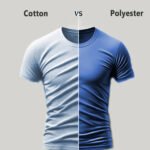
It is one of the most common questions we hear at XINGYE TEXTILE, and it deserves a clear answer. Both 65/35 T/R (Polyester-Rayon) and 65/35 T/C (Polyester-Cotton) are workhorse blends that dominate the corporate uniform market. But they are not interchangeable. They serve different use cases, different laundering environments, and different budget priorities.
After 30 years of manufacturing both blends in the same facility, here is how we help clients decide which one fits their needs.
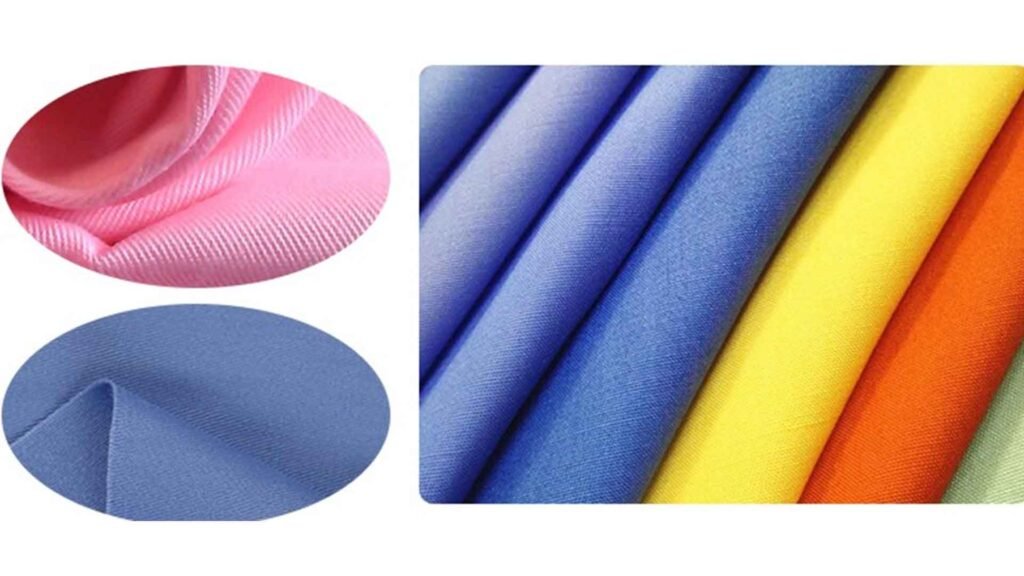 65/35 T/R 与 65/35 T/C
The Common Ground: Why 65/35 Works
Before comparing the two blends, it helps to understand why the 65/35 ratio itself has become an industry standard.
Polyester at 65% provides the structural backbone. Its thermoplastic fibers resist stretching, hold creases after pressing, and recover from wrinkling during wear. A polyester-dominant fabric also withstands the mechanical stress of industrial laundering—the high-temperature water, aggressive agitation, and chemical detergents that break down natural fibers over time.
The secondary fiber at 35% exists to solve the problems that pure polyester creates: poor breathability, a synthetic handfeel, and static buildup. Whether that secondary fiber is rayon or cotton determines the fabric's personality.
Here is how they differ at the fiber level.
| Property | T/R (65/35 Polyester-Rayon) | T/C (65/35 Polyester-Cotton) |
|---|---|---|
| Handfeel | Soft, smooth, wool-like | Crisp, matte, natural |
| Drape | Excellent—flows and hangs well | Moderate—stiffer hold |
| Wrinkle Recovery | 85%+ (AATCC 128) | 70–80% |
| Moisture Absorption | Moderate (rayon wicks better than polyester) | High (cotton's microcapillary structure) |
| Shrinkage (Industrial Wash) | <3% | <2% |
| Color Vibrancy | Excellent—dyes absorb deeply into rayon | Good—matte finish reduces perceived brightness |
| Abrasion Resistance | 40,000–50,000 Martindale cycles | 25,000–30,000 Martindale cycles |
| Industrial Laundry Tolerance | Good (80°C max) | Excellent (85°C+, higher pH tolerance) |
| Cost per Meter | $4.80–$6.50 | $4.50–$6.00 |
The numbers tell part of the story. The full picture requires understanding what each fabric does in a real uniform, worn by a real employee, washed in a real industrial laundry.
T/R (Polyester-Rayon): The Executive Standard
T/R blends exist for one primary reason: appearance retention.
Why Rayon Instead of Cotton
Rayon is a regenerated cellulose fiber made from wood pulp. Unlike cotton, which grows as a staple fiber with natural irregularities, rayon is extruded through spinnerets that produce uniform, smooth filaments. This uniformity gives T/R fabrics several advantages in corporate settings.
First, drape. A T/R blazer hangs cleanly from the shoulders without the stiffness that cotton introduces. When a sales representative stands to greet a client, the jacket falls naturally rather than holding its own shape. This matters in perception-heavy roles—front desk, executive suites, airline cabins—where the uniform contributes to brand image.
Second, wrinkle recovery. Polyester's thermoplastic memory is already good. Adding rayon improves it further because rayon fibers are more flexible than cotton and return to their original position after bending. Our lab tests show 85% wrinkle recovery after simulated wear—meaning the fabric self-smooths overnight on a hanger. T/C blends typically recover at 70–80%.
Third, color depth. Rayon absorbs dye more readily than cotton, producing richer, deeper colors. A navy T/R blazer looks visibly darker and more saturated than the same shade in T/C. For corporate identity programs where exact color matching is critical, T/R provides a broader color gamut.
Where T/R Falls Short
T/R is not the right choice for every application. It cannot withstand the aggressive wash cycles that T/C handles without issue. Industrial laundries running at 85°C with high-pH detergents will degrade rayon fibers over time. We typically recommend T/R for uniforms that are professionally dry-cleaned or laundered at 75°C or below.
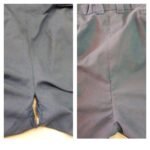
Abrasion resistance is also lower than pure polyester, though the 40,000–50,000 Martindale cycle range still exceeds the requirements of most corporate environments. The risk area is not general wear but localized friction—a security guard's holster, a doorman's shoulder where a coat rests—where the rayon component shows wear faster than the polyester.
Best Applications for T/R
- Airline cabin crews — needs drape, wrinkle resistance, and a polished appearance through long duty days
- Executive and management uniforms — blazers, dress trousers, skirts where appearance is the primary metric
- Hotel front desk and concierge — uniforms that must look fresh from check-in to checkout
- Banking and financial services — corporate identity programs with exact color specifications
T/C (Polyester-Cotton): The Workhorse Blend
T/C blends are engineered for durability and practicality in environments where uniforms face more stress and more frequent industrial laundering.
Why Cotton Instead of Rayon
Cotton's key advantage over rayon is its natural fiber structure. While rayon filaments are smooth and uniform, cotton fibers have a flat, twisted, ribbon-like cross-section. This creates microcapillaries that actively wick moisture away from the skin. In a T/C shirt, the cotton component pulls sweat from the body and spreads it across the fabric surface, where it evaporates. The wearer stays cooler and drier.
Cotton also has better wet strength than rayon. Lower-grade viscose fibers can lose up to 50% of their tensile strength when wet, which means T/R uniforms can stretch and distort during the washing and spin-drying cycle. Premium rayon (which we use in our T-R Series) performs significantly better—retaining over 80% of dry strength when wet—but T/C still holds the edge in wet-process durability.
The laundry tolerance is the deciding factor for many buyers. T/C blends comfortably withstand 85°C wash temperatures and pH levels up to 11—the standard conditions in industrial tunnel washers. T/R fabrics begin to show fiber degradation after repeated exposure to these conditions.
Where T/C Falls Short
Handfeel is the primary compromise. T/C fabrics feel crisper and less luxurious than T/R. The uniform looks professional but lacks the soft drape that signals quality in premium settings.
Color vibrance is also more muted. Cotton fibers scatter light differently than rayon, giving T/C fabrics a flatter, more matte appearance. This is not a flaw in most contexts, but for brands that rely on deep, saturated colors as part of their identity, T/R is a better choice.
Best Applications for T/C
- Hotel operational staff — housekeeping, maintenance, back-of-house where function matters more than drape
- Restaurant and food service — withstands high-temperature washdowns and aggressive stain removal
- Light industrial and warehouse — uniforms that face moderate abrasion and need to survive frequent laundering
- Healthcare support staff — where breathability and easy-care laundering are both priorities
Application Map: Which Blend Goes Where
This table distills the decision into a single reference for procurement teams.
| Work Environment | Primary Need | Recommended Blend | Why |
|---|---|---|---|
| Corporate office, executive | Appearance, drape, wrinkle resistance | T/R | Superior presentation retention |
| Airline cabin crew | Long-day wear, crisp appearance | T/R | Best drape and wrinkle recovery |
| Hotel front desk | Polished look, daily wear | T/R (preferred) or T/C | Depends on laundry setup |
| Hotel housekeeping | Frequent washing, durability | T/C | Higher wash-temperature tolerance |
| Restaurant kitchen | High heat, oil, heavy laundering | T/C + DWR coating | Better wet-strength retention |
| Warehouse / logistics | Abrasion, frequent washing | T/C or 100% Polyester | Durability priority over handfeel |
| Healthcare | Breathability, frequent wash | T/C (preferred) or Cotton-rich | Moisture management + laundry durability |
| Security / doorman | Mixed appearance + wear | T/R (customer-facing) or T/C (operational) | Depends on role visibility |
Total Cost of Ownership: T/R vs T/C
The cost difference between T/R and T/C is small per meter—typically $0.30 to $0.80—but the real financial question is how long each uniform lasts under your specific conditions.
Consider a hotel chain ordering 500 corporate uniforms, using 3 meters per uniform.
| T/R Blend | T/C Blend | |
|---|---|---|
| Fabric cost per meter | $5.65 (mid-range) | $5.25 (mid-range) |
| One-time fabric cost | $8,475 | $7,875 |
| Typical lifespan (corporate office) | 3–4 years | 2.5–3 years |
| Cost per year | $2,119–$2,825 | $2,625–$3,150 |
For client-facing roles where appearance directly affects brand perception, T/R's longer lifespan and superior presentation typically justify the marginal upfront premium. For back-of-house and operational roles, T/C delivers the same durability at a lower entry price.
The most cost-effective approach many of our clients adopt is a segmented strategy: T/R for front-of-house and management uniforms, T/C for operational and support staff. This optimizes both budget allocation and visual consistency across the organization.
How to Verify What You Are Actually Getting
Both T/R and T/C are susceptible to substitution by unscrupulous suppliers. Here are the checks that matter.
Fiber Composition Verification
Request a fiber content certificate (per ISO 1833 or AATCC 20A). The document should state the exact percentage of each fiber. For T/R, the certificate should specify whether the rayon cellulosic content is premium high-tenacity rayon or standard viscose. The difference affects wet-strength retention and, ultimately, uniform lifespan.
The Wet Strength Test
Ask for documentation showing retained tensile strength after 30 minutes of water immersion. Premium rayon should retain at least 80% of its dry tensile strength. Standard viscose drops to 50% or lower. This single test separates quality T/R from budget alternatives.
Batch-Specific Data
A certificate from a different production run is not proof of your fabric's quality. Insist on batch-specific test reports that match the roll numbers in your shipment. If the supplier hesitates, you are looking at a trading company, not a manufacturer.
Frequently Asked Questions
Can T/R and T/C be used in the same uniform program?
Yes—many of our clients use T/R for jackets, blazers, and front-of-house garments, and T/C for trousers, skirts, and operational staff uniforms. The color match between the two blends is close when dyed to the same specification, though the finish (T/R being slightly glossier) requires careful approval during the sampling stage.
Which blend is better for tropical climates?
T/C has the edge in hot, humid environments because cotton's microcapillary structure wicks sweat more effectively than rayon. For air-conditioned corporate environments (offices, airports, hotels), T/R performs well because the working conditions are temperature-controlled.
Does T/R shrink more than T/C?
With proper finishing, our T/R series shrinks less than 3% after industrial laundering. T/C is slightly better at under 2%, thanks to cotton's natural wet stability. Both are well within acceptable limits for tailored uniforms.
Which blend holds its color longer?
T/R produces deeper, more vibrant colors initially, and the color retention is excellent when garments are dry-cleaned or washed at moderate temperatures. T/C holds color well under aggressive industrial laundering but the matte finish means colors appear less saturated from the start.
Making the Final Decision
The choice between T/R and T/C is not about which blend is superior in absolute terms. It is about matching the fabric's engineering to the uniform's operating conditions.
Choose 65/35 T/R (Polyester-Rayon) when:
- Appearance, drape, and wrinkle resistance are the primary metrics
- Uniforms are dry-cleaned or laundered at moderate temperatures
- Staff work in client-facing, temperature-controlled environments
- Deep, saturated colors are critical to brand identity
Choose 65/35 T/C (Polyester-Cotton) when:
- Industrial laundering at high temperatures is the norm
- Breathability and moisture management are priorities
- Uniforms face moderate abrasion and frequent washing
- Budget constraints favor a slightly lower entry price
At XINGYE TEXTILE, we manufacture both blends under one roof and provide batch-specific test data—including fiber composition certificates, wet-strength retention reports, and abraion test results—for every production run. Our technical team works with procurement departments to match fabric engineering to real-world operating conditions.
For swatch kits, lab reports, or a consultation on your specific requirements: