A friend of mine runs procurement for a PCB assembly plant in Penang.
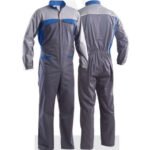
Last year he bought 300 sets of 'anti-static' coveralls from a new supplier. Cheap. $18 a pop. The fabric passed EN 1149 when it left the factory — he saw the test report.
Month four, his quality manager walks in with a failed ESD log. $12,000 in scrapped boards traced to one operator's sleeve dragging across a populated PCB. The coveralls measured 2.1 × 10⁹ Ω surface resistance. Not anti-static at all.
Month five, the customer audit flags excessive particle shedding from the same garments. Another write-up.
He called me. 'The test report was clean. What happened?'
What happened is he bought a fake anti-static fabric — topical chemical finish that washes off in 15 laundry cycles. It looked good on paper. It cost him $12,000 in scrap plus a customer compliance warning.
This story repeats in electronics plants across three continents. I've seen it happen more times than I can count.
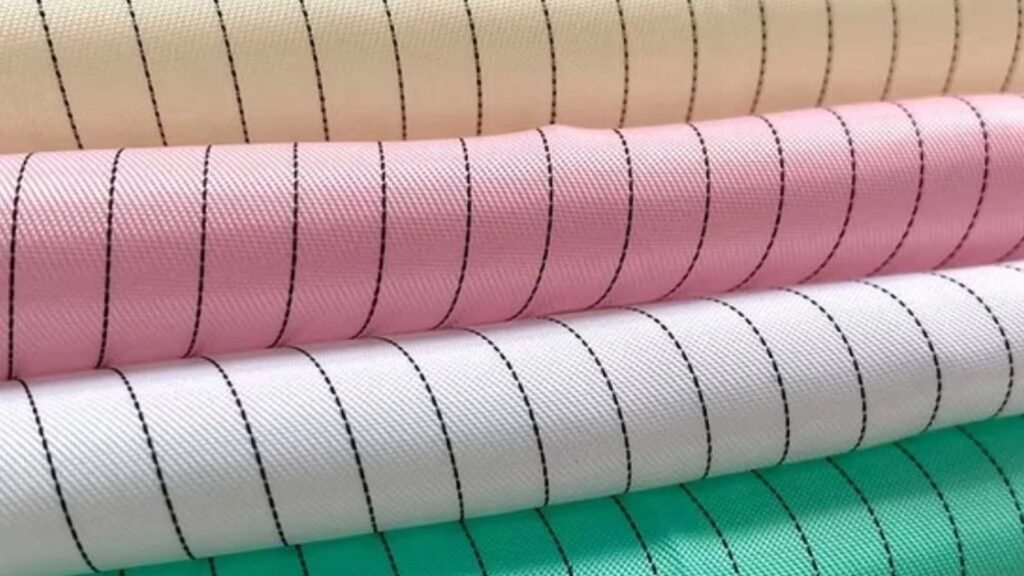
Anti-Static Fabric for Cleanrooms
Three Ways to Buy ESD Fabric. Two of Them Will Cost You.
Option 1: Cotton or T/C with a sprayed-on anti-static finish
Cost: $16–$22 per garment suit. Looks cheap on the purchase order.
Here's what you actually get:
Cotton is a mobile particle shedder. Every time a cotton fiber garment rubs against a work surface, micron-sized fiber fragments break off and float into your cleanroom. In a Class 10K zone processing sensitive electronics, that's a contamination event every time someone walks past.
And the anti-static finish? It's a chemical sprayed onto the fabric surface that conducts electricity by absorbing moisture from the air. First wash: some of it rinses off. Fifteenth wash: most of it is gone. By wash 20, your surface resistance has climbed from 10⁶ Ω to 10⁹ Ω.
At that point, your 'anti-static' garment is a liability. Every time your technician reaches across a populated PCB, that sleeve is a static discharge waiting to happen. You just don't know which board will die.
Real cost per garment for a 200-person cleanroom over three years: $57,000–$112,000. Not including the scrap.
Option 2: Carbon conductive fiber grid (what you should buy)
Cost: $32–$45 per garment suit. Higher on the purchase order. Cheaper in real life.
The conductive fiber is built into the fabric structure — carbon-loaded nylon filaments woven into the polyester base as a 5mm × 5mm grid. It's not a coating. It's not a chemical. It's a physical conductive path that sits inside the fabric and doesn't wash off, doesn't dry out, and doesn't degrade in detergent.
After 200 industrial washes at 70°C with neutral pH detergent, the surface resistance is still 10⁶–10⁷ Ω. Same as day one.
And because the base fabric is polyester (not cotton), particle shedding is 1/10th of cotton equivalents. Your cleanroom audit passes. Your ESD log stays clean.
Real cost for a 200-person cleanroom over three years: $21,000–$38,000. And zero scrap events traced to garment ESD failure.
Option 3: Stainless steel filament (overkill for most)
Cost: $52–$70 per garment suit. Lowest resistivity. Also lowest flexibility.
Good for extreme ESD environments. But stainless filaments can snap at crease points — crotch, elbow — and once a filament breaks, that grid cell stops conducting. Overkill for 90% of electronics assembly cleanrooms.
The Three-Year Math That Procurement Never Runs
Here's what happens when you look past the PO price and count what you actually spend:
| Cheap chemical finish ($18/set) | Carbon grid ($42/set) | |
|---|---|---|
| Cost per garment | $18 | $42 |
| Real wash life before ESD fails | 20 washes | 200+ washes |
| Replacements needed over 3 years | 6–8 sets per worker | 1 set per worker |
| Average scrap from ESD events per year | $8,000–$15,000 | ~$0 |
| Customer audit risk | High (particle + ESD) | Low |
| 3-year total for 200 workers | $57,000–$112,000 | $21,000–$38,000 |
The $18 set costs you $57,000 minimum over three years. The $42 set costs you $38,000 max. You save at least $19,000 by paying double the unit price.
That's not a typo. The arithmetic doesn't lie. You just have to count the scrap, the reorders, and the audit failures — none of which show up on the original PO.
The Real Test No One Runs — Until It's Too Late
Your supplier's EN 1149 test report says the fabric passes at 50% humidity. Congratulations. That's the easy test.
Here's the one that matters: test at 25% humidity. That's the dry winter condition in an air-conditioned cleanroom. That's when topical finishes fail.
I put three 'anti-static' fabrics through a 25% RH test:
| At 50% RH (standard test) | At 25% RH (real cleanroom) | What happens | |
|---|---|---|---|
| Cheap chemical finish | Pass: 3.1M Ω | FAIL: 7,400M Ω | Your worker becomes a walking ESD gun |
| Carbon grid + finish | Pass: 4.2M Ω | Pass: 8.9M Ω | Still works |
| Carbon grid only | Pass: 2.1M Ω | Pass: 2.4M Ω | Same reading, doesn't care about humidity |
If your supplier isn't testing at 25% RH, they're not testing for your actual working conditions. They're testing for a certificate.
One Sentence to Sound Like You Know What You're Doing
The call goes like this:
Amateur: 'Send me your anti-static fabric spec and price.'
Pro: 'I need 65/35 poly-cotton with embedded carbon conductive grid, 5mm spacing, EN 1149 tested at 25% RH and 50 washes, with particle emission data for Class 10K.'
The first call gets you a quote for whatever the supplier has on the shelf — might be chemical finish, might be 20mm grid spacing, you won't know until the roll lands.
The second call tells the supplier: 'This guy has already been burned before. Don't waste his time.'
What to Do If You're Tired of Chasing ESD Failures
Here's a three-step plan that costs you nothing upfront:
- Email us at fabricforuniform.com. Say 'I want to test your carbon grid anti-static fabric.'
- We send you a 20-meter cutting sample, any standard color, within 5 days.
- You wash it 20 times in your own laundry. Then test surface resistance at your actual cleanroom humidity.
No PO. No minimum. No sales follow-up calls.
If the carbon grid doesn't outlast your current fabric by a factor of five, I don't want your business.
XINGYE TEXTILE manufactures anti-static cleanroom fabrics — 100% polyester and T/C blends with embedded carbon conductive fiber grids (5mm and 10mm spacing), EN 1149-1 certified, Class 10K–1K particle-compatible. Mill-direct from Hebei, China. Contact us at fabricforuniform.com for cutting samples and a direct quote.