If your uniform rental operation handles corporate accounts, you've run into this wall:
The client wants suits. Real suits. Structured jackets, flat-front trousers, the kind of thing that says 'we mean business.' But your laundry process runs at 80°C, uses aggressive detergents, and spins at 400 G-force. Wool doesn't survive that. Even wool blends—90/10, 70/30—start showing problems by cycle 10.
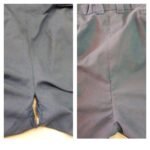
You tested 'washable suits' from three different suppliers. Some looked okay for five washes, then the lining puckered. Some came back with crotch seam failure by cycle 18. One supplier's fabric lost 40% of its tensile strength after 25 industrial washes. You stopped counting after that.
The problem isn't the suit design. It's the fabric.
I've been in textile manufacturing for over 15 years, supplying uniform fabrics to programs across North America, Europe, and the Middle East. Here's the short version: a suit fabric that survives 50+ industrial wash cycles has to be engineered for it from the yarn up. Most mills don't do that. They weave a cheap poly-viscose, call it 'washable,' and let you discover the shrinkage at cycle 12.
This article breaks down what actually works, why most options fall short, and where the industry is heading.

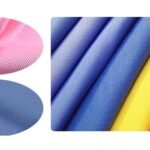
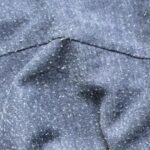
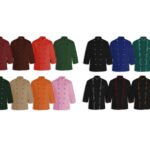
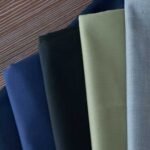
machine washable suit fabric for corporate uniform programs
The Washability Gap: Why Traditional Suiting Fabrics Can't Handle Industrial Laundry
Let's start with wool, because that's what your clients want.
Wool suiting is a protein fiber. It scales, felts, and shrinks under heat and agitation. Even 'super 100s' and 'super 120s' — the stuff that costs $80/yard — can't survive an industrial wash cycle designed for cotton-poly work shirts. The shrinkage alone: expect 3–5% after 20 washes on a standard polypropylene saddle program.
Here's a real benchmark from a program I worked with in Texas. A regional rental company ran a head-to-head on four suiting fabrics through 50 industrial wash cycles. Test parameters: 75°C wash, 85°C drying, no pressing between cycles.
| Fabric Type | Shrinkage @ 50 cycles | Visible wear @ 50 cycles | Seam integrity @ 50 cycles |
|---|---|---|---|
| 100% Worsted Wool (Super 110s) | 4.8% warp / 3.2% weft | Heavy pilling, surface fuzzing | 3 of 8 test seams failed |
| 55/45 Polyester/Wool | 3.1% warp / 2.4% weft | Moderate pilling | 1 seam failure |
| 65/35 Polyester/Rayon (T-R Twill) | 0.8% warp / 0.5% weft | Light surface abrasion only | 0 failures |
| 100% Polyester Textured | 0.3% warp / 0.2% weft | Surface shine developed | 0 failures |
The 100% polyester had the best dimensional stability, but it developed a plastic sheen by cycle 30. Your corporate client won't wear something that looks like a rental tuxedo.
The 65/35 T-R twill held up. No shine. No pilling. Shrinkage under 1%. After 50 cycles it still looked like a solid B+ suit — perfectly acceptable for a bank teller, hotel front desk, or airline ground crew.
What Makes a Suit Fabric Actually Machine-Washable
Three things determine whether a fabric survives industrial laundry:
1. Fiber selection — the non-negotiable
The fiber has to resist hydrolysis (chemical breakdown from heat + water + alkali). Polyester does this well. Rayon (viscose) is weaker than polyester but far better than wool. A 65/35 poly-rayon split is a proven balance: polyester provides the structural backbone, rayon provides the hand feel and drape.
But the quality of each fiber matters. Virgin high-tenacity polyester vs. recycled? Different shrinkage profile. Fine-denier rayon vs. commodity-grade? Different pilling resistance.
2. Yarn construction
Ring-spun vs. open-end. Twist multiplier. Ply. These matter enormously.
A 2/60Nm two-ply warp with a 2/40Nm single-ply weft will have different wash stability than a 1/30Nm single across the board — even at the same fiber ratio. The mills that understand industrial laundry spec higher twist and tighter construction specifically to combat relaxation shrinkage.
3. Dyeing and finishing
Piece-dyed vs. yarn-dyed. Reactive vs. disperse. These affect color retention after repeated hot washing. A suit fabric that bleeds onto white shirt collars after 15 washes isn't washable — it's defective.
The finishing process matters too. Sanforizing (compressive shrinkage control) is standard on good shirting fabrics but rare on suiting. It should be standard for any fabric destined for rental programs.
Five Questions to Ask Before Ordering 'Washable Suit Fabric'
I've watched procurement teams order samples, run three test washes, see okay results, and place a full container order — then spend six months managing returns. Avoid that. Ask these questions before you commit:
Q1: What's the shrinkage at 50 industrial wash cycles?
The answer should be under 1.5% in both directions. If the supplier can't give you a number because they 'haven't tested beyond 10 cycles,' move on.
Q2: What wash protocol did you test against?
There's a difference between home laundry (40°C, gentle cycle) and industrial tunnel wash (75°C+, mechanical agitation, chemical feed). If they tested at 40°C, the data is useless for rental programs.
Q3: What's the tensile strength retention after 50 cycles?
You want 85%+ retention. Below 70%, you'll start seeing seam failures in high-stress areas — crotch, armhole, center back.
Q4: Are you the mill or a trader?
This isn't about gatekeeping. It's about consistency. A mill controls fiber sourcing, spinning, weaving, dyeing, and finishing under one roof. A trader buys from whoever has stock this week. If you need color consistency across reorders over 18 months, mill-direct sourcing matters.
Q5: Can you run a production trial at 500 meters?
Trust but verify. A 500m production trial is enough to cut 40–50 suits, run them through your actual laundry process, and evaluate real-world performance. If the supplier hesitates at this, they don't believe in their own fabric.
The Cost Reality
Let's talk numbers, because I know your margin math runs tight.
A good 65/35 T-R suiting fabric suitable for industrial laundry runs $3.80–$5.20/meter FOB China (300gsm twill, 150cm width). That's roughly $5.70–$7.80 per suit for fabric cost.
Compare that to a commodity-grade suiting from a trader at $2.80/meter — you save 36% on fabric cost, but you get a fabric that was never engineered for industrial wash. The rejects, returns, and client churn will eat that saving in the first quarter.
Compare it to a branded 'performance suiting' from a Western mill at $12–$18/meter — you know that fabric works, but you're paying 2–3x markup primarily for branding and sales overhead. Mid-volume programs (5,000+ suits/year) should not be paying that premium.
The sweet spot for a rental program is $4.20–$4.80/meter for a mill-direct 65/35 T-R twill with verified 50-cycle performance. At that price, the fabric cost per suit is roughly what you're paying now for a commodity fabric — but your cycle life doubles.
What to Do Next
If you're currently sourcing suit fabric and wondering whether your supplier's 'washable' claim holds up, here's a honest workflow:
- Get a 20m sample of their 65/35 T-R twill (300–320gsm, 2/1 twill construction)
- Cut 5 test garments
- Run them through 50 cycles in your own laundry — not a lab, your actual tunnel
- Measure shrinkage at cycles 10, 25, 40, 50
- Judge for yourself
That's 50 meters total. No container order. No minimum commitment nonsense. Any supplier that can't support a 50-meter trial for a potential program order isn't set up for B2B work.
XINGYE TEXTILE manufactures 65/35 polyester-rayon suit suiting and uniform fabrics from our mill in Hebei, China. We've supplied rental-grade fabrics to uniform programs in 14 countries. If you want a 50-meter swatch for your own wash test, contact our export team at fabricforuniform.com with your program details — we'll get cutting specs back within 48 hours.