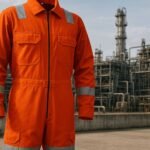
Three Reasons 80% of the World's Uniform Programs Use TR Fabric
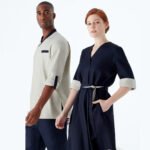
Walk through any hotel — front desk, restaurant, maintenance, housekeeping. Every department is wearing a different uniform style, but most of them share one thing: the fabric spec is TR.
The same is true for corporate uniforms, school uniforms, military service uniforms, and hospitality workwear worldwide. TR (polyester-viscose) has quietly become the default fabric for the global uniform industry. Not cotton. Not pure polyester. Not even TC.
The reason isn't tradition or supplier habit. It's three measurable facts that win out in uniform programs every single time:
- TR looks better for longer — wrinkle resistance + drape + color retention
- TR survives industrial laundry — 80-100+ cycles vs 20-30 for cotton
- TR fits more body types — the viscose content gives it drape that skims rather than clings
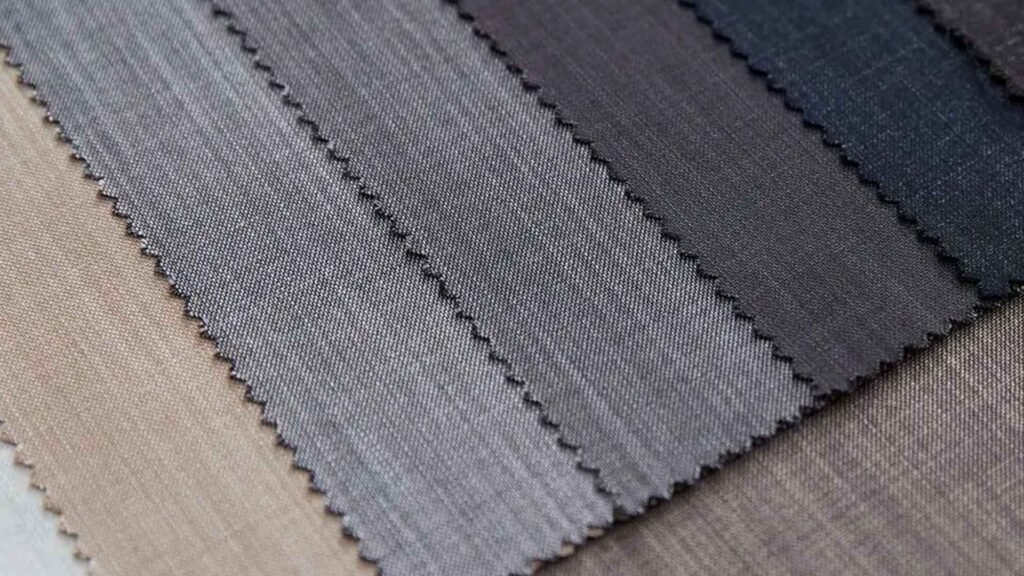
Why TR Fabric Is the Standard for Uniforms and Workwear
Why Not Cotton?
Cotton is comfortable. Everyone knows that. But a uniform is not a personal t-shirt. A uniform has to:
- Look the same at 7 PM as it did at 8 AM
- Survive being washed at 75°C with 20 other identical garments
- Fit the same person after 6 months of weekly washing
- Cost a predictable amount per wear over 12-24 months
Cotton fails on three of those four requirements. It wrinkles within hours, it shrinks progressively, it fades visibly, and it wears out in a third of the cycles that TR handles.
Cotton makes a good shirt. TR makes a good uniform.
What Makes TR Right for Uniforms
1. Wrinkle Resistance — Looks Professional All Shift
A uniform that wrinkles by lunch is not a uniform — it's a costume that stopped working.
TR fabric's polyester content (65% in the standard blend) gives the fabric elastic memory. When you bend, reach, or sit, the fabric stretches and returns. When the uniform is hung overnight, wrinkles release without ironing.
| Fabric | Wrinkle-Free Appearance After 8 Hours | Needs Ironing? |
|---|---|---|
| TR (65/35) | Clean with minimal creasing | No — hang and wear |
| TC (65/35) | Moderate creasing | Low-heat touch-up recommended |
| Cotton (100%) | Heavily wrinkled | Yes, steam iron required |
| Polyester (100%) | Clean | No, but fabric looks cheap |
For hotel front desk, restaurant service, and corporate uniforms where appearance is part of the job, TR's wrinkle resistance alone justifies the choice.
2. Industrial Laundry Survival — Costs Less Per Wear
This is the single biggest reason large uniform programs standardize on TR. When you're washing 1,000 uniforms per day in an industrial laundry, the fabric's life expectancy determines the program's cost.
Typical uniform life in industrial laundry:
| Fabric | Cycles Until Replacement | Cost Per Cycle (at ¥100/uniform) |
|---|---|---|
| TR (anti-pill treated) | 80-100 cycles | ¥1.00 – 1.25 |
| TC | 60-80 cycles | ¥1.25 – 1.67 |
| Cotton suiting | 20-30 cycles | ¥3.33 – 5.00 |
| Pure polyester | 100+ cycles | ¥1.00 (but looks cheap entire time) |
A cotton uniform needs to be replaced 3-4 times for every one TR uniform. The upfront cost of TR might be similar to cotton, but the lifetime cost is dramatically lower.
What actually fails in industrial laundry:
| Failure Mode | Cotton | TR |
|---|---|---|
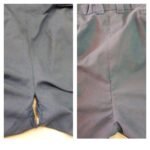
| Seam fraying | Starts at 15-20 cycles | 50-60 cycles |
| Collar delamination | 10-15 cycles | 40-50 cycles |
| Shrinkage (beyond tolerance) | 3-8% by 20 cycles | ≤2% at 50 cycles |
| Color fade visible | 15-20 cycles | 40-50 cycles |
| Pilling visible | Minimal (cotton pills less) | 4.0+ rating — minimal with treatment |
3. Drape and Fit — Skims Instead of Clinging
A uniform needs to fit a range of body types without custom tailoring. TR fabric's drape — the way it falls and moves — makes that possible.
Viscose gives TR fabric a smooth, fluid quality. Instead of clinging to curves (like polyester) or hanging stiffly (like heavy cotton), TR follows the body's lines without grabbing. It skims.
This is why hotel and restaurant chains can order the same TR blazer for 50 employees and have it look good on all of them. The fabric compensates for fit variations that would be exposed by stiffer or clingier materials.
4. Color Consistency Across Seasons and Dye Lots
Uniform programs run for years. When you reorder TR fabric 18 months after the original order, the color needs to match — not 'close enough,' but visually identical.
TR fabric takes dye well because both polyester (disperse dye) and viscose (reactive dye) have high dye affinity. Modern digital color-matching systems paired with TR's consistent fiber quality achieve Delta E variance of <1.0 across production runs.
Cotton, being a natural fiber with year-to-year crop variations, is harder to color-match across batches. This matters less for retail garments sold individually, but for a hotel reordering 500 blazers, a visible shade difference between old and new uniforms is a branding problem.
5. Stain Resistance and Cleanability
TR fabric can be treated with a hydrophobic (stain-resistant) finish that works on both the polyester and viscose components. This finish causes liquids to bead and roll off rather than soaking in.
For restaurant and hospitality uniforms that encounter food, drink, and cleaning chemicals daily, this treatment extends the time between replacement stains. The same treatment is less effective on cotton because cotton fibers absorb moisture aggressively — a stain that beads on TR fabric will soak into cotton before it can be wiped off.
| Stain type | Cotton | TR (with stain-resistant finish) |
|---|---|---|
| Red wine | Permanent if not treated immediately | Beads, wipes off |
| Coffee | Stains within 30 seconds | Beads, wipes off |
| Cooking oil | Absorbs, leaves grease mark | Repels, minimal penetration |
| Bleach | Permanent color loss | Resists bleach damage better |
TR Fabric Applications Across Uniform Types
| Uniform Type | Why TR Is the Standard | Recommended TR Spec |
|---|---|---|
| Hotel front desk | Wrinkle-free throughout shift, professional drape, color consistency across team | TR Gabardine 260-300 GSM |
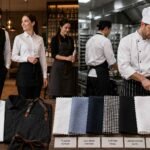
| Restaurant servers | Stain-resistant treatment, industrial laundry durable, sharp appearance | TR Twill 240-280 GSM |
| Corporate office | Polished look, no ironing, holds crease in trousers | TR Wool blend 260-320 GSM |
| School blazers | Kids wash them — TR survives. Drape hides poor fit on growing bodies | TR Twill 280-320 GSM |
| Military/service uniforms | Industrial laundry rated, color consistency, crease retention | TR Gabardine 300-350 GSM |
| Thobes | White stability, wrinkle resistance against long wear, smooth hand feel | TR Plain/Twill 200-280 GSM |
| Housekeeping | Stain resistance, easy care, industrial wash durable | TR Twill 200-240 GSM |
| Security uniforms | Structured look, heavy-duty weave, color fastness | TR Gabardine 280-320 GSM |
Is TR Fabric Good for Uniforms? The Vericlear
Yes — and it's the best all-around choice for most uniform programs.
Here's the honest assessment:
| Uniform Requirement | How TR Performs |
|---|---|
| Professional appearance | Excellent — holds creases, resists wrinkles, drapes well |
| Comfort for 8-12 hour wear | Good — not as breathable as cotton, but comfortable in AC environments |
| Industrial laundry durability | Excellent — 80-100+ cycles |
| Sizing stability | Excellent — ≤2% shrinkage |
| Cost value | Excellent — lower cost per wear than any alternative |
| Breathability in heat | Moderate — choose lightweight TR or TC for hot environments |
| Natural fiber feel | Fair — it doesn't feel like cotton. It feels smoother, closer to wool |
When NOT to use TR for uniforms:
- Outdoor work in hot, humid climates with no air conditioning — choose TC or cotton
- High-activity roles where maximum breathability is critical — choose moisture-wicking performance fabrics
- Budget is the absolute lowest priority and cotton appearance is required — choose TC as a compromise
- Workers have cotton-specific skin sensitivities — test TR samples first (some people prefer the smoother feel)
What to Look For When Buying TR Uniform Fabric
Not all TR fabric is the same quality. When sourcing for a uniform program, verify these specifications:
- Anti-pilling treatment — Level 4.0+ is essential for high-friction areas (seats, elbows, underarms)
- Shrinkage guarantee — ≤2% after 5 industrial wash cycles. Get it in writing.
- Color fastness — Rating 4+ for both dry and wet crocking. Ask for the test report.
- GSM appropriate to your climate — 180-220 for warm environments, 260-320 for standard uniforms, 320+ for heavy-duty
- Stain-resistant finish — Specify this for hospitality and food service applications
- Heat-set and pre-shrunk — Two-step finishing process that locks dimensions
Get a Quote — TR Fabric for Uniform Programs
XINGYE TEXTILE manufactures TR fabric specifically for uniform and workwear programs. Standard 65/35 polyester-viscose, anti-pilling treated, ≤2% shrinkage, stain-resistant finish available. Weave options: twill, gabardine, plain, herringbone. GSM range 180-350. Custom colors matched to your program. Industrial laundry tested.
Minimum order: 300 meters per color. Sample yardage available for evaluation. We'll match your existing uniform fabric or develop a custom spec for your program.