Here's a scenario every uniform procurement manager has seen.
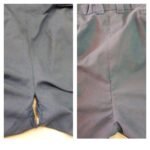
A hotel front desk agent starts her shift at 7 AM. Freshly pressed uniform. Sharp collar. Crisp jacket. By noon, she's checked in 40 guests, sat down twice, and reached across the counter a hundred times. The shirt is pulling at the buttons. The jacket has a crease line across the back where it bunched against the chair.
By 4 PM, the uniform looks like she slept in it.
She's not alone. Bank tellers. Airport ground crew. Cruise ship reception. Corporate security. Any role where you sit, stand, move, and repeat for 8+ hours wrecks a standard uniform fabric fast.
Most uniform suppliers offer two options:
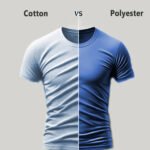
- Wrinkle-resistant poly: Looks sharp, breathes like a raincoat. Staff complain about heat.
- Breathable cotton or T/C: Comfortable, looks like an unmade bed by 3 PM.
Neither solves the actual problem. The problem isn't that fabric wrinkles OR that it traps heat. The problem is that most uniform fabric does both badly.
I've been in uniform fabric for 15 years. Here's what works for all-day wear.
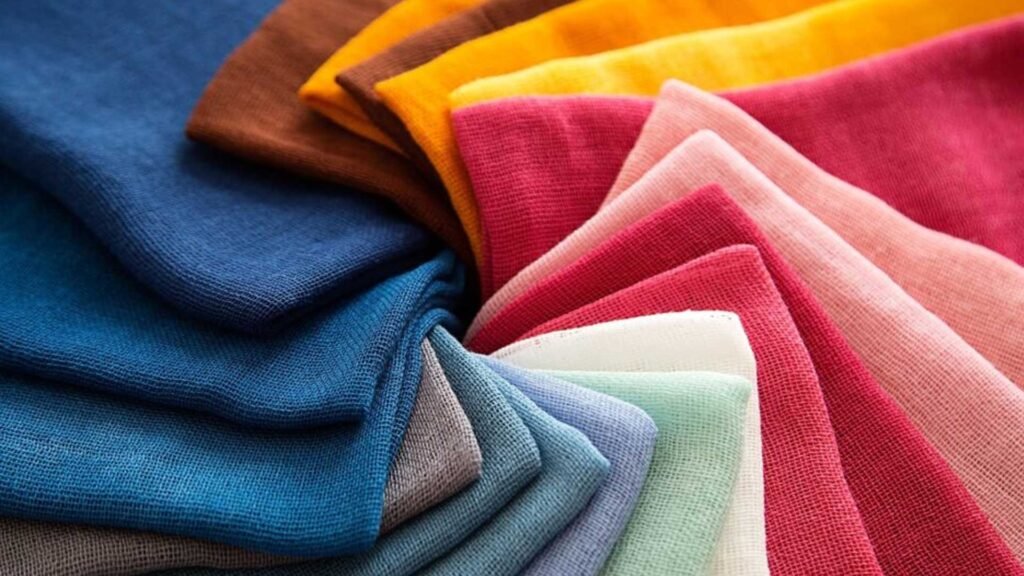
Wrinkle-Free and Breathable Uniform Fabric
Why Most 'Wrinkle Resistant' Uniforms Fail the All-Day Test
Wrinkle resistance in fabric comes from the polyester content. Polyester fibers have elastic recovery — they bend under pressure and spring back when released. The more polyester in the blend, the better the wrinkle recovery.
But polyester is hydrophobic (literally 'water-fearing'). It doesn't absorb moisture. In a 100% polyester fabric, sweat vapor can't pass into the fiber. It stays between the fabric and the skin. The wearer feels hot, damp, and uncomfortable within hours.
The typical 'wrinkle-resistant' uniform fabric is 200–220gsm 100% polyester textured weave. Wrinkle recovery angle: ~290°. Looks great on the hanger.
Real-world test: wear it for 8 hours in a 24°C lobby with moderate activity. The back of the shirt shows salt staining by hour 6. The wearer's core temperature rises 1–1.5°C above baseline because the fabric can't vent heat. Comfort level by hour 8: poor.
The trade-off is a lie. You don't have to choose between looking sharp and being comfortable. You need a fabric that recovers from creasing AND moves moisture out.
The Blend That Does Both: T-R 65/35
T-R (Tetron-Rayon, also called poly-rayon or 65/35 poly-viscose) is a 65% polyester, 35% rayon blend. It solves the wrinkle-vs-breathability problem because each fiber handles one requirement.
| Property | 100% polyester | 65/35 T-R (poly-rayon) | 100% cotton |
|---|---|---|---|
| Wrinkle recovery angle | 280–300° | 270–290° | 150–180° |
| Moisture regain | 0.4% | 7–9% (rayon component) | 7–8% |
| MVTR (g/m²/24h) | 3,000–4,000 | 6,000–8,000 | 8,000–10,000 |
| Shrinkage (industrial wash) | 0.3–0.5% | 1–2% | 3–5% |
| Pilling resistance | Good (textured) | Good (2/60Nm+) | Poor |
| Fabric cost/meter | $2.80–$4.00 | $4.20–$5.80 | $3.50–$5.00 |
Here's what that means for your staff:
A 65/35 T-R shirt at 180–200gsm, 2/1 twill, gives you:
- Wrinkle recovery of 270–290° — staff can sit for 2 hours, stand up, and the jacket back recovers within 60 seconds with no visible crease
- Moisture regain of 7–9% — the rayon fibers absorb sweat vapor rather than trapping it between layers. The difference is noticeable by hour 3
- MVTR ≥ 6,000 — moisture moves through the fabric fast enough that the wearer doesn't feel damp at moderate activity levels
Everyone fixates on the wrinkle resistance number. The moisture regain number is equally important. A fabric that recovers from wrinkles but leaves the wearer soaking wet has failed its primary job — keeping staff presentable for a full shift.
What 'All-Day Wear' Actually Means — By the Numbers
A uniform program manager at a Middle East airline ran a wear test. Three fabrics, identical shirt cut, worn by check-in counter staff for 8-hour shifts in a 24°C air-conditioned terminal.
Fabric A: 100% polyester textured (200gsm, plain weave)
- Wrinkle rating at hour 8: 4/10 (moderate creasing at back and elbows)
- Comfort rating at hour 8: 2/10 (staff reported 'sticky' feeling by hour 3)
- Staff preference: 12% would wear again
Fabric B: 65/35 cotton-poly (200gsm, twill)
- Wrinkle rating at hour 8: 3/10 (heavy creasing, especially at seat and back)
- Comfort rating at hour 8: 6/10 (breathable but wrinkled)
- Staff preference: 30% would wear again
Fabric C: T-R 65/35 poly-rayon (200gsm, twill)
- Wrinkle rating at hour 8: 8/10 (light creasing at elbows only, back recovered within 30 seconds of standing)
- Comfort rating at hour 8: 7/10 (dry feel through shift, no salt staining)
- Staff preference: 78% would wear again
The T-R fabric was preferred 6.5:1 over the polyester and 2.6:1 over the cotton-poly. The procurement team standardized on T-R across 3,000 staff within 6 months.
Fabric Spec for All-Day Wear Uniform Programs
There's no universal 'all-day fabric.' The spec depends on the garment type and the climate. Here's the range that works:
| Garment | Recommended spec | Weight | Why |
|---|---|---|---|
| Men's dress shirt (short sleeve) | T-R 65/35, plain or oxford weave | 150–170gsm | Light enough for breathability, wrinkle-resistant enough for 8-hour wear |
| Men's dress shirt (long sleeve) | T-R 65/35, twill | 170–190gsm | Twill holds crease better at collar and cuff for full-day wear |
| Women's blouse | T-R 65/35, plain weave with softener finish | 140–160gsm | Lighter weight for drape, still wrinkle-recovery capable |
| Trousers / skirt | T-R 65/35, 2/1 twill | 240–280gsm | Needs weight for drape and crease retention at seat and knee |
| Jacket / blazer | T-R 65/35, 2/1 or 3/1 twill | 280–320gsm | Jacket gets the most visual scrutiny — spec higher weight for better drape |
| Summer-weight suit | T-R 65/35, 2/1 twill | 240–260gsm | Lighter but uses finer yarns (2/60Nm+) for wrinkle recovery |
The yarn count matters
A 65/35 T-R at 1/30Nm single-ply is not the same fabric as 2/60Nm two-ply — even at the same weight and blend ratio.
| Yarn spec | Wrinkle recovery | Pilling resistance | Drape | Typical use |
|---|---|---|---|---|
| 1/30Nm single | 260–270° | Moderate — pilling by wear 30 | Medium-stiff | Budget uniforms, student wear |
| 2/60Nm two-ply warp + 1/40Nm weft | 275–285° | Good — minimal pilling through 50+ wears | Good | Mid-grade corporate uniforms |
| 2/80Nm two-ply warp and weft | 280–290° | Excellent — negligible pilling | Excellent — wool-like | Executive uniforms, premium programs |
For an all-day wear program (airline, hotel, bank), spec 2/60Nm two-ply as a minimum. Below that, the fabric starts showing visible wear within 12 months.
Cost of Right vs. Wrong Fabric for All-Day Uniforms
For a 1,000-person airport ground staff program, three uniforms per person (summer + winter + spare), 2-year rotation:
| 100% polyester (commodity) | T/C 65/35 (standard) | T-R 65/35 2/60Nm (recommended) | |
|---|---|---|---|
| Fabric cost/meter | $2.80–$3.50 | $3.20–$4.50 | $4.80–$6.20 |
| Garment cost landed | $12–$18/set | $14–$22/set | $20–$28/set |
| Staff comfort complaints | High | Moderate | Low |
| Wrinkle complaints | Low (polyester recovers) | High (wrinkles badly) | Low |
| Average garment life | 18–24 months | 12–18 months (wrinkles + pilling) | 24–36 months |
| Replacement rate | 1 set/2 years | 1.5 sets/2 years | 1 set/2.5 years |
| Annual fabric cost | $18,000–$27,000 | $21,000–$33,000 | $24,000–$33,600 |
| Staff turnover penalty (lost uniforms) | Standard | Standard | Lower (staff prefer wearing T-R, less likely to 'lose' them) |
The T-R program costs ~$6,000–$11,000 more per year in fabric than the commodity polyester. But the polyester program generates complaints about heat, staff buy their own cotton shirts to wear under the uniform (defeating the uniform policy), and turnover-related uniform loss is higher because staff don't want to wear uncomfortable polyester.
Measured on cost alone, T-R is competitive with commodity options. Measured on staff satisfaction and compliance, it wins by a wider margin.
One Sentence to Sound Like You Know What You're Doing
Amateur: 'I need wrinkle-resistant shirt fabric. What do you have?'
Pro: 'I need T-R 65/35, 2/60Nm two-ply, 180gsm, 2/1 twill, in corporate white and light blue, with moisture-wicking finish. Send me the wrinkle recovery angle data and MVTR test results.'
The first call gets you a list of commodity polyester fabrics. The second call gets you 'let me check our T-R production schedule.'
Five Checks Before You Order All-Day Wear Fabric
1. Confirm the wrinkle recovery angle is ≥ 270°.
ASTM D1296 or AATCC 128. Measured on both warp and weft. Below 270°, the fabric will show visible creasing after prolonged sitting.
2. Verify MVTR data, not marketing claims.
A fabric labeled 'breathable' should have an MVTR (ASTM E96 or ISO 15496) of at least 6,000 g/m²/24h in relevant conditions. If the supplier can't produce MVTR data, they don't know if the fabric is breathable — they're guessing.
3. Test moisture regain at 65% RH.
Rayon has ~11–13% moisture regain at standard conditions. If the fabric tests below 6%, the rayon content may be lower than specified or of poor quality. This affects breathability directly.
4. Check pilling after 50 washes.
Martindale or Random Tumble Pilling test at 0 and 50 washes. At 50 washes, visible pilling should be minimal (rating 4/5 or better below the ASTM scale). If pilling appears by 30 washes, the yarn quality is too low for an all-day wear program.
5. Verify color fastness to perspiration.
For airport and hospitality staff in warm climates, perspiration fastness matters. ISO 105 E04 or AATCC 15. If the fabric bleeds or shifts color under perspiration exposure, white-collar dress shirts will show staining within weeks.
The Bottom Line
If your uniform program involves staff who sit, stand, and move for 8+ hours — airline check-in, hotel front desk, bank tellers, cruise staff — you need a fabric that does two things at once.
The right spec: T-R 65/35, 2/60Nm minimum, 180gsm (shirts) or 260gsm (trousers), 2/1 twill, with verified wrinkle recovery ≥ 270° and MVTR ≥ 6,000.
This blend gives you 90% of the wrinkle resistance of 100% polyester with 80% of the breathability of cotton. Nothing else in the uniform fabric market hits both numbers at a competitive cost.
The $24 poly-rayon shirt is a better investment than the $14 cotton-poly shirt for the same reason a good chair is better than a cheap one — you're paying for 8 hours of daily use over 2+ years. The cost-per-wear difference is pennies. The staff satisfaction difference is measurable.
XINGYE TEXTILE manufactures T-R 65/35 uniform fabrics for all-day wear programs — shirting, trouser, and jacket weights, 2/60Nm and 2/80Nm specs, with verified wrinkle recovery and MVTR data. Mill-direct from Hebei, China. Contact us at fabricforuniform.com for 20-meter swatches and spec sheets for your uniform program.