The Habit Is Not a Costume — It's a Uniform with 1,500 Years of History
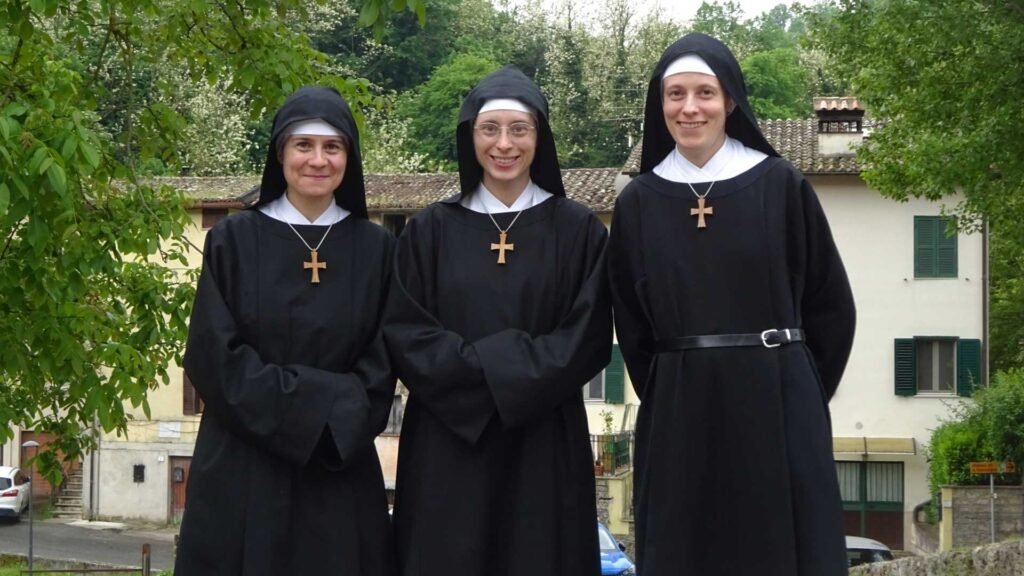
The clothing worn by nuns — commonly called a 'habit' — is one of the most recognizable uniforms in the world. A woman in a black tunic with a white headdress can be identified as a nun from across a room, in any country, regardless of language or culture.
But not all nuns dress the same way. The habit varies significantly by religious order, by region, by the time period, and increasingly by the individual sister's preference. Some orders still wear full traditional habits. Others have modernized to simple dark suits or dresses. Many wear a modified habit that blends tradition with practicality for their daily work — teaching, nursing, social work, or administrative roles.
This guide covers the components of a traditional nun's habit, the variations between orders, the fabrics used, and how religious attire has evolved over time.
What Clothes Do Nuns Wear
What Is a Nun's Habit Called?
The full set of clothing a nun wears is called a religious habit. Each piece has a specific name:
| Garment | Traditional Name | Purpose |
|---|---|---|
| Tunic | Habit (sometimes 'robe' or 'gown') | The main garment — a long, loose-fitting dress reaching the ankles |
| Belt / Cincture | Cincture, girdle, or leather belt | Holds the tunic at the waist. Often includes a rosary |
| Head covering | Veil, wimple, coif, or cornette | Covers the hair as a sign of modesty and dedication to religious life |
| Under-veil cap | Coif or cap | Fitted cap worn under the veil to hold hair in place |
| Forehead band | Wimple or bandeau | Frames the face, covers the forehead and sometimes neck |
| Shoulder covering | Scapular | A long rectangular panel of fabric worn over the tunic, front and back, reaching to the hem |
| Neck covering | Guimpe or chemisette | Covers the neck and upper chest, worn under the tunic |
| Outer cloak | Mantle or cape | Worn in cold weather or for formal occasions |
| Rosary | Rosary beads | Usually hung from the cincture — both a devotional object and a visual identifier |
| Ring | Profession ring | Worn by some orders to symbolize marriage to Christ |
| Cross / Crucifix | Profession cross | Worn on a chain around the neck or pinned to the habit |
Not all orders use all of these elements. Some use a simplified version with fewer parts.
The Traditional Nun Habit — Piece by Piece
The Tunic (Main Garment)
The tunic is the foundation of the habit. It is a full-length, loose-fitting dress made from a heavyweight woven fabric. Traditional colors vary by order:
| Color | Typical Orders | Meaning / Tradition |
|---|---|---|
| Black | Most common — Benedictines, Dominicans, many others | Symbol of death to the world, humility, simplicity |
| White / Cream | Carmelites, Sisters of Mercy, some Dominican nuns | Symbol of purity, often worn by cloistered orders |
| Brown | Franciscans, Poor Clares | Symbol of poverty — undyed wool, the simplest option |
| Grey | Sisters of Charity, some modern orders | Practical, less severe than black |
| Blue | Sisters of the Holy Cross, some Marian orders | Associated with the Virgin Mary |
| Navy | Various modern orders | Professional, practical |
The Veil and Head Covering
The veil is the most distinctive part of a nun's attire. Its design varies significantly by order:
| Type | Description | Worn By |
|---|---|---|
| Simple veil | A rectangular or oval piece of fabric draped over the head and falling to the shoulders or lower | Most modern orders, post-Vatican II |
| Cornette | A large, starched white headdress that extends outward from the head, often with wings | Daughters of Charity (the 'Flying Nun' style) |
| Coif + veil | A fitted white cap (coif) that covers the hair and ears, with a veil worn over it | Traditional orders — Dominicans, Benedictines |
| Wimple | A cloth covering the neck and chin, often worn with a coif and veil | Very traditional orders, pre-Vatican II style |
| Short veil | A smaller veil worn on the back of the head, leaving the face fully exposed | Some contemporary orders |
| No veil | No head covering at all | The most modern orders, or individual sisters who have chosen not to wear the veil |
Color of the veil often indicates status:
- Black veil — Professed sister (taken final vows)
- White veil — Novice (in training, not yet taken final vows)
- White veil (always) — Some orders wear white regardless of status (Carmelites, Sisters of Mercy)
The Scapular
The scapular is a long rectangular panel of fabric worn over the tunic, hanging down the front and back. It originated as a practical garment — an apron-like cover worn by monks during manual labor — and evolved into a symbolic garment.
- Full scapular — Reaches to the hem of the tunic, both front and back
- Short scapular — A smaller version, often just a symbolic panel worn under clothing
- Scapular medal — A medal that replaces the fabric scapular in modern practice
The Cincture
The cincture (belt or cord) holds the tunic at the waist. It can be:
- Leather belt — Simple and practical
- Rope cord with knots — Franciscan orders use a white rope cord with three knots representing poverty, chastity, and obedience
- Fabric sash — Some orders use a matching fabric sash
The rosary is often tucked into or hung from the cincture on the right side.
Habits by Religious Order — Key Differences
| Order | Habit Color | Head Covering | Distinguishing Features |
|---|---|---|---|
| Benedictine | Black | Black veil + white coif | Black scapular, leather cincture |
| Franciscan | Brown or grey | Brown veil + white coif | White rope cincture with three knots, often sandals |
| Dominican | White tunic + black veil | Black veil + white coif + black scapular | Full white habit is distinctive — the only order with a completely white tunic |
| Carmelite | Brown or cream | Brown or cream veil | Brown scapular, sometimes a mantle |
| Sisters of Mercy | Black or grey | Black veil + white coif | Grey or black habit, more practical cut |
| Daughters of Charity | Blue-grey + white cornette | Large white cornette (starched headdress) | The most recognizable habit — sometimes called the 'Flying Nun' look |
| Poor Clares | Black or brown | Black veil | Enclosed order — very traditional habit |
| Sisters of the Holy Cross | Black with white coif | Black veil + white coif | Simple, traditional |
| Missionaries of Charity (Mother Teresa's order) | White with blue border | White veil with blue stripes | Simple cotton sari-style habit — bare feet or sandals |
What Fabric Are Nun Habits Made Of?
The choice of fabric for a religious habit depends on the order's tradition, climate, and the sister's daily work.
| Fabric | Used In | Why |
|---|---|---|
| Wool serge / wool blend | Traditional habits (Benedictine, Dominican, Franciscan) | Traditional material. Heavy, durable, warm. Historically the most common habit fabric |
| Polyester-cotton twill (TC 65/35) | Modern habits, working sisters | Wrinkle-resistant, durable, easier to wash than wool. Practical for active ministry |
| Cotton twill or poplin | Summer habits, light-weight options | Breathable, comfortable in warm climates |
| 100% Cotton | Some traditional orders, summer veils | Natural, breathable — but wrinkles easily and shrinks in hot wash |
| Polyester gabardine | Modern habits, travel habits | Wrinkle-free, lightweight, easy care |
| Cotton-polyester jersey | Veils, head coverings | Some stretch, comfortable, easy to maintain shape |
The shift from wool to synthetic blends mirrors what happened in all uniform sectors over the 20th century. Wool habits were hot, heavy, expensive, and required dry cleaning. Modern polyester-cotton habits can be machine washed and hung to dry — significantly more practical for sisters working in schools, hospitals, and communities.
Modern vs Traditional Habits — The Evolution
Before the Second Vatican Council (1962-1965), nearly all nuns wore full traditional habits — floor-length tunics, full veils, wimples, scapulars, and often heavy wool fabrics.
After Vatican II, many orders were encouraged to simplify their habits to be more practical for modern ministry. The result was a wide range of approaches:
| Approach | What It Looks Like | Which Orders |
|---|---|---|
| Full traditional habit | All components — tunic, scapular, coif, wimple, full veil, cincture | Cloistered orders (Poor Clares, Carmelites), very traditional communities |
| Modified traditional habit | Simplified tunic, shorter veil, no wimple, practical fabrics | Many teaching and nursing orders |
| Semi-modern habit | Dark-colored dress or suit + a small veil or cross pin | Active ministry orders |
| Non-habit (modern dress) | Ordinary professional clothing (dress, skirt suit, pantsuit) + a small cross | Many contemporary orders — sisters choose their own clothing within guidelines |
| Hybrid | Simple tunic + veil, often with a jacket or cardigan | Younger communities, traditional-leaning orders |
Why Different Orders Dress Differently
The habit is not a universal uniform. Each religious order designs its habit based on its founding traditions, its rule of life, and its practical needs.
| Order | Focus of Ministry | How the Habit Reflects This |
|---|---|---|
| Cloistered orders | Prayer, contemplation | Full traditional habit — they do not leave the monastery, so practicality for active work is less important |
| Teaching orders | Education | Modified habits or modern dress — practical for classroom movement, approachable to students |
| Nursing orders | Healthcare | Modified habits or modern dress — hygienic, easy to move in, practical for hospital work |
| Missionary orders | Social work, running shelters | Simple, durable habits — often adapted to local climate and culture |
How to Care for a Nun's Habit
The care requirements depend entirely on the fabric. This is a real challenge for traditional orders that still wear wool habits.
| Fabric | Care Method | Challenges |
|---|---|---|
| Wool serge | Dry clean or hand wash cold, lay flat to dry | Expensive to dry clean, takes 2-3 days to dry, heavy when wet |
| Polyester-cotton twill | Machine wash warm/gentle, hang to dry | Easy care, quick dry, wrinkle-resistant |
| Cotton twill | Machine wash warm, iron while damp | Wrinkles easily, needs ironing |
| Jersey veil | Hand wash or gentle machine, reshape while wet | Holds shape well, quick drying |
Most modern orders machine-wash their habits at home or use commercial laundry services. The shift to easy-care fabrics has been one of the most practical changes in religious life over the past 50 years.
Frequently Asked Questions
Q: Why do nuns wear habits? A: The habit serves several purposes: it identifies the sister as a member of a religious order, symbolizes her dedication to religious life, removes the need for personal fashion choices (as a sign of humility), and historically provided a simple, practical garment for a life of service.
Q: Do nuns still wear full habits? A: Some do, some don't. Cloistered orders and traditional communities still wear full habits. Many active ministry orders have simplified or replaced the habit with modern clothing. The trend has been toward simpler, more practical attire since the 1960s.
Q: Why do some nuns wear white and others wear black? A: The color is determined by the religious order. Black is most common and symbolizes death to worldly life. White is worn by some orders to symbolize purity. Brown (Franciscans) symbolizes poverty. Each order's founder chose the color based on the order's values and traditions.
Q: What is the head covering called? A: The head covering has several names depending on the specific piece: veil (general term for the draped head covering), coif (fitted cap worn under the veil), wimple (covers forehead and neck), cornette (starched, winged headdress).
Q: Do all nuns cover their hair? A: In traditional orders, yes — covering the hair has been a sign of modesty and dedication for centuries. In many modern orders, sisters may wear a veil or may not cover their hair at all. The practice varies by order and by individual preference.
Q: What do novice nuns wear? A: Novices (sisters who have entered the order but not yet taken final vows) typically wear a slightly different habit than professed sisters. Most commonly: a white veil instead of a black veil, and sometimes a different colored tunic.
Q: Why do some nuns wear a ring? A: Some orders give a ring to sisters when they take their final (perpetual) vows. The ring symbolizes the sister's spiritual marriage to Christ. It is particularly common in cloistered orders and traditional communities.
Q: Can nuns wear pants? A: Some modern orders allow pants as part of their work attire, particularly for sisters working in physically demanding roles. Traditional orders require skirts or tunics. The practice has become more common since the 1970s.
Get a Quote — Religious Habit Manufacturing
XINGYE TEXTILE manufactures custom religious habits for orders and communities worldwide. Available in traditional wool serge, modern polyester-cotton twill, and custom fabric specifications. Full habit sets — tunic, scapular, veil, coif, wimple — manufactured to order in your community's traditional design and color.
Custom color matching, sizing from XS to 4X, fabric sampling available before bulk commitment.