Construction Workwear Is Safety Equipment First, Clothing Second
If you show up to a construction site wearing the wrong thing, you don't get to work. It's that simple.
Construction workwear is regulated by safety standards that vary by country but share the same goal: protect the worker from the specific hazards of a construction environment. Falling objects, sharp materials, heavy equipment, extreme weather, and hazardous substances are not hypothetical risks — they are daily realities.
This means construction workers don't wear 'whatever is comfortable.' They wear clothing that meets specific safety standards — hard hat, hi-vis, steel-toe boots, flame-resistant fabrics where required — and then layer comfort and practicality on top of that baseline.
This guide covers what construction workers wear, the safety standards that govern construction workwear, the fabrics that survive the job, and what to specify when buying construction uniforms for your team.
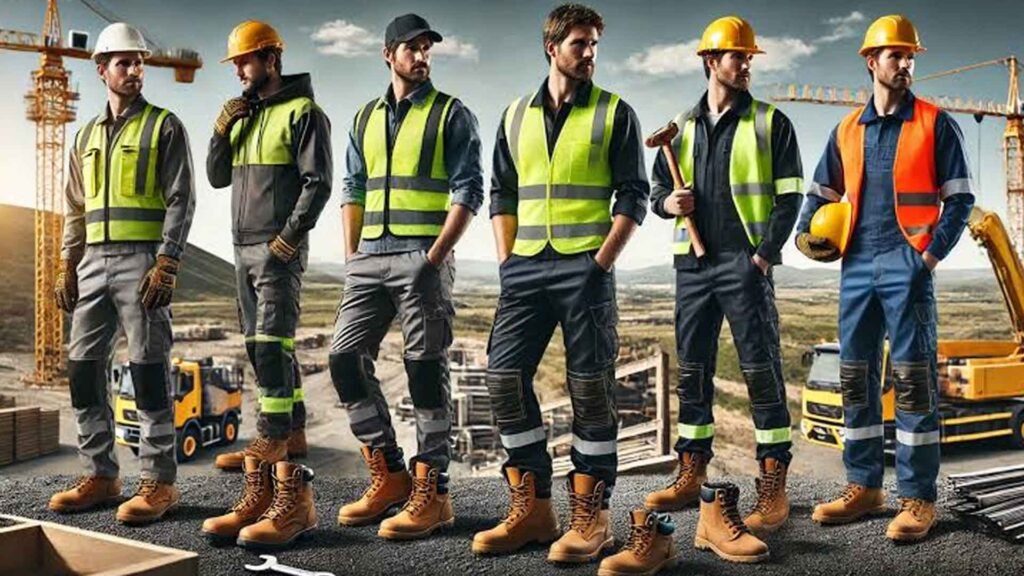
What Do Construction Workers Wear
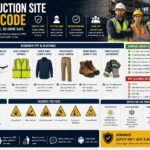
The Standard Construction Worker Uniform — What You'll See on Any Job Site
| Garment | What They Wear | Why |
|---|---|---|
| Hard hat | ANSI/ISEA Z89.1 or EN 397 rated | Protection from falling objects, head impact, electrical hazards |
| Hi-vis shirt or vest | ANSI Class 2 or 3, or EN ISO 20471 | Visibility — required near moving vehicles and equipment |
| Work shirt | Flannel, denim, or performance polo / t-shirt | Comfort, breathability, durability |
| Pants | Denim jeans, cargo work pants, or FR-rated pants | Abrasion resistance, pocket storage, leg protection |
| Boots | Steel-toe or composite-toe, slip-resistant, puncture-resistant | Toe protection from falling objects, slip resistance on wet surfaces |
| Gloves | Cut-resistant, grip gloves, or task-specific | Hand protection from cuts, abrasion, chemicals |
| Safety glasses | ANSI Z87.1 or EN 166 rated | Eye protection from debris, dust, chemical splashes |
| Hearing protection (as needed) | Earplugs or earmuffs | Required near loud equipment |
| Knee pads (as needed) | External or built-in | Protection for kneeling work — concrete, flooring, framing |
| Rain gear (weather-dependent) | Waterproof jacket and pants | Work continues in rain. Must be hi-vis rated |
Construction Roles — Different Jobs, Different Clothing Needs
| Role | Key Clothing Requirements | Why |
|---|---|---|
| General laborer | Durable pants, hi-vis shirt or vest, steel-toe boots, hard hat, gloves | Versatile — lifting, carrying, digging, cleaning, assisting trades |
| Carpenter / framer | Durable pants with tool pockets, work boots, hard hat, gloves, knee pads | Kneeling, climbing, carrying tools. Needs reinforced knees and tool storage |
| Electrician | Flame-resistant (FR) clothing (on many sites), insulated boots, hard hat | Arc flash protection is critical. FR rating may be required |
| Welder | FR jacket or apron, welding sleeves, leather gloves, welding helmet, steel-toe boots | Sparks and molten metal require leather or FR cotton. No synthetic fabrics near welding |
| Equipment operator | Hi-vis, comfortable shirt, steel-toe boots, hard hat | Sitting in heavy equipment — comfort matters. Still needs hi-vis for getting out of cab |
| Roofer | Non-slip boots, light-colored clothing in summer, hard hat, fall protection harness | Heat management on rooftops. Slip resistance is critical |
| Concrete worker | Waterproof/resistant boots, rubber gloves, durable pants, knee pads | Concrete is caustic — skin protection from cement burns is essential |
| Foreman / supervisor | Hi-vis vest over regular workwear or company uniform, hard hat, boots | Needs to be identifiable as supervisory staff. Often wears embroidered company shirt |
| Safety officer | Hi-vis with 'Safety' markings, all required PPE, often distinct color vest | Must be immediately identifiable in an emergency |
PPE Requirements — The Non-Negotiables
Most countries have government agencies that set minimum PPE requirements for construction sites:
| Country / Region | Governing Body | Standard |
|---|---|---|
| United States | OSHA (Occupational Safety and Health Administration) | 29 CFR 1926 — Construction PPE standards |
| European Union | EU Directives | EN 397 (hard hats), EN 388 (gloves), EN 345 (boots) |
| United Kingdom | HSE (Health and Safety Executive) | PPE Regulations 2022 |
| Australia / New Zealand | Safe Work Australia | AS/NZS standards for each PPE category |
| Canada | CCOHS / Provincial regulations | CSA standards for PPE |
The minimum PPE required on almost any construction site:
- Hard hat (ANSI Z89.1 Type I or II / EN 397)
- High-visibility clothing (ANSI Class 2 or 3 / EN ISO 20471)
- Steel-toe or composite-toe boots (ASTM F2413 / EN 345)
- Safety glasses (ANSI Z87.1 / EN 166)
- Cut-resistant gloves (ANSI Cut Level 2+ / EN 388)
What Fabric Is Best for Construction Workwear?
Construction workwear faces extreme conditions: abrasion from rough materials, frequent washing, sun exposure, temperature extremes, and sometimes flame or chemical hazards.
| Fabric | Best For | Why |
|---|---|---|
| 100% Cotton (heavyweight, 300-400 GSM) | Shirts, pants in non-FR environments (denim, canvas, flannel) | Breathable, comfortable, natural. No melt/drip risk near sparks. Wrinkles easily, shrinks |
| TC 65/35 Twill (240-300 GSM) | Uniform work shirts, work pants | Wrinkle-resistant, durable, affordable, industrial laundry safe |
| 50/50 Nylon-Cotton Ripstop | Heavy-duty work pants | Tear-resistant, abrasion-resistant, quick-dry — for the toughest jobs |
| FR Cotton (flame-resistant treated) | Shirts and pants for welding, electrical, and high-heat environments | Meets NFPA 70E and ASTM D6413 standards. Does not melt or drip |
| FR Blends (cotton-nylon or aramid) | High-risk FR environments | Inherent FR properties. Highest level of protection. Higher cost |
| Polyester-cotton jersey (200-260 GSM) | T-shirts, polo shirts under hi-vis vest | Comfortable, breathable, affordable base layer |
| High-visibility polyester (ANSI rated) | Hi-vis vests, hi-vis t-shirts | Fluorescent background + reflective tape for compliance |
| Denim (100% cotton) | Jeans — most common non-uniform pant for laborers | Durable, comfortable, affordable. Reinforced knees recommended |
| Canvas (cotton or cotton-poly) | Aprons, welding sleeves, heavy-duty pants | Maximum abrasion resistance. Heavy, stiff, less breathable |
What to avoid on construction sites:
- 100% Polyester (unblended) — melts when exposed to high heat, arc flash, or sparks. On some sites, it is prohibited entirely
- Nylon — melts at lower temperatures than polyester. Not suitable near welding, grinding, or electrical work
- Baggy / loose-fitting clothing — snag hazard around machinery, rebar, and moving equipment
- Thin fabrics under 200 GSM — wear through quickly against rough construction materials
- Joggers / sweatpants — no protection against sharp objects, no flame resistance
Hi-Vis Clothing — The Most Common Safety Garment on Site
| ANSI Class | Minimum Reflective Material | Who Needs It |
|---|---|---|
| Class 1 | 155 in² background + 155 in² reflective | Low-risk areas — parking lot attendants, warehouse workers away from vehicles |
| Class 2 | 201 in² background + 201 in² reflective | Most construction workers — required for anyone on foot near moving vehicles or equipment under 25 mph |
| Class 3 | 310 in² background + 310 in² reflective | High-risk areas — highway construction, night work, workers in same space as fast-moving vehicles |
Most general construction workers require Class 2 hi-vis as a minimum.
Hi-vis options for construction:
- Hi-vis t-shirt — most common for warm weather. ANSI Class 2 available
- Hi-vis polo — for sites with a professional uniform requirement
- Hi-vis vest — worn over any shirt or jacket. Easy to remove, easy to replace
- Hi-vis jacket — for cold or wet weather. Often with removable liner
- Hi-vis rain gear — waterproof hi-vis jacket and pants for wet conditions
- Hi-vis pants or bibs — used by traffic control and highway workers
FR (Flame-Resistant) Clothing — When It's Required
FR clothing is required on construction sites where there is a risk of arc flash, flash fire, or molten metal exposure:
| Work Type | FR Required? | Typical FR Standard |
|---|---|---|
| General construction labor | No (unless specified by site) | N/A |
| Electrical work (near live circuits) | Yes | NFPA 70E / ASTM D6413 |
| Welding and cutting | Yes | NFPA 51B / ASTM D6413 |
| Oil and gas construction | Yes | NFPA 2112 / ASTM F1506 |
| Demolition (potential gas exposure) | Sometimes | Site-specific risk assessment |
| Road construction | No | N/A |
FR fabric options:
| Fabric | Protection Level | Cost | Comfort |
|---|---|---|---|
| FR-treated cotton | Meets NFPA 70E HRC 1-2 | $$ | Good — breathable, cotton feel |
| FR cotton-nylon blend | Meets HRC 2-3 | $$$ | Good — durable and comfortable |
| Aramid (Nomex, Kevlar) | Highest — HRC 3-4 | $$$$ | Stiff, less breathable |
| Modacrylic blends | High — varies | $$$ | Moderate — specialized |
Construction Workwear by Season
| Season | Clothing Adjustment | Why |
|---|---|---|
| Summer | Light colors, breathable fabrics (cotton, cotton-poly blends), short sleeves (where safe), cooling neck wraps, sweat-wicking base layer | Construction in 35°C+ heat causes heat stress. Light colors reflect sunlight. Cotton absorbs sweat |
| Winter | Thermal base layer (wool or synthetic — not cotton next to skin), mid-layer fleece, hi-vis insulated jacket or vest, insulated boots, thermal gloves | Cotton as a base layer in winter is dangerous — holds moisture, causes chilling. Wool or synthetic base layers wick moisture away |
| Rainy season | Waterproof hi-vis jacket and pants, waterproof boots, change of clothes in vehicle | Work continues in rain. Wet clothing causes cold stress and chafing |
| Cold storage / indoor construction | Same layering principles — insulated boots, thermal base, hi-vis vest over insulated jacket | Indoor construction in winter or cold storage facilities requires cold-rated gear |
How to Choose Construction Workwear — A Buyer's Checklist
If you're buying workwear for a construction crew, verify these:
- Site hazard assessment — What specific risks does the crew face? General construction, electrical, welding, demolition? This determines FR requirements
- Hi-vis class — Class 2 minimum. Class 3 for highway and night work
- Fabric — 100% cotton or FR cotton for high-heat environments. TC twill or nylon-cotton ripstop for general construction
- Fit — Not baggy (snag hazard), not tight (restricts movement). Room in seat and thighs for bending and climbing
- Reinforced stress points — Double-stitched or triple-stitched at crotch, seat, knee, pocket corners. Knees need double-layer or pad pockets
- Pockets — Cargo pockets for tools and phone. Chest pockets for pens and small tools. No loose pocket flaps that can catch on rebar
- Boots — Steel-toe or composite-toe. Slip-resistant. Puncture-resistant sole preferred
- Wash test — Shrinkage <3%, color fastness 4+ after 20 washes
- Sizing range — XS to 4X minimum. Diverse body types on any crew
How Many Sets of Workwear Does a Construction Worker Need?
| Items Per Person | Scenario |
|---|---|
| 5-7 shirt sets | One per day for a work week, plus backup |
| 3-5 pairs of pants | Pants wear faster than shirts — they need more frequent replacement |
| 2-3 hi-vis vests | Vests get dirty and may need replacement if reflective tape delaminates |
| 2 pairs of boots | Rotate between days to let boots dry completely. Extends boot life significantly |
| 4-6 pairs of work gloves | Gloves are consumables — they wear out quickly |
Frequently Asked Questions
Q: Why do construction workers wear hi-vis clothing? A: The bright fluorescent colors (lime/yellow, orange) make workers visible against any background. The reflective tape makes them visible at night or in low light. This is the single most effective way to prevent vehicle-related injuries on construction sites.
Q: Why do construction workers wear long pants even in summer? A: Long pants protect the legs from cuts, scrapes, chemical splashes, bug bites, and sun exposure. On many sites, shorts are not allowed regardless of temperature.
Q: Do construction workers need FR clothing? A: Only if they work in environments with arc flash, flash fire, or molten metal exposure risk (electrical, welding, oil and gas). General construction laborers do not typically require FR clothing.
Q: Why do some construction sites ban synthetic fabrics? A: Synthetic fabrics like polyester and nylon can melt when exposed to high heat — sticking to the skin and causing severe burns. Sites with welding, grinding, or electrical hazards often require 100% cotton or FR-rated fabrics.
Q: Can construction workers wear shorts? A: On most professional construction sites, no. OSHA does not explicitly ban shorts, but most site safety policies require long pants for protection. Some sites in extremely hot climates may permit shorts with site-specific risk assessment.
Q: What boots do construction workers wear? A: Steel-toe or composite-toe boots with slip-resistant, oil-resistant, and puncture-resistant soles. 6-inch or 8-inch height for ankle support. Waterproof for wet conditions. Lace-up for secure fit.
Get a Quote — Construction Workwear
XINGYE TEXTILE manufactures construction workwear for general laborers, electricians, welders, equipment operators, and supervisors. Available in 100% cotton, TC twill, nylon-cotton ripstop, and FR-rated fabrics. Hi-vis ANSI Class 2 and Class 3 options. Custom colors, custom embroidery for company branding. Industrial laundry rated.
Minimum order: 500 pieces per color/size. Sample-first ordering available.