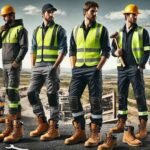
Walk onto any construction site in North America, Australia, or Europe, and you'll see the same thing: hard hats, hi-vis vests, steel-toe boots — and a lot of denim.
Jeans are arguably the most common pants on construction sites, even though most workers aren't issued them as part of a uniform. They're a personal choice, and for good reason.
But why denim specifically? And when should a construction worker swap jeans for something more technical?
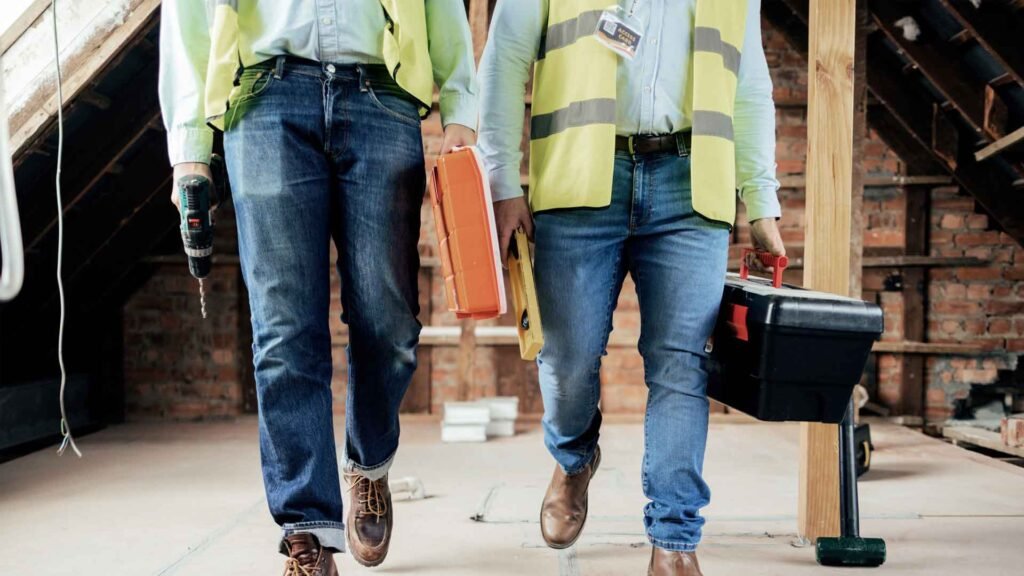
why do construction workers wear jeans
This article breaks down the fabric science, practical benefits, and limitations of jeans on the job site — and when proper workwear fabric makes more sense.
The Fabric Science: Why Denim Works
Denim is a 100% cotton, warp-faced twill fabric. The key construction details that make it suitable for construction work:
| Property | What It Means for Construction |
|---|---|
| Twill weave | Diagonal rib pattern makes it denser and more abrasion-resistant than plain-weave cotton |
| High GSM (340–450 GSM) | Heavyweight construction withstands scraping, kneeling, and daily abuse |
| Cotton fiber | Breathable, absorbent, and critically — will not melt or drip when exposed to heat or sparks |
| Indigo dyeing | Fades attractively over time (aesthetic benefit), but color hides dirt well between washes |
| Sizing/stiffness | New jeans are stiff and protective; broken-in jeans conform to the body |
Twill vs. Plain Weave: Denim's 2/1 or 3/1 twill structure means the yarn floats over 2–3 warp threads before interlacing — compared to plain weave's over-under pattern. This gives twill fabrics roughly 30–50% better abrasion resistance at the same weight, ideal for rough construction environments.
Top Reasons Construction Workers Choose Jeans
1. Abrasion & Tear Resistance
Construction workers constantly rub against rough concrete, rebar, lumber, and drywall. A pair of heavyweight denim jeans (14 oz or heavier) offers exceptional abrasion resistance — far better than chinos, cargo pants from a department store, or lightweight synthetic pants.
- Denim (14 oz): Abrasion resistance ~20,000+ cycles (Martindale)
- Standard cotton chino (200 GSM): Abrasion resistance ~8,000–12,000 cycles
- Synthetic hiking pants: ~5,000–10,000 cycles
2. Heat & Spark Protection — No Melt/Drip
This is the most critical safety advantage of cotton denim.
When exposed to high heat, sparks, or welding droplets:
- Cotton denim chars and burns but does not melt
- Polyester or nylon pants melt, drip onto skin, and cause severe molten-plastic burns
Even on sites without mandatory FR clothing, cotton denim provides a baseline level of protection against sparks, grinding debris, and hot metal that synthetic fabrics cannot match.
3. Breathability in Hot Weather
Cotton denim breathes naturally, allowing moisture vapor to escape. On a summer roofing job or concrete pour, poly-blend pants trap heat and sweat. Denim keeps the worker significantly cooler.
- Cotton denim moisture regain: ~8–10% (absorbs sweat, wicks it to surface)
- 100% polyester: ~0.4% (sweat stays on skin, heat builds up)
4. Affordability & Availability
A pair of durable work jeans costs $25–60 at any retailer. Equivalent work pants from workwear brands (Carhartt, Dickies, Vertx) cost $50–120. For workers buying their own gear — which most construction workers do — denim is the affordable default.
5. Comfort & Familiarity
Jeans break in over time to conform to the wearer's body. Workers who spend 10–12 hours on their feet prefer pants that don't require re-adjustment. A well-worn pair of jeans is more comfortable than any brand-new work pant.
6. Pocket Functionality
Standard five-pocket jeans offer:
- Two front pockets (tools, tape, hardware)
- Two back pockets (notebook, gloves, wallet)
- One coin/watch pocket (utility blade, small screws)
For workers who need more storage, cargo-pocket jeans or carpenter jeans with side tool pockets extend this further.
When Jeans Are NOT Enough
Despite their popularity, jeans have real limitations on construction sites. This is where proper workwear fabric is the better choice.
❌ No FR Rating (Unless Specifically Treated)
Standard retail denim is not flame-resistant. While it won't melt, it will:
- Ignite and continue burning
- Provide minimal arc flash protection (NFPA 70E requires FR-rated clothing)
- Fail ASTM D6413 (vertical flame test) for welding/electrical work
Solution: For electrical, welding, oil/gas, and high-heat environments, workers need FR-rated cotton or FR cotton-nylon blends that meet NFPA 70E or EN ISO 11612.
❌ Poor Water & Chemical Resistance
Denim absorbs water and holds it, becoming heavy and cold in wet conditions. It also absorbs oil, paint, solvents, and concrete slurry — staining permanently and reducing protection.
Solution: For wet environments, cotton-polyester work pants with DWR (durable water repellent) finish or nylon-cotton ripstop pants perform better and dry faster.
❌ Limited Visibility
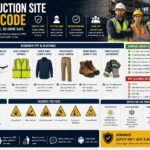
Dark blue or black denim provides zero visibility in low-light conditions. Workers near vehicle traffic or heavy equipment need hi-vis pants or hi-vis vest overlay.
❌ Low Stretch & Recovery
Traditional rigid denim offers minimal stretch — which can restrict movement when climbing scaffolding, kneeling, or reaching. Stretch denim (1–2% elastane) helps, but still doesn't match purpose-built work pants with articulated knees and gusseted crotches.
❌ Washing & Durability Over Time
- Denim shrinks with repeated washing
- Abrasion in the thigh/knee area leads to blowouts
- Indigo dye bleeds onto seats, tools, and other clothing
Fabric Comparison: Jeans vs. Proper Workwear Pants
| Feature | Standard Denim (14 oz) | Performance Work Pant (Cotton-Twill) | Nylon-Cotton Ripstop | FR Cotton/FR Blend |
|---|---|---|---|---|
| Abrasion resistance | ★★★★☆ | ★★★☆☆ | ★★★★★ | ★★★★☆ |
| Heat/spark protection | ★★★☆☆ (no melt) | ★★★☆☆ (no melt) | ★★★★☆ (FR blends) | ★★★★★ |
| Stretch/mobility | ★★☆☆☆ | ★★★☆☆ | ★★★★☆ | ★★★☆☆ |
| Water resistance | ★☆☆☆☆ | ★★☆☆☆ | ★★★★☆ | ★★☆☆☆ |
| Hi-vis option | ✗ | ✓ (stripes added) | ✓ | ✓ |
| FR rated possible | ✗ (unless treated) | ✗ | ✓ | ✓ |
| Price | $25–60 | $50–100 | $80–150 | $80–200 |
| Industrial laundry safe | ✗ (shrinks, fades) | ✓ | ✓ | ✓ |
So, Should Construction Workers Wear Jeans?
The honest answer: it depends on the job.
✓ Jeans are fine for:
- General labor (framing, demo, carpentry, concrete formwork, site cleanup)
- Low-risk sites without FR requirements
- Warm-weather work where breathability matters
- Workers buying their own gear on a budget
✗ Jeans are NOT recommended for:
- Welding, electrical work, or any hot-work (requires FR-rated pants)
- Oil & gas, chemical plants, confined-space work
- Wet or muddy conditions (absorbent, stays wet)
- High-visibility areas near vehicle traffic (no inherent reflectivity)
- Extreme cold (cotton holds moisture against skin — use layered wool/poly base)
What Fabric Manufacturers Recommend for Professional Work Pants
For construction companies issuing uniforms or workwear programs, the best fabric choices are:
| Use Case | Recommended Fabric | GSM Range | Key Properties |
|---|---|---|---|
| General site work | Cotton-Twill (100% cotton) | 300–400 GSM | Breathable, durable, no melt |
| Heavy-duty / rough terrain | Nylon-Cotton Ripstop | 250–320 GSM | Superior tear resistance, abrasion, quick-dry |
| Hot environment | Lightweight Cotton-Twill | 240–280 GSM | Maximum breathability, lighter weight |
| FR environment | FR Cotton or FR Cotton-Nylon | 300–400 GSM | Meets NFPA 70E, ASTM D6413 |
| Contractor uniform (laundry service) | TC 65/35 Twill (poly-cotton) | 240–300 GSM | Wrinkle-resistant, industrial-laundry durable |
About Xingye Textile
XINGYE TEXTILE has 30 years of experience manufacturing uniform-grade workwear fabrics. We supply cotton twill, CVC, nylon-cotton ripstop, and FR-rated fabrics to uniform manufacturers and workwear brands serving the construction industry worldwide.
Our cotton and cotton-blend work pants fabrics:
- ✅ 100% cotton twill (240–400 GSM) — denim alternative with better uniformity and industrial laundry compatibility
- ✅ Cotton-polyester TC 65/35 — wrinkle-resistant, wash-and-wear
- ✅ Nylon-cotton ripstop — maximum tear resistance
- ✅ FR cotton — NFPA 70E compliant
- ✅ OEM/ODM fabric development — custom weight, color, finish, and treatment
All fabrics available wholesale. Sample swatches upon request.
[→ Browse our workwear fabric collection] [→ Contact us for bulk pricing and technical specs]