Roofers work in the most exposed conditions on any construction site. Rooftops have no shade, no air conditioning, and no escape from direct sun. In winter, wind chill is 5–10°C colder than ground level. In summer, roof surface temperatures can reach 60–80°C — hot enough to fry an egg.
And yet, through all of it, many roofers wear hoodies.
Not because they're comfortable in the heat. Not because they don't know better. Because a hoodie solves specific problems that are unique to roofing work.
This article covers why roofers wear hoodies, what risks street hoodies introduce on a roof, and what professional work hoodies offer that standard retail hoodies cannot match.
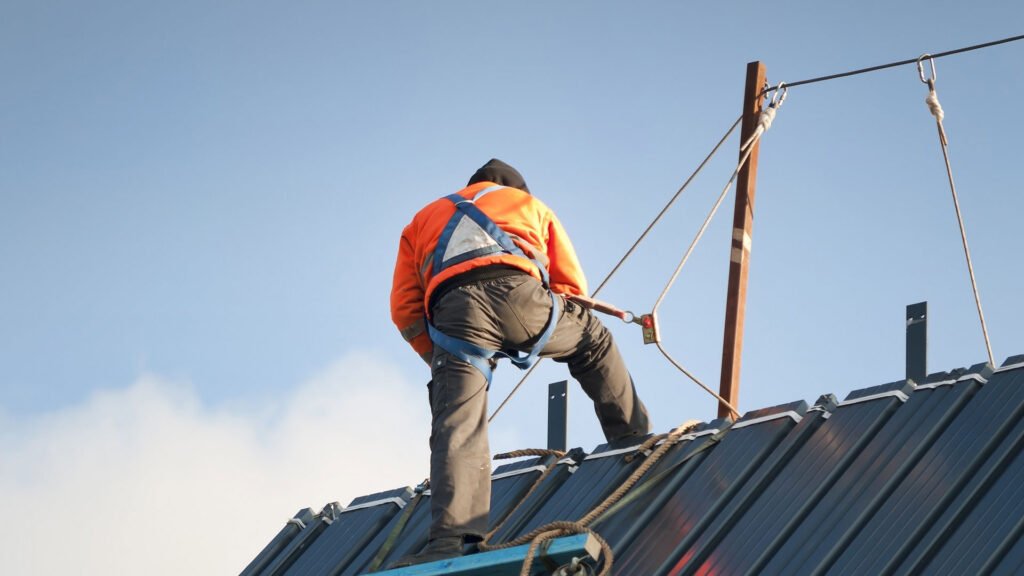
Why Do Roofers Wear Hoodies
5 Reasons Roofers Wear Hoodies
1. Extreme Sun & UV Exposure — Unlike Any Other Trade
Roofers get more sun exposure than any other construction worker.
- Ground-level workers receive ambient UV
- Roofers receive ambient UV plus reflected UV from roofing surfaces
- Flat white TPO/PVC roofs reflect up to 80% of UV radiation back at the worker
- Asphalt shingles absorb heat and reradiate it as infrared — cooking the worker from all sides
| Surface | Reflected UV | Surface Temp (Summer) |
|---|---|---|
| Grass/soil | ~5% | 30–35°C |
| Concrete sidewalk | ~10–15% | 40–50°C |
| Dark asphalt shingle | ~5% (absorbs) | 65–80°C |
| White TPO/PVC membrane | ~75–85% | 50–60°C |
| Gravel BUR roof | ~15–20% | 55–70°C |
A roofer on a white TPO roof gets UV exposure from above (sun) AND below (reflection). A heavyweight cotton hoodie (UPF 30–50+) provides continuous, passive protection that sunscreen cannot match — especially since sweat washes sunscreen off within 20–30 minutes at roofing pace.
The hood itself is critical: roofers tilt their heads down constantly (nailing, cutting, measuring), exposing the back of the neck directly to the sun. This is the #1 skin cancer hotspot for outdoor workers.
2. Protection from Hot Roofing Materials
Roofing involves direct contact with hot materials:
- Asphalt shingles — stored in the sun at 50–65°C, hot to the touch
- Torch-applied modified bitumen — 200°C+ flame, molten asphalt at 180°C+
- Hot asphalt / tar kettles — kettles at 200–260°C, splashes can reach the worker
- Metal roofing in summer — panels can reach 60–70°C surface temp
A hoodie provides a layer between the worker's arms/torso and these hot materials. The cotton fabric chars before it melts — unlike polyester or nylon, which melt, drip, and cause deep burns.
Important distinction: Standard cotton hoodies provide baseline heat protection against brief contact with hot materials and radiant heat. They are not a substitute for FR-rated hoodies where open flame or torch work is involved.
3. Kneeling & Crawling Wear Protection
Roofers spend hours on their knees and elbows:
- Kneeling on abrasive asphalt shingles
- Kneeling on sharp gravel for BUR (built-up roofing)
- Crawling across rough tile or metal panels
- Elbows resting on hot, gritty surfaces while cutting or nailing
A hoodie worn with sleeves down protects the forearms and elbows — the forearms are in constant contact with the roof surface during nailing, measuring, and material handling. This is unique to roofers: most construction workers don't crawl on their forearms for hours a day.
Without a hoodie (or long sleeves), a roofer's forearms are raw, scratched, and sunburned by day two.
4. Wind Protection on Open Roofs
A rooftop in spring or fall is significantly windier and colder than ground level:
- Wind speed increases roughly 1–2× at roof height vs. ground level
- Wind chill on a 10°C day with 25 km/h wind at roof level = feels like 3–5°C
- Roofers work in this for 8–10 hours with no windbreak
A hoodie blocks wind far better than a t-shirt, without the bulk of a jacket that restricts movement. The hood also traps body heat around the head and neck — areas that lose heat rapidly in wind.
5. Tool & Material Pockets
Roofers have limited pocket real estate:
- Tool belt carries nail gun, hammer, pry bar, snips, chalk line
- No room in the tool belt for small items
- Kangaroo pocket on hoodie holds: nail coils, screws, chalk, utility blades, gloves, phone
The kangaroo pocket is ideal because it doesn't interfere with the tool belt — nothing pokes into the worker's hip or side when they bend.
The Risks: When a Roofer's Hoodie Isn't Enough
🔥 Torch-Applied Roofing Needs Real FR
For roofers doing torch-applied modified bitumen or hot-mopping, a standard cotton hoodie is not enough. Even heavy cotton can ignite from sustained flame contact or molten asphalt splashes.
OSHA and NFPA guidance for torch-on roofing recommends:
- FR-rated clothing meeting ASTM D6413
- No synthetic blends (melt/drip risk)
- FR-rated hoodies made from treated cotton fleece or FR knit fabric
If you're doing torch work in a standard hoodie, you're relying on luck.
🔥 Asphalt & Tar Splash Burns
Hot asphalt at 200–260°C sticks to fabric and continues burning. Even cotton charrs through eventually. For roofers working near kettles or mop buckets:
- Standard hoodie = burns through in 2–5 seconds of contact
- FR cotton hoodie = chars but contains the burn, gives time to remove
- FR blend with Nomex/Kevlar = best protection, longer escape time
🔥 Heat Stress on Humid Days
Roofers have the highest heat-stress risk of any construction trade. Adding a hoodie in humid conditions (>60% RH):
- Traps body heat when sweat can't evaporate
- Increases core temperature rapidly
- Risk of heat exhaustion at 38–40°C core temp
- Risk of heat stroke (organ damage) at 40°C+
For humid-climate roofers: Lightweight moisture-wicking hoodies (180–220 GSM fleece) or mesh-lined hoodies are better choices.
🔥 Snag Hazards on Rooftops
Roofers work on slopes, around vents, flashing, and edges. Hoodie drawstrings can:
- Catch on vent pipes and HVAC units
- Snag on flashing edges
- Get caught in coil nailers or shearing tools
- Create a fall hazard if caught on something at roof edge
Better option: Work hoodies with breakaway drawstrings or drawstring-free designs.
Hoodie Fabric Comparison for Roofers
| Feature | Street Cotton Hoodie | Lightweight Fleece Hoodie | FR Cotton Hoodie | Hi-Vis FR Hoodie |
|---|---|---|---|---|
| UPF rating | 20–50 (varies) | 15–25 | 30–50+ | 30–50+ |
| Hot tar/asphalt protection | ★★☆☆☆ | ★☆☆☆☆ (melt risk) | ★★★★☆ | ★★★★☆ |
| Torch work / open flame | ★☆☆☆☆ (ignites) | ✗ (melts) | ★★★★☆ (ASTM D6413) | ★★★★☆ |
| Breathable (hot/dry) | ★★★☆☆ | ★★★★☆ | ★★★☆☆ | ★★★☆☆ |
| Breathable (hot/humid) | ★★☆☆☆ | ★★★★☆ | ★★☆☆☆ | ★★☆☆☆ |
| Wind resistance | ★★★★☆ | ★★★☆☆ | ★★★★☆ | ★★★★☆ |
| Abrasion (kneeling/elbows) | ★★★☆☆ | ★★☆☆☆ | ★★★☆☆ | ★★★☆☆ |
| Quick dry | ✗ (absorbs water) | ✓ | ✗ (cotton absorbs) | ✗ (cotton absorbs) |
| Hi-vis compliant | ✗ | ✗ | ✗ | ✓ (ANSI Class 2 or 3) |
| Industrial laundry safe | ✗ | ✓ | ✓ | ✓ |
| Breakaway drawstring | ✗ | ✗ (unless specified) | ✓ (standard) | ✓ (standard) |
What Roofing Companies Should Provide
Roofers choose hoodies because hoodies work for the job. Instead of banning them, provide hoodies that are designed for roofing work:
| Roofer's Need | Professional Hoodie Solution | Upgrade Over Street Hoodie |
|---|---|---|
| Full sun protection (neck + arms) | Hooded work hoodie, UPF 50+ | Guaranteed UV rating, no gaps |
| Hot material contact protection | FR-rated cotton fleece hoodie | NFPA 70E / ASTM D6413 compliant |
| Kneeling/elbow abrasion | Reinforced elbow panels in work hoodie | 2–3× longer wear life than standard fleece |
| Torch-on / hot-mop work | FR hoodie certified for ASTM F1959 (arc) + ASTM D6413 (flame) | Proper thermal protection, OSHA compliant |
| Heat stress reduction | Lightweight moisture-wicking fleece (200 GSM) or mesh-lined | Cools via evaporation, reduces core temp |
| Hi-vis requirement | ANSI Class 3 hi-vis hoodie with reflective stripes | Site compliant without separate vest |
| Snag prevention | Breakaway drawstring or drawstring-free hoodie | Eliminates entanglement hazard |
About Xingye Textile — Work Hoodies for Roofing Professionals
XINGYE TEXTILE manufactures knit and woven fabrics and produces finished garments for the workwear industry, including work hoodies for construction and roofing applications.
Our hoodie capabilities for roofing:
| Type | Fabric Options | Key Features |
|---|---|---|
| Standard work hoodie | Cotton fleece, poly-cotton fleece, 240–400 GSM | Kangaroo pocket, UPF 30–50+, reinforced seams, breakaway drawstring, industrial wash safe |
| Lightweight summer hoodie | Cotton jersey, moisture-wicking fleece, 180–220 GSM | Breathable, quick-dry, UPF 20–30, ideal for humid climates |
| FR-rated hoodie | FR-treated cotton fleece (NFPA 70E / ASTM D6413), 280–360 GSM | Meets OSHA requirements for torch-on roofing, hot asphalt work, and arc flash |
| Hi-vis hoodie | ANSI-rated fluorescent fleece with reflective tape, Class 2 or 3 | DOT-compliant, eliminates need for separate hi-vis vest |
| Custom / branded hoodie | Your fabric choice, logo embroidery, private labeling | Perfect for roofing company uniform programs |
We also supply:
- ✅ Finished garment manufacturing — fabric to finished hoodie under one roof
- ✅ Custom development — weight, color, finish, pocket layout, reflective placement
- ✅ OEM and ODM — your brand, our manufacturing
- ✅ Bulk or wholesale supply — fabric rolls or finished garments
Have a roofing workwear project? Contact us for samples, spec sheets, and pricing.