Every uniform buyer eventually faces this choice: 100% cotton twill or poly cotton?
It looks like a simple question, but it hides a common confusion. Cotton twill and poly cotton aren't actually two separate species — poly cotton is often woven in a twill construction too. The real comparison is between 100% cotton twill (pure cotton, twill weave) and poly cotton blends (cotton + polyester, usually also twill).
One gives you natural comfort and traditional appearance. The other gives you durability, easy care, and lower cost. Which one belongs in your uniform program depends on who wears it, where they work, and how the uniforms get washed.
This guide compares cotton twill vs. poly cotton across every decision factor — comfort, durability, maintenance, cost, and appearance — so you can choose with confidence.
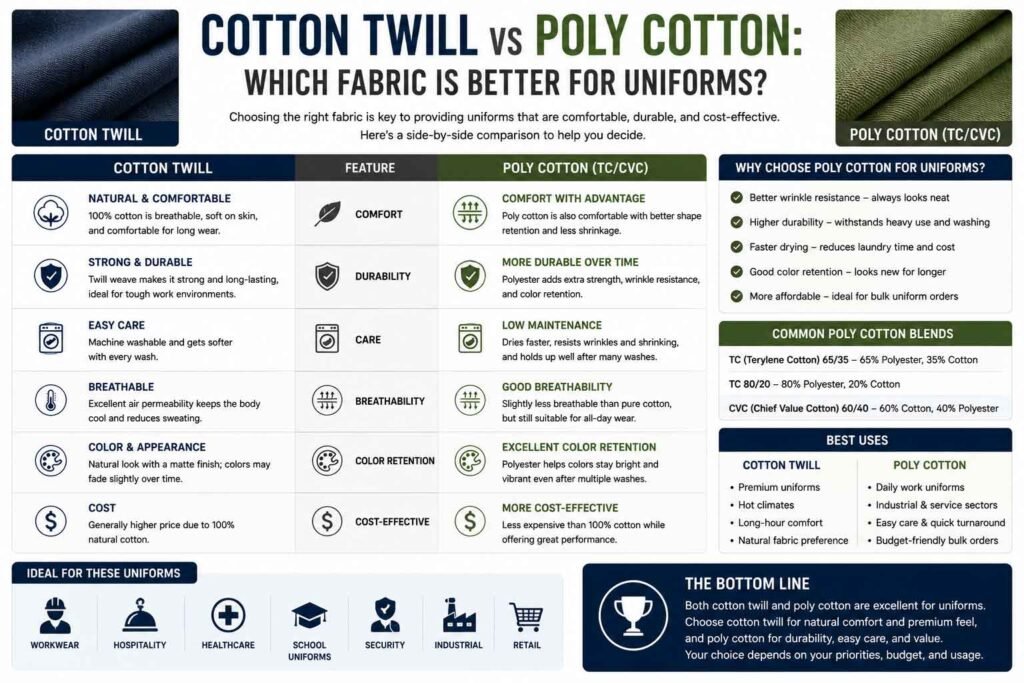
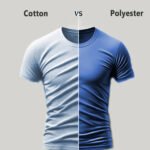
Cotton Twill vs Poly Cotton
First, Clear Up the Confusion
| Term | What It Actually Means |
|---|---|
| Cotton twill | 100% cotton, woven in a twill pattern (diagonal ribs) |
| Poly cotton | A blend of polyester + cotton — any weave (twill, poplin, oxford, plain) |
| Poly cotton twill | The same blend, woven in twill — the most common uniform construction |
So when comparing 'cotton twill vs. poly cotton,' we're really comparing:
100% cotton in twill weave vs. polyester-cotton blend (usually TC 65/35 or CVC 60/40) in twill weave
The most common poly cotton twill blends:
| Blend | Composition | Nickname |
|---|---|---|
| TC 65/35 | 65% poly / 35% cotton | Poly-dominant — maximum durability |
| CVC 60/40 | 60% cotton / 40% poly | Cotton-rich — comfort first |
1. Comfort & Feel
| Factor | 100% Cotton Twill | Poly Cotton Twill (TC 65/35) | Poly Cotton Twill (CVC 60/40) |
|---|---|---|---|
| Softness | ★★★★★ | ★★★☆☆ | ★★★★☆ |
| Breathability | ★★★★★ | ★★☆☆☆ | ★★★★☆ |
| Moisture absorption | ★★★★★ (8–10%) | ★★☆☆☆ (0.4% poly) | ★★★★☆ |
| Skin feel | Natural, familiar | Smooth, slightly synthetic | Cotton-like |
| Long-shift comfort | ★★★★★ | ★★★☆☆ | ★★★★☆ |
Verdict: 100% cotton twill is the most comfortable. CVC 60/40 gets close. TC 65/35 is the least comfortable in heat — but many wearers find it perfectly fine in air-conditioned environments.
The heat factor: A worker in a hot warehouse or kitchen wearing TC 65/35 will feel noticeably hotter than one in cotton twill or CVC. Polyester doesn't absorb sweat — it stays on the skin.
2. Durability & Lifespan
| Factor | 100% Cotton Twill | TC 65/35 | CVC 60/40 |
|---|---|---|---|
| Tear strength | ★★★☆☆ | ★★★★★ | ★★★★☆ |
| Abrasion resistance | ★★★☆☆ | ★★★★★ | ★★★★☆ |
| Lifespan (home wash) | 2–3 years | 3–4 years | 2–3 years |
| Lifespan (industrial laundry) | 6–12 months | 18–24 months | 6–12 months |
| Pilling resistance | ★★★★★ (no pilling) | ★★★★☆ | ★★★★☆ |
Verdict: Poly cotton — especially TC 65/35 — wins durability by a wide margin. This is the single biggest reason industrial and workwear programs choose poly cotton.
Why polyester is stronger: Polyester fibers are extruded, continuous, and stronger than natural cotton staples. They resist tearing, abrasion, and chemical degradation far better.
3. Wrinkle Resistance & Appearance
| Factor | 100% Cotton Twill | TC 65/35 | CVC 60/40 |
|---|---|---|---|
| Wrinkles after washing | ★★☆☆☆ — needs ironing | ★★★★★ — no ironing | ★★★★☆ — minimal |
| Wrinkles during wear | ★★★☆☆ | ★★★★★ | ★★★★☆ |
| Appearance after 8-hr shift | Rumpled | Crisp | Presentable |
| Color depth | ★★★★★ — rich, natural | ★★★☆☆ — slightly flat | ★★★★☆ |
Verdict: Poly cotton wins the wrinkle battle — this is its second biggest selling point. Cotton twill looks more traditional and premium when pressed, but requires constant maintenance to stay that way.
The fine dining exception: For premium uniforms where appearance is king and laundry staff iron everything — hotels, fine dining, formal service — cotton twill's richer drape and color depth still win.
4. Shrinkage Control
| Factor | 100% Cotton Twill | TC 65/35 | CVC 60/40 |
|---|---|---|---|
| Shrinkage (without pre-shrink) | 5–8% | 1–3% | 2–4% |
| Shrinkage (pre-shrunk cotton) | 2–3% | 1–2% | 1–2% |
| Shape retention after 50 washes | ★★★☆☆ | ★★★★★ | ★★★★☆ |
Verdict: Polyester's dimensional stability keeps poly cotton in shape. Cotton twill must be pre-shrunk to be usable for uniforms — always verify this with your supplier.
5. Stain & Color Performance
| Factor | 100% Cotton Twill | TC 65/35 | CVC 60/40 |
|---|---|---|---|
| Stain absorption | ★★☆☆☆ — absorbs oils and liquids | ★★★★☆ — resists absorption | ★★★☆☆ |
| Stain removal | ★★★☆☆ — sets if not washed fast | ★★★★☆ — washes out | ★★★☆☆ |
| Color fastness | ★★★☆☆ — fades faster | ★★★★★ — holds color | ★★★★☆ |
| Fading over 50 washes | Visible | Minimal | Moderate |
| Bleach tolerance | ★★★★☆ (but weakens fibers) | ★★★☆☆ (yellowes) | ★★★☆☆ |
Verdict: Poly cotton is easier to keep clean and color-true over time. Cotton twill stains more easily but tolerates chlorine bleach better.
6. Industrial Laundry Compatibility
| Factor | 100% Cotton Twill | TC 65/35 | CVC 60/40 |
|---|---|---|---|
| Survives 85°C commercial wash | ★★☆☆☆ | ★★★★★ | ★★★☆☆ |
| Survives strong chemicals | ★★★☆☆ | ★★★★★ | ★★★☆☆ |
| Industrial laundry lifespan | 6–12 months | 18–24 months | 6–12 months |
| Best choice for rental/laundry programs | ✗ | ✓ The standard | ◐ Acceptable |
Verdict: If uniforms go through third-party industrial laundry (hotels, hospitals, catering, uniform rental services), TC 65/35 is the only sensible choice. Cotton twill will degrade in months.
7. Cost Comparison
| Factor | 100% Cotton Twill | TC 65/35 | CVC 60/40 |
|---|---|---|---|
| Fabric cost per meter | $$$ | $ | $$ |
| Uniform cost per piece | $18–30 | $12–18 | $15–22 |
| Cost per year (home wash) | $9–15 | $6–9 | $8–11 |
| Cost per year (industrial laundry) | $18–30 (short life) | $8–12 | $22–44 (shorter life) |
| Long-term cost | High | Lowest | Medium |
Verdict: TC 65/35 is the lowest cost-per-year in every scenario. Cotton twill is the most expensive per year — especially under industrial laundry.
8. Safety Considerations
| Factor | 100% Cotton Twill | TC 65/35 | CVC 60/40 |
|---|---|---|---|
| Melting risk near heat | ★★★★★ — no melt, chars | ★★★☆☆ — polyester melts | ★★★★☆ — less melt |
| Sparks & grinding debris | ★★★★☆ — chars, self-extinguishes-ish | ★★☆☆☆ — melts, sticks | ★★★☆☆ |
| FR treatment possible | ✓ (FR cotton standard) | ✓ (limited) | ✓ |
Verdict: For work near heat, sparks, or welding — 100% cotton is safer than poly blends. Polyester melts and drips; cotton chars. This is why FR and welding environments specify cotton or FR cotton, not standard poly cotton.
Full Comparison Table
| Factor | 100% Cotton Twill | TC 65/35 Poly Cotton | CVC 60/40 Poly Cotton |
|---|---|---|---|
| Comfort | ★★★★★ | ★★★☆☆ | ★★★★☆ |
| Breathability | ★★★★★ | ★★☆☆☆ | ★★★★☆ |
| Durability | ★★★☆☆ | ★★★★★ | ★★★★☆ |
| Wrinkle resistance | ★★☆☆☆ | ★★★★★ | ★★★★☆ |
| Shrinkage control | ★★☆☆☆ | ★★★★★ | ★★★★☆ |
| Stain resistance | ★★☆☆☆ | ★★★★☆ | ★★★☆☆ |
| Color retention | ★★★☆☆ | ★★★★★ | ★★★★☆ |
| Industrial laundry | ★★☆☆☆ | ★★★★★ | ★★★☆☆ |
| Cost per year | High | Lowest | Medium |
| Heat safety (no melt) | ★★★★★ | ★★☆☆☆ | ★★★★☆ |
| Traditional premium look | ★★★★★ | ★★★☆☆ | ★★★★☆ |
| Overall winner | Premium comfort | Workhorse value | Best balance |
Which Should You Choose? Decision Guide
| Your Situation | Best Choice | Why |
|---|---|---|
| Industrial laundry program (hotel, hospital, rental service) | TC 65/35 poly cotton | Survives 85°C washing, lowest cost per year |
| Premium appearance uniforms (fine dining, front desk, formal) | Cotton twill | Rich drape, natural color, traditional prestige |
| Hot, physical work (kitchen, warehouse, outdoor) | CVC 60/40 or cotton twill | Breathability and comfort matter most |
| Work near heat/sparks (welding, foundry) | Cotton twill (or FR cotton) | No melt risk — never polyester near heat |
| Budget uniform program | TC 65/35 | Lowest cost per year by a clear margin |
| School uniforms (kids, home-washed) | CVC 60/40 | Comfort + easy care for parents |
| Staff comfort priority (12-hr shifts) | CVC 60/40 | Cotton-rich comfort with wrinkle resistance |
| Wrinkle-free required (no ironing budget) | TC 65/35 | Crisp out of the dryer, every time |
Care Comparison
| Care Item | Cotton Twill | Poly Cotton (TC/CVC) |
|---|---|---|
| Wash temperature | Up to 60°C | Up to 60°C home, 85°C industrial (TC) |
| Bleach | Chlorine OK (weakens fibers) | Oxygen bleach only — chlorine yellowes poly |
| Drying | Tumble low, iron while damp | Tumble low — no ironing needed |
| Ironing | Medium-high heat, steam | Low-medium only — poly melts at high heat |
| Shrinkage risk | High without pre-shrink | Low |
| Stain pre-treatment | Needed for oil/grease | Usually washes out |
Common Misconceptions
'Poly cotton is just cheap cotton.' No — it's an engineered blend with deliberately different properties: durability and easy care instead of natural softness. It's not a downgrade; it's a different spec for a different job.
'Cotton twill is always better quality.' Quality depends on GSM, yarn, dye, and finishing — not just fiber content. A premium TC 65/35 can outlast and out-perform a budget cotton twill.
'Poly cotton can't be worn in summer.' CVC 60/40 is perfectly wearable in heat. The problem fabric is high-polyester knit, not cotton-rich twill.
'Cotton twill is flame resistant.' No — cotton twill doesn't melt (safer than poly), but it's not FR-rated unless specifically treated. For real flame protection, use certified FR fabric.
About Xingye Textile — Cotton Twill & Poly Cotton Manufacturer
XINGYE TEXTILE manufactures both 100% cotton twill and poly cotton twill (TC 65/35 and CVC 60/40) for uniforms and workwear in 50+ countries. With 30 years in textile manufacturing, we supply both families from one source — so you can compare, sample, and choose.
Our twill range:
| Fabric | Composition | Weight | Best For |
|---|---|---|---|
| Cotton Twill | 100% cotton, pre-shrunk | 260–360 GSM | Fine dining, premium uniforms, heat-safety workwear |
| TC 65/35 Twill | 65% poly / 35% cotton | 200–300 GSM | Industrial laundry programs, workwear, schools |
| CVC 60/40 Twill | 60% cotton / 40% poly | 240–300 GSM | Chef coats, scrubs, comfort-first uniforms |
| Poly Cotton Ripstop | 65/35 or 50/50 | 200–280 GSM | Heavy workwear, tactical uniforms |
Our capabilities:
- ✅ Both fabric families from one factory — compare side by side
- ✅ Custom weight, weave, and color development
- ✅ Pre-shrunk cotton — no surprise shrinkage
- ✅ Pantone color matching with spectrophotometer verification
- ✅ Finishes: wrinkle-free, stain-release, DWR, antimicrobial
- ✅ Single-dye-lot production for uniform programs
- ✅ Finished garment manufacturing — from fabric to finished uniform
Choosing between cotton twill and poly cotton? [Contact us] for samples of both — compare them in your own wash test before you decide.
By Andy Tian, Export Sales Manager, XINGYE TEXTILE
Andy Tian has 10 years of experience in textile export at XINGYE TEXTILE, covering fabric sourcing, pricing, sampling, and order execution for uniform fabric buyers worldwide.