When it comes to uniforms, fit and durability are paramount. Whether for corporate, healthcare, industrial, or school settings, uniforms must maintain their shape and size after repeated washes. Fabric shrinkage, a common issue in textile manufacturing, directly impacts this stability. But how much fabric shrinkage is acceptable for uniforms? Understanding this is crucial for manufacturers, buyers, and program managers who want to ensure uniform quality and customer satisfaction.
In this article, we will explore fabric shrinkage in detail, its acceptable limits for uniforms, testing methods, causes, and how to control it effectively. We will incorporate insights from industry-leading standards and research to provide a thorough, SEO-optimized resource.
How Much Fabric Shrinkage Is Acceptable for Uniforms
What Is Fabric Shrinkage?
Fabric shrinkage refers to the percentage reduction in the dimensions (length and width) of fabric after washing, drying, or other finishing processes. It happens because fibers and yarns are stretched during manufacturing (weaving, knitting, finishing) and tend to relax back to their natural state once exposed to heat, moisture, and mechanical agitation.
Shrinkage is measured as:
Shrinkage (%) = [(Original Dimension – Final Dimension) / Original Dimension] × 100
This measurement is taken separately for the warp (lengthwise) and weft (widthwise) directions because shrinkage rates often differ.
Why Is Fabric Shrinkage Important for Uniforms?
Uniforms are not just everyday garments; they are functional apparel worn for extended hours and washed frequently under industrial conditions. Excessive shrinkage can cause:
- Poor fit and discomfort for wearers
- Distortion of seams and garment structure
- Increased returns and complaints from end-users
- Additional costs for manufacturers due to rework or replacements
Therefore, controlling fabric shrinkage is critical to ensure uniforms maintain their professional appearance and performance over time.
Acceptable Fabric Shrinkage Limits for Uniforms
According to international standards such as ISO 6330, AATCC TM 135, and industry best practices, the acceptable shrinkage limits vary depending on fabric type and application:
| Fabric Type | Maximum Acceptable Shrinkage | Notes |
|---|---|---|
| Woven fabrics | Up to 3% | Typical for cotton/polyester blends used in uniforms |
| Knit fabrics | Up to 5% | More elastic, so higher shrinkage tolerated |
| Technical textiles (e.g., medical, automotive) | ≤ 1% | Strict control due to functional requirements |
| Uniforms (general) | ≤ 2-3% | Per ISO 5077 and ISO 5077, tighter control for professional uniforms |
For uniforms specifically, the recommended shrinkage tolerance is 2% for woven fabrics and up to 3-5% for knits, depending on the fiber content and intended use. For example:
- Cotton/polyester (TC 65/35) blends often have shrinkage controlled to less than 3% after industrial washing.
- Polyester-rich fabrics (TR 65/35) are more stable, with shrinkage often below 2%.
- 100% cotton uniforms may shrink more (3-8%), making blends preferable for industrial laundry environments.
Key Factors Influencing Fabric Shrinkage in Uniforms
Understanding what causes fabric shrinkage helps in selecting and producing more stable uniforms. The main factors include:
1. Fiber Content
- Natural fibers like cotton and wool absorb water, swell, and then shrink upon drying.
- Synthetic fibers such as polyester and nylon are hydrophobic and heat-stable, showing minimal shrinkage.
- Blends like polyester-cotton (TC) reduce shrinkage compared to pure cotton.
2. Fabric Construction
- Woven fabrics are generally more dimensionally stable.
- Knit fabrics have more elasticity and can shrink more due to loop relaxation.
- Denser weaves and higher yarn twist reduce shrinkage.
3. Finishing Processes
- Sanforization (mechanical pre-shrinking) compresses the fabric, reducing future shrinkage to below 1-3%.
- Heat setting stabilizes synthetic fibers.
- Untreated fabrics may shrink excessively during washing.
4. Washing and Drying Conditions
- High temperatures and tumble drying increase shrinkage.
- Industrial laundering at 60-75°C with aggressive chemicals accelerates shrinkage.
- Care instructions aligned with fabric testing conditions help minimize unexpected shrinkage.
How Is Fabric Shrinkage Tested?
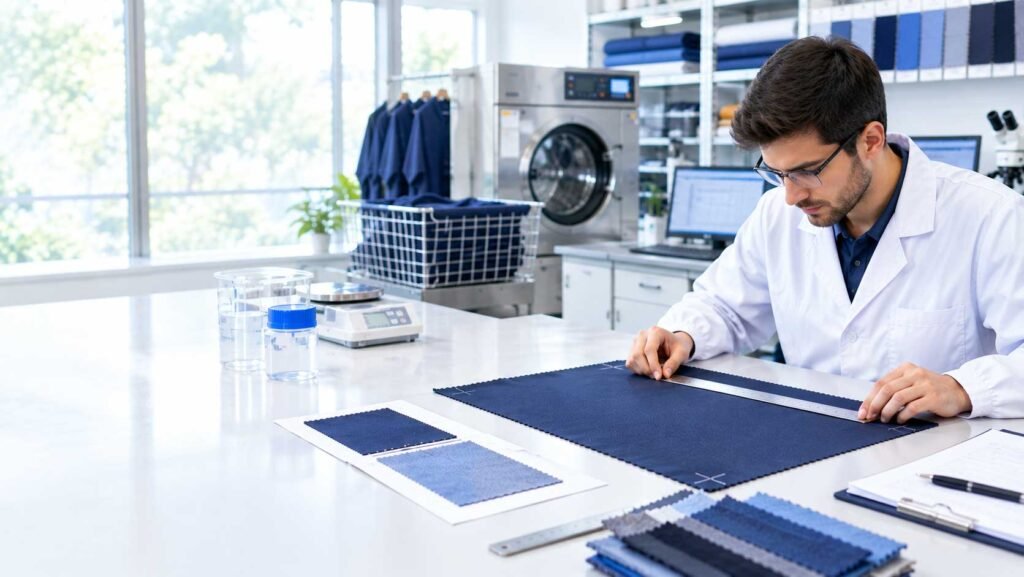
Uniform manufacturers and textile labs use standardized testing to ensure shrinkage is within limits:
Testing Standards:
- ISO 6330: Domestic washing and drying procedures for textiles.
- AATCC TM 135: American standard for dimensional change after laundering.
- ISO 5077 / ISO 3759: Measurement and calculation of dimensional change.
Testing Procedure:
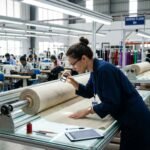
- Sample Preparation: Cut fabric specimens (usually 50x50 cm).
- Conditioning: Stabilize samples in controlled temperature and humidity.
- Marking: Reference points are marked on fabric for accurate measurement.
- Washing and Drying: Samples undergo multiple wash/dry cycles at specified temperatures.
- Measurement: Dimensions before and after washing are measured to calculate shrinkage percentage.
Automated tools like the Smart Shrink tester use AI and high-resolution cameras to increase accuracy and reduce human error, delivering results in seconds with ±0.1% precision.
How to Control and Minimize Fabric Shrinkage in Uniforms
Uniform manufacturers can take several steps to control shrinkage:
1. Use Pre-shrunk or Sanforized Fabrics
- Sanforization locks fabric dimensions mechanically.
- Heat setting stabilizes synthetic fibers.
2. Choose Appropriate Fabric Blends
- Polyester-cotton blends (e.g., TC 65/35) reduce shrinkage and improve durability.
- Avoid 100% cotton for industrial laundry uniforms unless pre-treated.
3. Specify Shrinkage Limits in Purchase Orders
- Include maximum allowable shrinkage (e.g., ≤ 3%) with testing standards.
- Require test reports from suppliers for quality assurance.
4. Align Care Labels with Testing Conditions
- Match care instructions (e.g., washing temperature, drying method) with the fabric’s tested shrinkage profile.
- For uniforms washed industrially, specify washing at 60°C with tumble drying if applicable.
5. Educate End-Users
- Provide guidance on proper washing and drying to minimize shrinkage.
- Recommend air drying or low heat tumble drying where possible.
Why Shrinkage Control Matters: Real-World Impact
Shrinkage beyond acceptable limits can lead to:
- Poor garment fit, affecting wearer comfort and professional appearance.
- Increased returns and complaints, damaging brand reputation.
- Higher costs for reorders, replacements, and lost productivity.
For example, a cotton uniform shirt shrinking 5% after the first wash can become unwearable, forcing costly reorders. Conversely, a well-controlled shrinkage of ≤3% ensures consistent sizing and longer garment life.
Conclusion: Setting the Right Shrinkage Expectations for Uniforms
In summary, acceptable fabric shrinkage for uniforms typically ranges between 2-3% for woven fabrics and up to 5% for knits, depending on fiber content and finishing. Controlling shrinkage through fabric selection, finishing processes like sanforization, and proper testing is essential for delivering uniforms that fit well and last.
By specifying shrinkage limits in contracts, using standardized testing methods, and educating users on care, manufacturers and buyers can reduce costly quality issues and improve satisfaction.