When it comes to producing camouflage apparel or gear in bulk, fabric quality is paramount. The camouflage pattern may catch the eye, but the true performance and durability of the product hinge on the fabric beneath the print. Whether you’re a manufacturer, supplier, or brand owner, knowing how to check camouflage fabric quality before bulk production can save you from costly mistakes, returns, and customer dissatisfaction.
This comprehensive guide will walk you through the essential factors to evaluate camouflage fabric quality, backed by insights from industry-leading sources. From fiber composition to finishing treatments, you’ll gain the knowledge to make informed sourcing decisions and ensure your bulk production runs smoothly.
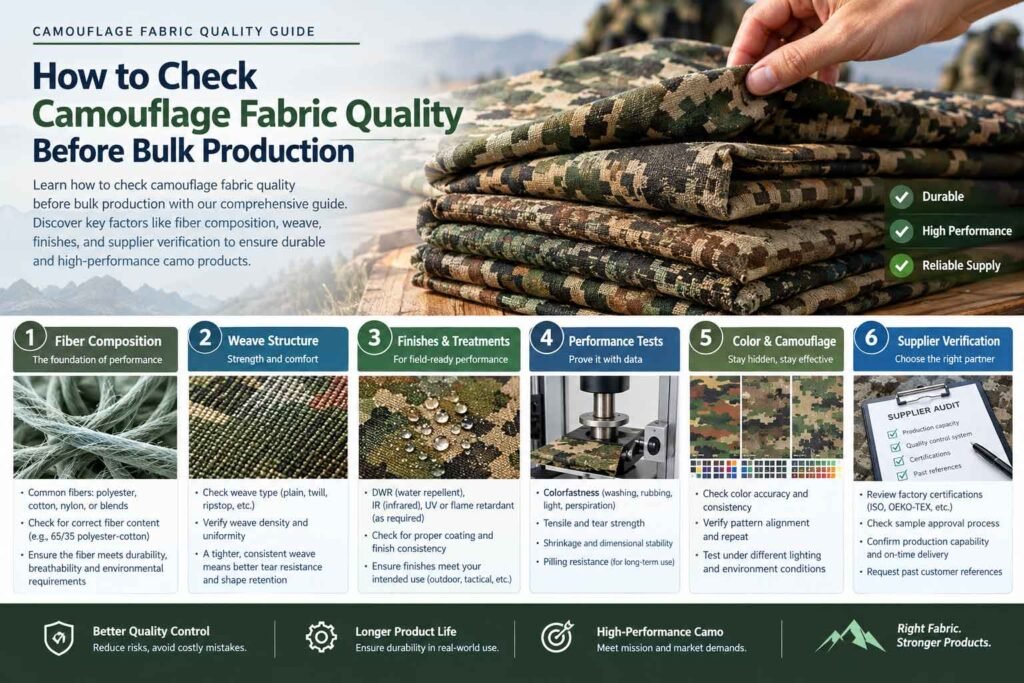
How to Check Camouflage Fabric Quality Before Bulk Production
Why Fabric Quality Matters in Camouflage Production
Camouflage fabric is not just about aesthetics. It serves a critical function in outdoor, tactical, and hunting environments by blending the wearer into their surroundings. However, if the fabric is weak, uncomfortable, or poorly finished, the camouflage effect and product lifespan suffer.
Key reasons to prioritize fabric quality include:
- Durability: Resistance to tearing, abrasion, and wear in harsh outdoor conditions.
- Comfort: Breathability, moisture management, and softness for prolonged use.
- Performance: Water resistance, noise reduction, and colorfastness under sunlight and washing.
- Consistency: Uniformity across production batches to maintain brand reputation.
Key Factors to Check Before Bulk Production
1. Fiber Composition and Fabric Base
Understanding the fiber content is the foundation of evaluating camouflage fabric quality. The choice of fibers influences durability, comfort, drying time, and cost.
- Cotton: Soft, breathable, and comfortable but absorbs moisture and wrinkles easily. Best for casual wear rather than heavy-duty use.
- Polyester: Durable, quick-drying, and colorfast but less breathable and may retain odors.
- Nylon: Stronger abrasion resistance than polyester, often used in tactical gear.
- Blends (e.g., Cotton/Polyester 65/35): Balance comfort and durability, commonly used in performance camo fabrics.
Tip: Check fabric labels or supplier data sheets for fiber percentages and request swatches to feel the fabric firsthand.
2. Weave Structure and Fabric Weight
The weave affects the fabric’s strength, texture, and noise profile.
- Ripstop Weave: Reinforced grid pattern prevents tears from spreading; ideal for tactical and hunting gear.
- Twill Weave: Diagonal rib pattern offering durability and a quieter hand feel.
- Plain Weave: Simple over-under pattern, less tear-resistant, often used in cheaper fabrics.
Fabric weight, measured in GSM (grams per square meter) or denier, indicates durability and suitability for different applications:
- Lightweight (<150 GSM): Base layers, warm-weather shirts.
- Mid-weight (150-250 GSM): Most hunting pants and jackets.
- Heavyweight (>250 GSM): Cold-weather gear and heavy-duty outerwear.
Tip: Request fabric weight specifications and physically test the fabric’s heft and drape.
3. Camouflage Pattern Quality and Colorfastness
The camouflage pattern’s clarity and color accuracy are crucial for effective concealment and aesthetic appeal.
- Ensure the pattern matches the intended environment (woodland, desert, marsh, snow).
- Verify colorfastness through tests for washing, rubbing, light exposure, and perspiration (ISO 105 standards).
- Request lab dip approvals or Pantone references to confirm color consistency across batches.
Tip: Ask suppliers for spectrophotometer reports or color fastness test certificates to avoid fading or mismatched colors.
4. Functional Finishes and Treatments
Modern camouflage fabrics often include performance-enhancing finishes that are not always apparent on labels but vital for quality.
- Durable Water Repellent (DWR): Causes water to bead and roll off, essential for light rain resistance.
- Moisture-Wicking / Antimicrobial Treatments: Keep the wearer dry and reduce odor.
- UV Protection: Fabrics with UPF ratings shield against harmful sun rays.
- Soil and Stain Resistance: Useful for workwear and tactical gear.
Tip: Confirm the presence and durability of finishes with your supplier, and inquire about care instructions to maintain these treatments.
5. Fabric Construction and Manufacturing Quality
Beyond the fabric itself, inspect the construction quality:
- Seam Strength: Look for double stitching or taped seams in high-stress areas.
- Pattern Matching: Well-aligned patterns at seams indicate higher manufacturing standards.
- Fabric Hand Feel and Noise: Crinkle the fabric to assess stiffness and noise; brushed cotton or soft polyester tends to be quieter than stiff nylon.
Tip: Order sample garments or fabric swatches and perform physical tests including stretch, tear resistance, and wash cycles.
Practical Steps to Verify Camouflage Fabric Quality
Step 1: Request Fabric Swatches and Technical Data Sheets (TDS)
Before committing to bulk orders, obtain fabric swatches along with TDS that include:
- Fiber composition
- Weight (GSM or denier)
- Weave type
- Finishing treatments
- Test results for colorfastness, tear strength, and water repellency
Step 2: Conduct In-House Physical Testing
Perform simple tests such as:
- Tear and Stretch Test: Tug fabric diagonally to assess elasticity and resistance.
- Water Repellency Test: Spray water and observe if it beads or soaks in.
- Color Bleed Test: Rub wet fabric on white cloth to check for dye transfer.
- Noise Test: Crinkle fabric near the ear to gauge rustling noise.
Step 3: Verify Supplier Certifications and Production Capability
Ensure your supplier maintains:
- ISO 9001 or equivalent quality management certification.
- Compliance with industry standards (e.g., AATCC, ISO).
- Consistent batch production with traceability.
- Ability to provide repeatable color and fabric quality.
Common Pitfalls to Avoid
- Relying Solely on Marketing Claims: Terms like “whisper-quiet” or “military-grade” are subjective; always verify physically.
- Ignoring Functional Finishes: DWR is not waterproof; understand the difference to set realistic product expectations.
- Neglecting Batch Consistency: Color and fabric hand feel can vary between lots, causing quality control issues.
- Overlooking Environmental Impact: Synthetic fibers shed microplastics; consider suppliers with recycled content or eco-certifications.
Conclusion: Ensure Success by Prioritizing Fabric Quality
Knowing how to check camouflage fabric quality before bulk production is essential for manufacturers and brands aiming to deliver durable, comfortable, and effective camouflage products. By focusing on fiber composition, weave, fabric weight, pattern fidelity, functional finishes, and supplier reliability, you can avoid costly production errors and build trust with your customers.
Take Action: Start by requesting detailed fabric samples and test reports from your suppliers. Conduct hands-on evaluations and insist on certifications and consistent batch quality. A well-chosen camouflage fabric is the backbone of any successful bulk production run—invest the time upfront to secure your product’s performance and reputation.