Sourcing uniform fabric from China is an increasingly popular choice for businesses worldwide, thanks to China’s vast textile industry, competitive pricing, and diverse fabric options. Whether you’re a uniform manufacturer, a corporate buyer, or a fashion brand looking for durable workwear textiles, understanding how to source uniform fabric from China effectively can save you time, reduce costs, and ensure product quality.
In this comprehensive guide, we’ll walk you through everything you need to know about sourcing uniform fabric from China in 2026, including key sourcing regions, supplier vetting, MOQ strategies, certifications, and logistics. Let’s dive in.
Why Source Uniform Fabric from China?
China produces over 54% of the world’s textile exports, offering unmatched vertical integration—from yarn spinning to dyeing and finishing—all within concentrated industrial hubs. This integration enables faster lead times, lower costs, and a broader range of fabric types, including specialized uniform fabrics such as heavy-duty twill, flame-retardant textiles, and high-visibility materials.
Key advantages include:
- Competitive Pricing: Factory-direct sourcing can reduce costs by up to 30% compared to intermediaries.
- Diverse Fabric Options: From polyester-cotton blends to flame-retardant and high-visibility fabrics, China’s mills cater to all uniform needs.
- Certifications: Many Chinese manufacturers hold ISO 9001, OEKO-TEX, GOTS, and EN ISO certifications, ensuring compliance with international standards.
- Scalable Production: Capable of handling orders from small batches to hundreds of tons monthly.
Step 1: Understand China’s Key Fabric Sourcing Regions for Uniform Fabrics
China’s textile market is vast, but five major regions dominate fabric sourcing. Knowing which region specializes in uniform fabrics helps you target the right suppliers efficiently.
| Region | Specialty Fabrics | Ideal For |
|---|---|---|
| East China (Shaoxing, Keqiao) | High-end woven fabrics, polyester-cotton blends, twill | Large volume uniform fabric orders, export-grade quality |
| South China (Guangzhou, Zhongda) | Knits, jersey, fast fashion fabrics | Small- to medium-sized uniform orders, quick replenishment |
| Central China (Wuhan, Changsha) | Cost-effective basics, poly-cotton blends | Domestic uniform supply, budget-conscious buyers |
| North China (Shijiazhuang, Qingdao) | Cotton spinning, industrial textiles, poly-cotton blends | Durable workwear, uniform fabrics with abrasion resistance |
| West China (Xi’an, Chengdu) | Regional specialties, woolen fabrics, heavy-duty textiles | Local uniform needs, winter fabrics |
For sourcing uniform fabric, East China and North China are the primary hubs due to their mature industrial chains and specialization in workwear and uniform textiles.
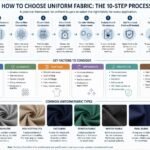
Step 2: Identify the Right Fabric Types for Uniforms
Uniform fabrics must meet durability, comfort, and compliance standards. Here are the most common types used in uniform manufacturing:
1. Heavy-Duty Twill (Polyester/Cotton 65/35 or 80/20)
- Weight: 280-320 gsm
- Features: High abrasion resistance (10,000+ Martindale cycles), tear strength, flame retardant options (EN ISO 11612)
- Applications: Corporate uniforms, chef jackets, industrial workwear
- Certifications: EN ISO 11612, EN ISO 13688
2. High-Visibility Fabric
- Composition: Fluorescent polyester with reflective tape
- Weight: 250-300 gsm
- Features: 360° retroreflectivity, wash durability (50+ cycles)
- Applications: Construction, logistics, emergency services uniforms
- Certifications: EN ISO 20471, EN 471
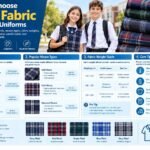
3. Polyester Cotton Blends (TC Fabrics)
- Weight: 200-280 gsm
- Features: Durable, wrinkle-resistant, cost-effective
- Applications: School uniforms, office uniforms, light industrial wear
- Certifications: ISO 9001, OEKO-TEX
Step 3: Vet Your Suppliers — Manufacturer vs. Trading Company
Choosing a direct manufacturer is crucial for quality control, transparent pricing, and flexible MOQs.
How to Verify a Genuine Manufacturer:
- Business License: Look for “制造商” (manufacturer) or “生产企业” (production enterprise) on Chinese business licenses. Trading companies show “贸易公司” or “商贸”.
- Factory Tour: Request videos or virtual tours showing looms (air-jet, rapier), dye vats, and finishing lines.
- Product Range: Manufacturers typically specialize in a narrow product range (e.g., polyester-cotton blends), whereas trading companies offer a broad catalog (silk, denim, wool, polyester all together).
- MOQ & Lead Times: Real mills provide clear lead times (e.g., 20-30 days for dyeing) and MOQs starting at 500 meters for custom fabrics.
Step 4: Manage Minimum Order Quantities (MOQs)
MOQs are a common challenge when sourcing fabric from China, especially for small businesses or first-time buyers.
Strategies to Overcome High MOQs:
- Buy In-Stock Fabric: Keqiao’s stock textile market offers dyed and finished fabrics from 50-100 meters, reducing lead times to 15-30 days.
- Join Batch Orders: Use sourcing agents to pool orders with other buyers to meet dyeing MOQs collectively.
- Standard Colors: Choose from mill’s standard colors (black, navy, white) with lower MOQs (100-200 meters).
- Sample Yardage: Negotiate sample orders (5-20 meters) with trade assurance before committing to bulk.
Step 5: Ensure Certifications and Compliance
Uniform fabrics often require strict compliance with safety and environmental standards.
Essential Certifications:
- OEKO-TEX Standard 100: Tests for harmful substances; critical for children’s uniforms and skin-contact fabrics.
- ISO 9001: Quality management system certification.
- EN ISO 11612: Flame retardant standard for protective clothing.
- EN ISO 20471: High-visibility fabric certification.
- GOTS / GRS: For organic or recycled fiber content, increasingly important for sustainable uniform lines.
Tip: Always verify certificates on official databases (e.g., OEKO-TEX certificate checker) to avoid counterfeit claims.
Step 6: Negotiate Pricing and Logistics
Pricing Tips:
- Request fixed pricing models with transparent breakdowns.
- Negotiate bulk discounts (up to 15% off for orders above 5,000 meters).
- Confirm incoterms (DDP recommended for first-time importers to avoid hidden customs fees).
Shipping & Lead Times:
- Custom fabric orders typically take 20-30 days production + 25-35 days sea freight (50-60 days total).
- In-stock fabrics can reduce total delivery to 30-40 days.
- Air freight is faster (7-14 days) but significantly more expensive; best for urgent samples.
Step 7: Sample and Quality Control
Before placing large orders:
- Request fabric swatches (5 free samples are common) for tactile and visual inspection.
- Perform shrinkage, colorfastness, and abrasion tests (ask for lab reports).
- Use computerized color matching to ensure dye lot consistency.
- Insist on AI-powered automated inspections for defects before shipment (if available).
Step 8: Build Long-Term Relationships
Reliable sourcing is about trust and transparency.
- Visit factories or schedule virtual tours.
- Use sourcing agents or platforms with strong customer service and after-sales policies.
- Negotiate private labeling and branding options if needed.
- Maintain clear contracts specifying quality standards, MOQs, and penalties for defects or delays.
Conclusion
Sourcing uniform fabric from China offers unparalleled opportunities for quality, cost savings, and scalability—if you know where to look and how to navigate the market. By understanding China’s key sourcing regions, verifying manufacturers, managing MOQs, and ensuring certifications, you can secure the best uniform fabrics for your business needs.
Ready to take the next step? Start by requesting free fabric samples from certified manufacturers in Shaoxing or Shijiazhuang, verify their certifications, and explore stock fabric options to reduce your initial investment risk.
Call to Action
Explore premium uniform fabrics from trusted Chinese manufacturers today! Whether you need heavy-duty twill, flame-retardant textiles, or high-visibility materials, connect with verified suppliers to get your free samples and quotes now. Don’t forget to verify OEKO-TEX and ISO certifications for peace of mind.