When launching a clothing line, home textile brand, or any fabric-based product, the fabric supplier you choose can make or break your business. Fabric sourcing accounts for up to 70% of a garment’s cost and heavily influences product quality and customer satisfaction. So, what to ask a fabric supplier before ordering is a critical question every apparel brand owner must address.
In this comprehensive 2026 guide, we’ll walk you through the essential questions to ask your fabric supplier, backed by insights from top industry sources like Panda Woven, King Cason, Shanghai Fumao, and YM Textile. Whether you’re sourcing from China, Turkey, or elsewhere, this article will help you navigate MOQ, certifications, sample testing, pricing, and more to build a reliable, long-term partnership.
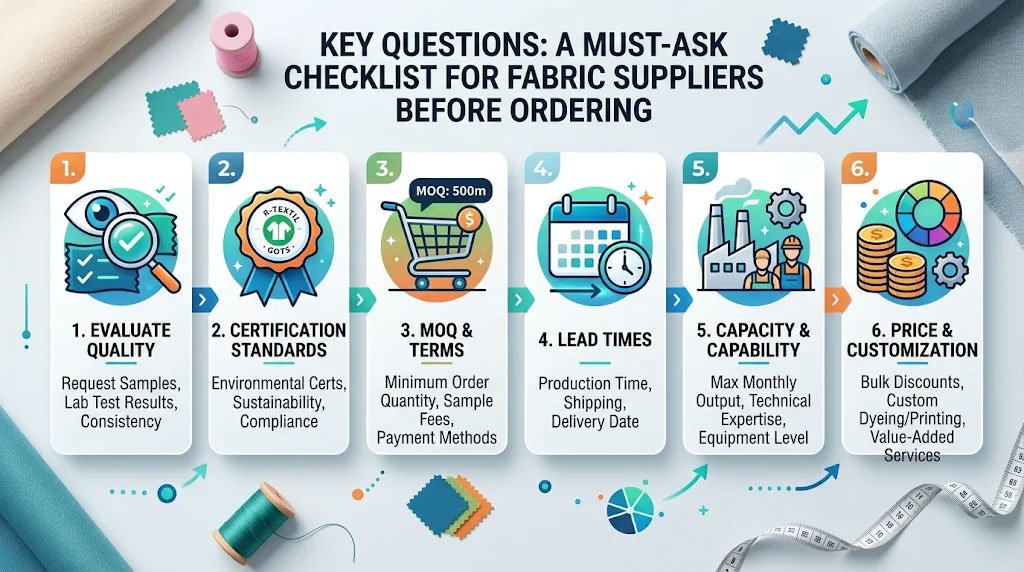
What to Ask a Fabric Supplier Before Ordering
Why Asking the Right Questions Matters
Fabric suppliers vary widely in expertise, transparency, and production capabilities. Many brands fall into traps by choosing suppliers based on price or photos alone, only to face delays, inconsistent quality, or compliance failures later.
By asking the right questions upfront, you can:
- Identify genuine manufacturers vs. middlemen or trading companies
- Verify fabric quality and consistency
- Understand production and lead times
- Confirm certifications and sustainability claims
- Avoid hidden costs and MOQ surprises
1. What Fabric Constructions and Types Do You Produce?
Start by understanding the supplier’s core expertise:
- Fabric types: Do they specialize in knits, wovens, printed, yarn-dyed fabrics, or technical textiles?
- In-house production: Can they control the entire process from yarn to finished fabric?
- Customization: Can they develop custom weights, colors, patterns, or finishes?
Why it matters: A supplier with vertical integration and R&D capabilities can better support your product development and quality control.
2. What Is Your Minimum Order Quantity (MOQ) Per Color?
MOQ is often the biggest barrier for new brands.
- Stock fabrics: MOQ typically ranges from 100 to 500 meters per color.
- Standard production (dyed to order): 500 to 3,000 meters per color.
- Custom development: 3,000+ meters per color.
- Custom color on stock base: 300 to 1,000 meters per color.
Tip: If MOQ is too high, ask if they can split dye lots, reduce MOQ for a small premium, or offer stock fabric programs.
3. Can You Provide a Detailed Tech Spec Sheet?
Ensure the supplier provides a technical data sheet (TDS) that includes:
- Fabric composition (fiber content)
- GSM (grams per square meter)
- Width (usable width, not total width)
- Construction details (weave, knit type)
- Finish and treatment information
Why: Verbal descriptions are unreliable. A TDS documents exactly what you’re ordering and helps avoid surprises.
4. What Certifications Do You Hold?
Certifications validate fabric safety, sustainability, and quality.
- Oeko-Tex Standard 100: Chemical safety for finished fabric, essential for skin-contact textiles.
- GOTS (Global Organic Textile Standard): For organic fiber and social compliance.
- GRS (Global Recycled Standard): Verifies recycled content and chain of custody.
- ISO 9001: Quality management system certification.
- FSC: Responsible sourcing for cellulosic fibers like lyocell and viscose.
Ask: Which certifications apply to the specific fabric you want? Request certificate numbers and batch test reports.
5. What Are Your Sample and Bulk Lead Times?
Lead times impact your product launch schedule.
- Sample swatches: 3–7 days plus courier time.
- Lab dips: 5–10 days for color approval.
- Bulk production: 2–5 weeks for stock dyed fabrics; 4–8 weeks for custom developments.
- Shipping: Sea freight takes 20–40 days; air freight 5–10 days but at higher cost.
Tip: Build a 10-day buffer for customs and inspections. Confirm lead times in writing.
6. What Samples Should I Request Before Ordering Bulk Fabric?
Never order bulk fabric based on photos alone. Request and test:
- Lab dip (20x20 cm): To verify color accuracy against your Pantone or color standard.
- Production sample (1 meter): To assess hand feel, drape, weight, and weave quality.
- Wash test sample (0.5 meter): Machine wash and dry as your end customer would; check shrinkage and pilling.
- Color fastness test: Rub dry and wet with a white cloth; aim for grade 4 or above to avoid dye transfer.
Real example: A streetwear brand skipped testing and faced print cracking after the first wash, leading to costly recalls.
7. How Do You Quote Pricing and Payment Terms?
A complete fabric quote should include:
- Price basis: FOB (you pay freight), CIF (supplier pays to your port), or EXW (ex-works).
- Price per meter or kilogram: Knits often priced per kg; wovens per meter.
- MOQ per color and available color range.
- Sample costs: Free, charged, or deducted from bulk order.
- Production lead time and shipping time, stated separately.
- Payment terms: Typically 30% deposit and 70% before shipment; L/C for large orders.
Compare: Don’t choose solely on price. A quote 20% cheaper but with no certifications and longer lead times often costs more in the long run.
8. How Do You Ensure Quality Control and Consistency?
Ask about their internal QC processes:
- Use of the 4-point inspection system for fabric defects.
- In-process inspections to catch defects early.
- Final inspection reports before shipment.
- Fabric testing for shrinkage (<3%), tensile strength, pilling resistance, and color fastness.
Tip: Request inspection reports and third-party audit certificates if available.
9. Can You Support Sustainability and Traceability?
If your brand emphasizes sustainability, verify:
- Traceability of raw materials and fiber origins.
- Compliance with environmental standards (e.g., ZDHC).
- Availability of batch-specific test reports for certifications.
10. What Is Your Export Experience and Logistics Support?
Export experience is crucial for smooth shipping and customs clearance.
- Which markets do they serve?
- Can they provide commercial invoices, packing lists, and documentation compliant with your country’s customs?
- Do they offer FOB or CIF shipping terms?
- Can they handle container orders and recommend freight forwarders?
Bonus Tips: How to Verify Your Fabric Supplier
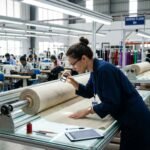
- Request a real-time factory video call to see production areas, machines, and sample rooms.
- Attend textile exhibitions to touch fabrics and meet suppliers face-to-face.
- Use B2B platforms like Alibaba with strict filters (verified suppliers, manufacturers, high response rates).
- Check social media for active, transparent suppliers posting real production videos.
- Order small pilot runs before committing to full seasonal volumes.
Conclusion: Build a Strong Foundation for Your Brand
Choosing the right fabric supplier is a strategic decision that affects your product quality, brand reputation, and profitability. By knowing what to ask a fabric supplier before ordering, you reduce risks, improve product consistency, and set the stage for long-term success.
Take action today: prepare your list of questions, request detailed tech specs and samples, verify certifications, and confirm lead times and MOQ. Remember, a professional fabric supplier is not just a vendor—they are your partner in building a brand that customers trust and love.