Uniforms are more than just clothing—they represent professionalism, brand identity, and team unity. One of the most critical factors in maintaining a uniform’s quality over time is its colorfastness—the fabric’s ability to retain its color without fading, bleeding, or staining other garments. Understanding how to test colorfastness in uniform fabric is essential for manufacturers, quality controllers, and procurement professionals who want to ensure long-lasting, vibrant uniforms.
In this article, we’ll explore the importance of colorfastness, key testing methods, international standards, and practical tips to maintain uniform fabric color integrity.
How to Test Colorfastness in Uniform Fabric
What Is Colorfastness and Why Does It Matter for Uniforms?
Colorfastness refers to the resistance of dyed or printed fabric to color loss or color transfer when exposed to external factors such as washing, light, perspiration, and friction. For uniforms, high colorfastness means:
- Consistent, professional appearance: Uniforms maintain their original color, reinforcing brand image.
- Durability: Fabrics resist fading and staining even after repeated washing and use.
- User satisfaction: Employees feel confident wearing uniforms that look fresh and neat.
- Cost-effectiveness: Reduces the need for frequent replacement due to discoloration.
Poor colorfastness leads to uneven fading, color bleeding onto other garments, and a worn-out appearance, which can damage a company’s professional image and increase costs.
Key Factors Affecting Colorfastness in Uniform Fabric
Several elements influence how well a uniform fabric retains its color:
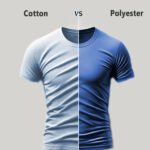
- Fiber type: Natural fibers like cotton absorb dyes differently than synthetic fibers such as polyester.
- Dye class and chemistry: Reactive dyes bond chemically with cotton, while disperse dyes are used for polyester.
- Fabric construction: Dense weaves and smooth surfaces often retain color better.
- Dyeing and finishing processes: Proper pre-treatment, fixation, and post-treatment enhance dye bonding.
- Environmental exposure: UV light, sweat, detergents, and friction all challenge colorfastness.
How to Test Colorfastness in Uniform Fabric: Essential Methods
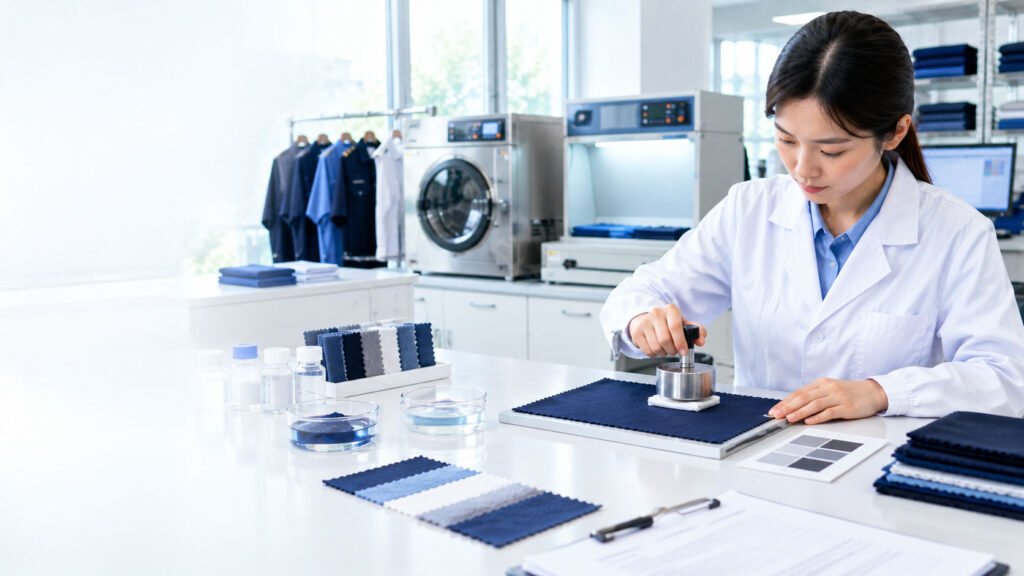
Testing colorfastness involves standardized procedures to simulate real-life wear and care conditions. Below are the main tests used in the uniform industry:
1. Colorfastness to Washing
Why it matters: Uniforms are washed frequently, and this test evaluates how well the fabric resists fading and color transfer during laundering.
Standards to follow:
- ISO 105-C06: The global benchmark simulating domestic and industrial washing with controlled detergent, temperature, and mechanical action.
- AATCC 61: An accelerated washing test common in North America, simulating multiple home washes in a shorter time.
Testing process:
- Specimens are sewn to a multifiber adjacent fabric strip to detect color bleeding.
- Samples are washed in a launderometer with reference detergent and stainless steel balls to simulate abrasion.
- After washing, color change and staining on adjacent fabric are graded on a scale from 1 (poor) to 5 (excellent).
Key insight: A minimum grade of 4 is recommended for uniforms to ensure durability and avoid staining.
2. Colorfastness to Light
Why it matters: Uniforms exposed to sunlight risk fading due to UV radiation.
Standards to follow:
- ISO 105-B02 and AATCC 16/188: Evaluate resistance to fading under simulated sunlight or xenon arc lamps.
Testing process:
- Fabric samples are exposed to controlled light sources for set durations.
- Color changes are assessed visually or instrumentally.
Tip: Choose fabrics with dyes and finishes designed for UV resistance, especially for outdoor uniforms.
3. Colorfastness to Rubbing (Crocking)
Why it matters: Friction during wear can cause color to transfer onto other materials or skin.
Standards to follow:
- ISO 105-X12 and AATCC 8: Measure color transfer under dry and wet conditions.
Testing process:
- A white rubbing cloth is rubbed against the fabric under controlled pressure and cycles.
- The amount of color transferred is graded.
Factors influencing results: Fiber type, fabric construction, dye fixation, and moisture content.
4. Colorfastness to Perspiration
Why it matters: Sweat contains acids and salts that can degrade dyes.
Standards to follow:
- ISO 105-E04: Tests color change and staining after exposure to acidic and alkaline sweat solutions.
Testing process:
- Fabric is soaked in artificial sweat, pressed between multifiber fabrics, and subjected to mechanical action.
- After drying, color changes and staining are evaluated.
Step-by-Step Guide: Running Colorfastness Tests in Your Lab
Implementing a reliable testing workflow ensures consistent results and quality control:
-
Define test plan and acceptance criteria: Specify fabric type, color shade, test methods (e.g., ISO 105-C06 for washing), and minimum passing grades.
-
Prepare specimens carefully: Cut clean, flat swatches from production lots, label clearly, and orient fibers correctly.
-
Conduct crocking test: Use a calibrated crockmeter with specified force and cycles, testing both dry and wet rub conditions.
-
Conduct washing fastness test: Use launderometer with reference detergent, controlled temperature (usually 40°C or 60°C), and mechanical action simulating real washing.
-
Evaluate results under controlled lighting: Grade color change and staining using ISO grey scales under D65 daylight simulation.
-
Make disposition decisions: Approve lots scoring grade 4 or above; quarantine and retest failing batches.
Practical Tips to Maintain Colorfastness in Uniforms
-
Follow care labels: Wash uniforms in cold water with mild detergents to reduce color loss. Avoid bleach and high heat drying.
-
Separate colors: Wash dark and light uniforms separately to prevent staining.
-
Perform pre-wash tests: Before bulk washing, test new uniforms for colorfastness to avoid surprises.
-
Choose certified fabrics: Look for OEKO-TEX® or GOTS certifications and compliance with ISO or AATCC standards.
-
Consider fabric blends carefully: Polyester blends may require different dyeing and fixation processes to ensure uniform colorfastness.
Frequently Asked Questions (FAQs)
Q1: What is the best colorfastness rating for uniform fabrics?
A: A grade 5 indicates excellent colorfastness with no visible change. A minimum of grade 4 is recommended for durable uniforms.
Q2: Can colorfastness be improved at home?
A: Following proper washing instructions—cold water, gentle detergents, air drying—helps preserve colors but cannot fix weak dye bonds.
Q3: Why do some uniforms fade unevenly?
A: Uneven fading often results from differential exposure to sunlight or friction on specific garment areas like shoulders or elbows.
Conclusion: Prioritize Colorfastness for Professional, Long-Lasting Uniforms
Testing and ensuring colorfastness in uniform fabric is vital for maintaining a polished, professional appearance and extending garment life. By adhering to international standards such as ISO 105-C06 and ISO 105-X12, using proper testing methods, and selecting high-quality fabrics, organizations can protect their brand image and save costs over time.