
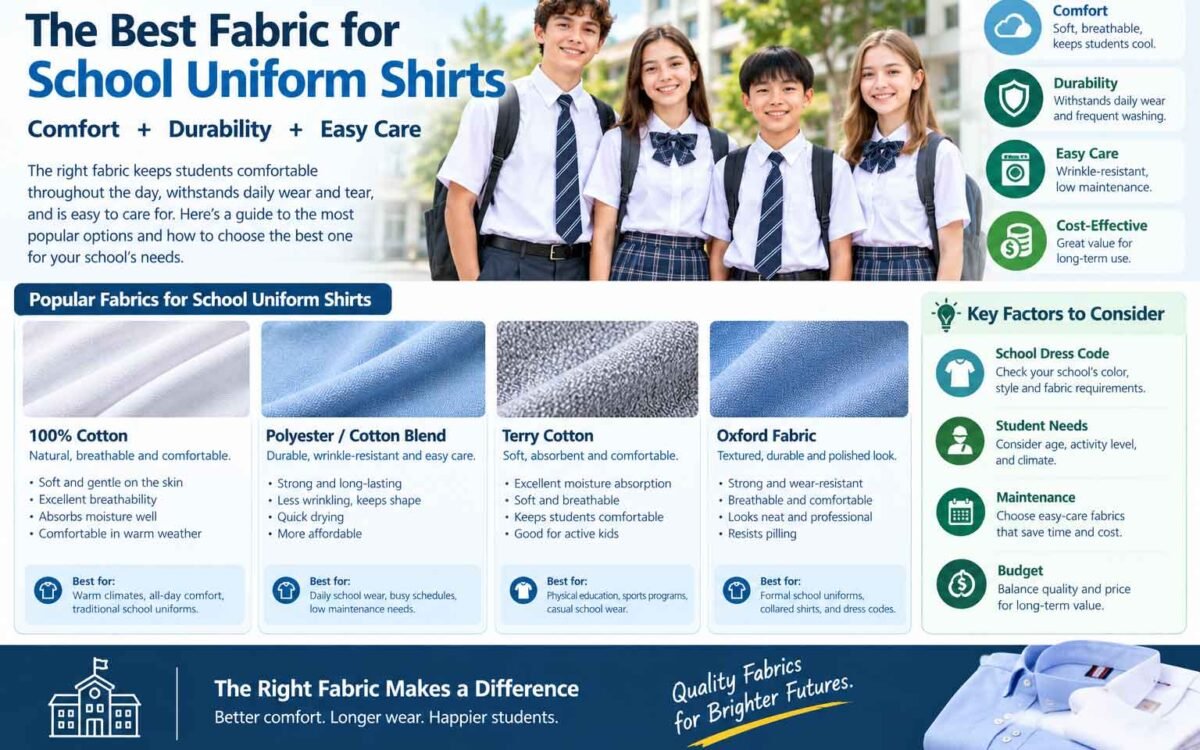
Best Fabric for School Uniform Shirts: A Comprehensive Guide for Comfort, Durability, and Style
Discover the best fabric for school uniform shirts that balances comfort, durability, and easy care. Learn about cotton, polyester blends, terry cotton, and more to choose the perfect material for your school’s needs.
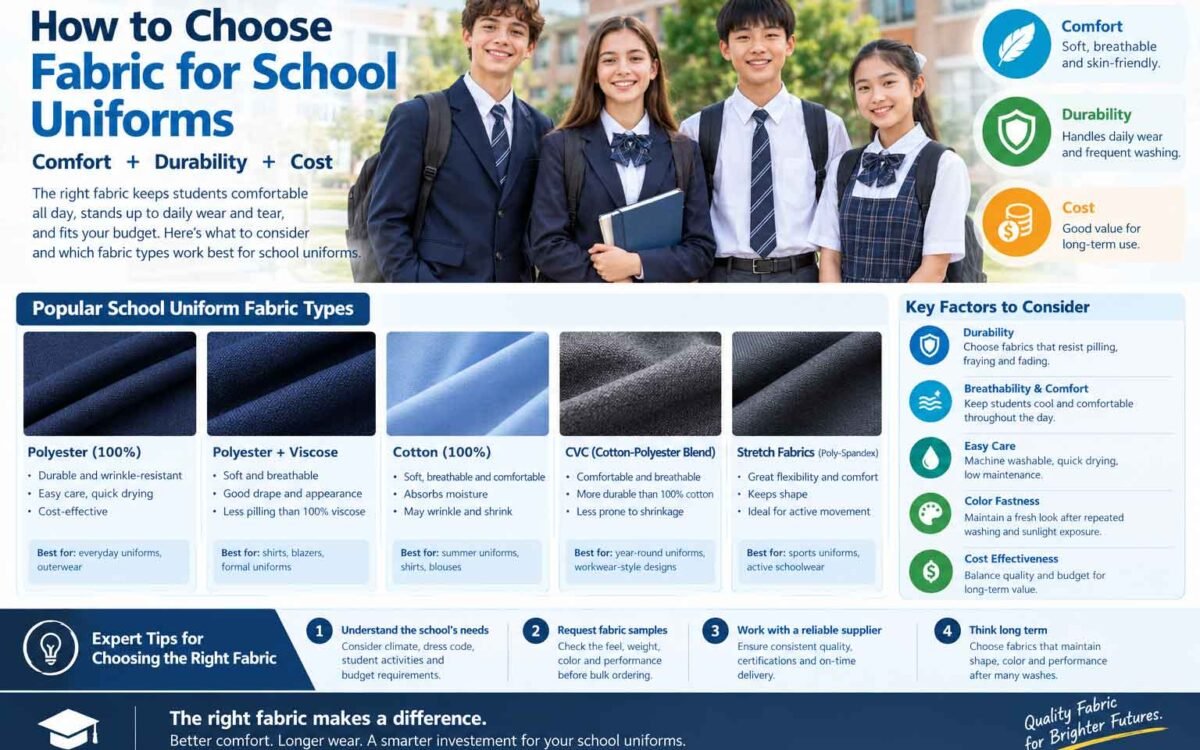
How to Choose Fabric for School Uniforms
Discover how to choose fabric for school uniforms that balances comfort, durability, and cost. Learn expert tips, fabric types, and design insights to ensure the perfect school uniform for students.
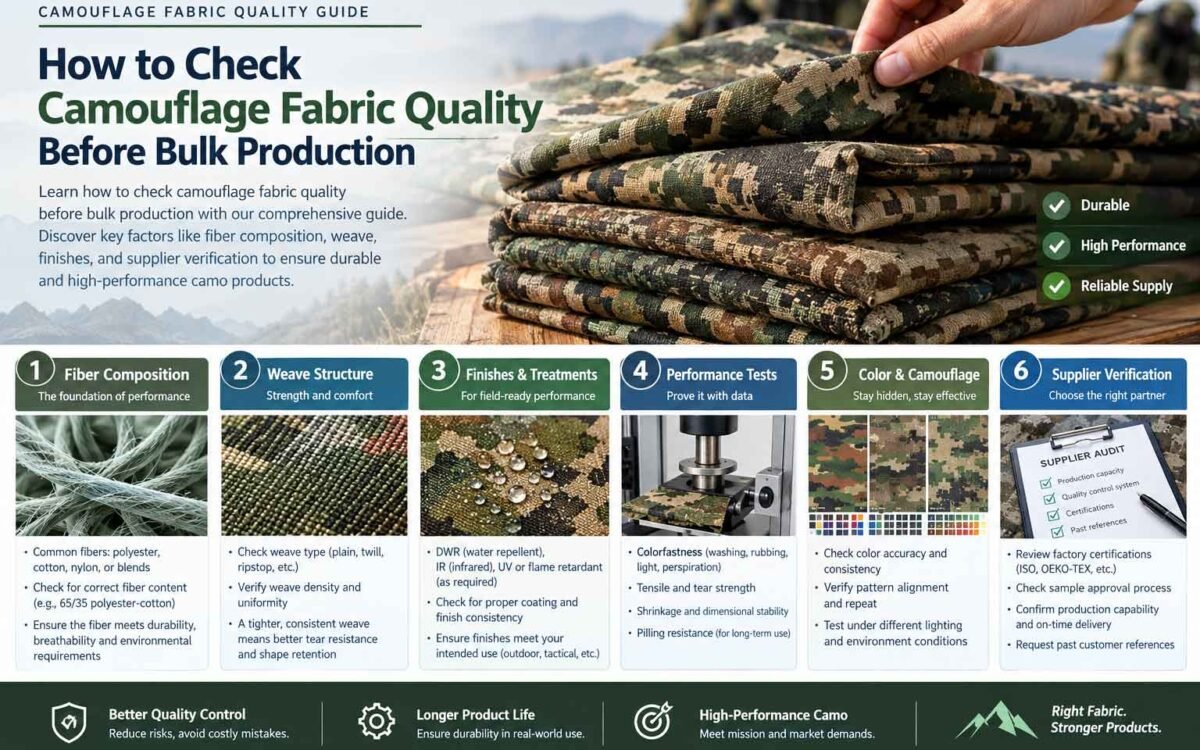
How to Check Camouflage Fabric Quality Before Bulk Production
Learn how to check camouflage fabric quality before bulk production with our comprehensive guide. Discover key factors like fiber composition, weave, finishes, and supplier verification to ensure durable and high-performance camo products.
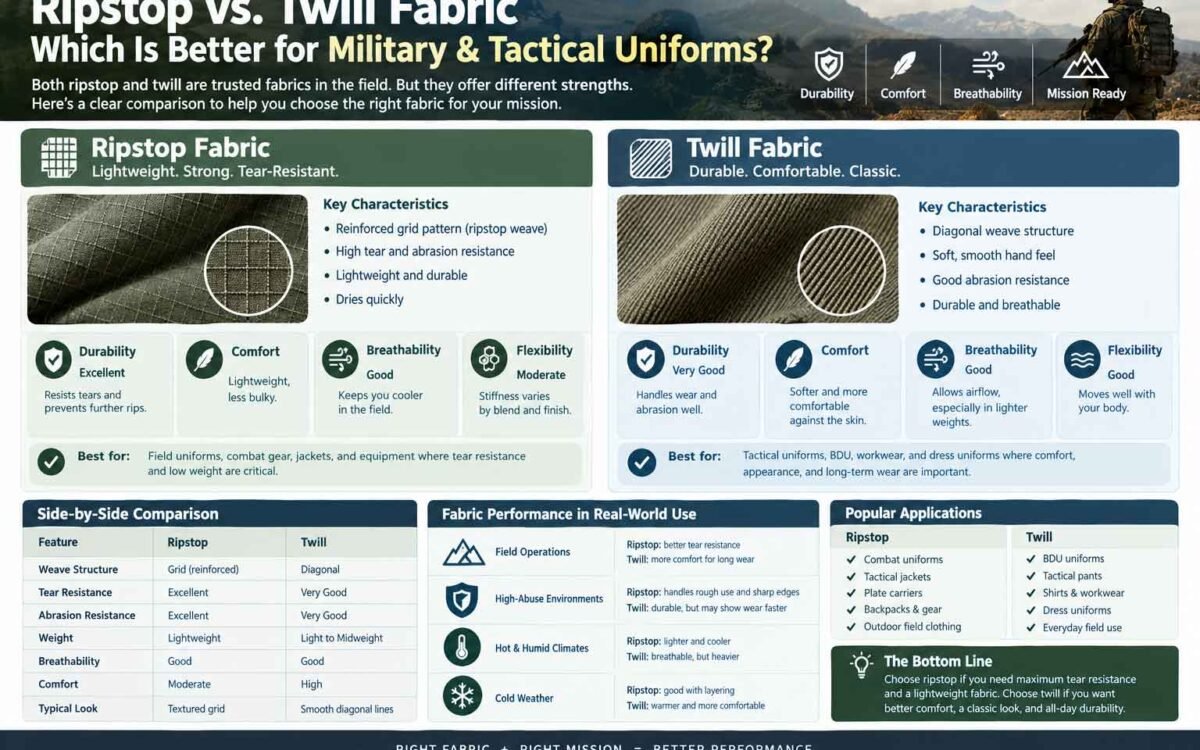
Ripstop vs Twill for Military and Tactical Uniforms: Which Fabric Reigns Supreme?
Discover the key differences between ripstop and twill fabrics for military and tactical uniforms. Explore durability, comfort, breathability, and application insights to make the best fabric choice for your gear.
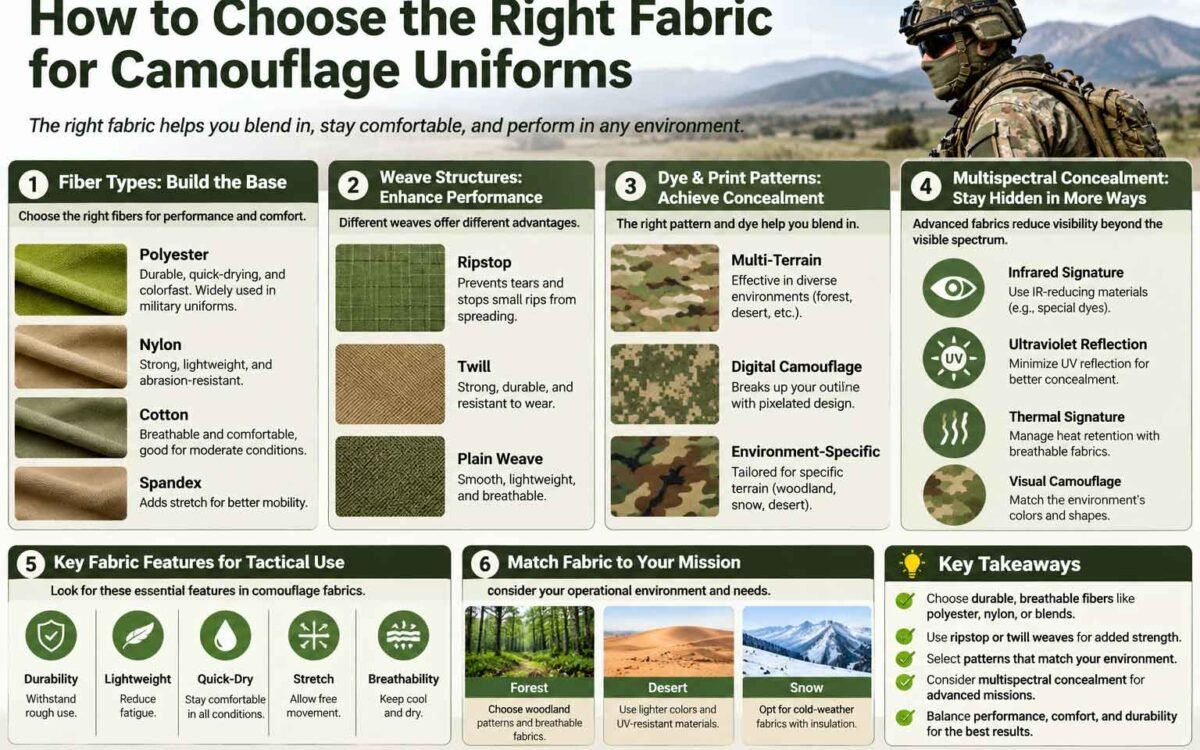
How to Choose the Right Fabric for Camouflage Uniforms: A Comprehensive Guide
Learn how to choose the right fabric for camouflage uniforms with expert insights on fiber types, weave structures, dye compatibility, and multispectral concealment for military and tactical applications.
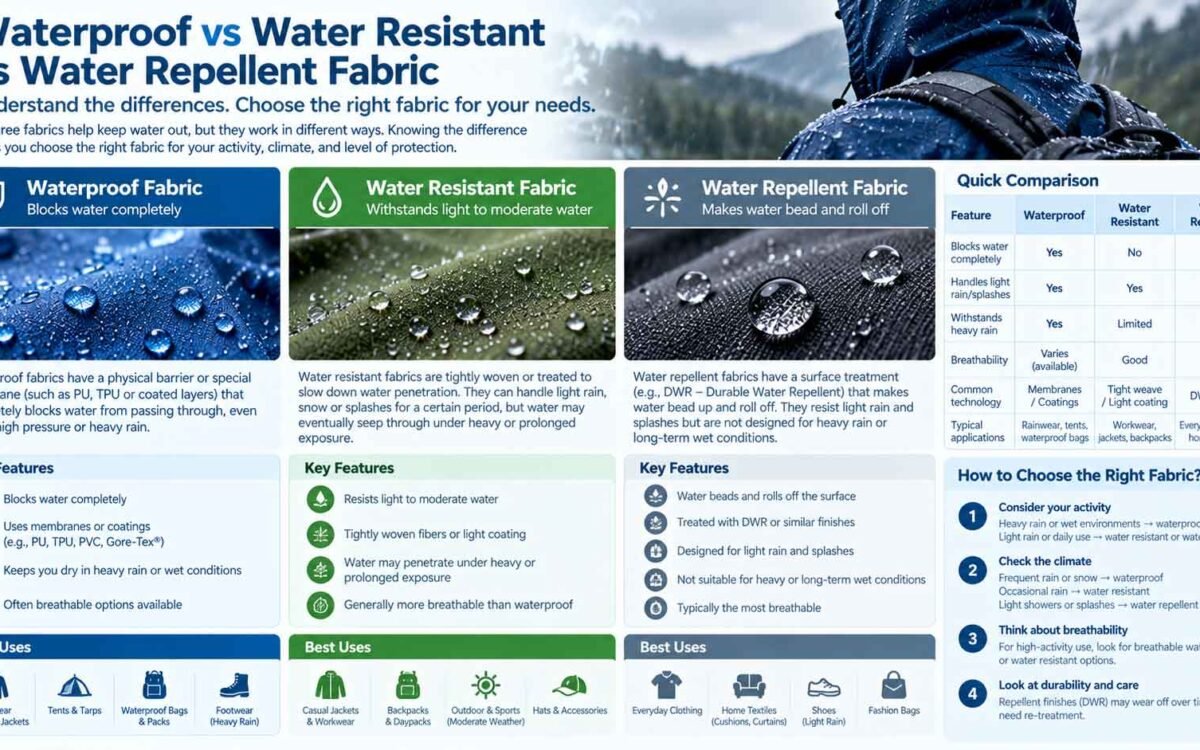
Waterproof vs Water Resistant vs Water Repellent Fabric: Understanding the Key Differences
Confused about waterproof vs water resistant vs water repellent fabric? Discover the differences, benefits, and best uses of each to stay dry and comfortable in any weather.
FR Treated vs Inherently FR Fabric: A Comprehensive Guide to Flame Resistant Workwear
Discover the key differences between FR treated vs inherently FR fabric. Learn about their protection mechanisms, durability, applications, and how to choose the right flame resistant fabric for your safety needs.
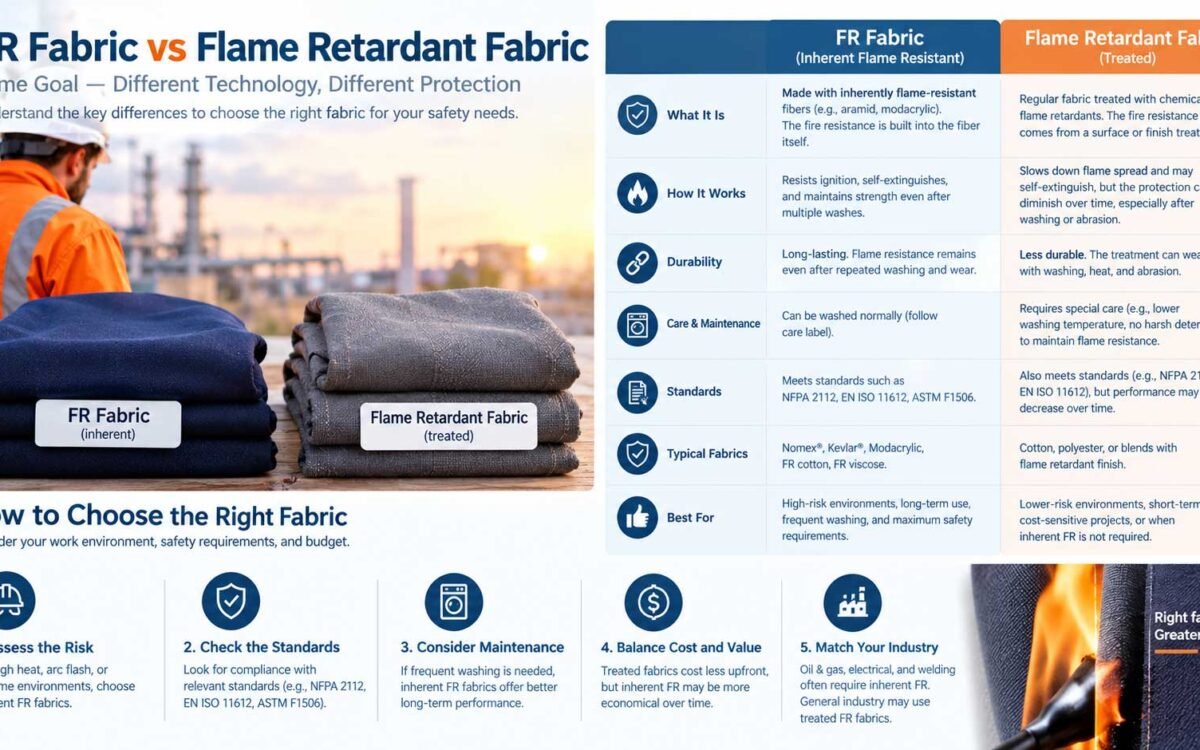
FR Fabric vs Flame Retardant Fabric: Understanding the Key Differences and Applications
Discover the critical differences between FR fabric vs flame retardant fabric. Learn about treated vs inherent flame resistance, standards, durability, and how to choose the right fabric for your safety needs.

Best Fabric for Pilot Shirts: A Comprehensive Guide to Comfort, Durability, and Safety
Discover the best fabric for pilot shirts with our comprehensive guide. Learn about cotton, polyester, specialty fibers like Nomex and Kevlar, and ergonomic designs that ensure comfort, durability, and safety for pilots.

Fabric MOQ Explained: What Uniform Buyers Should Know
Discover everything uniform buyers need to know about fabric MOQ. Learn why minimum order quantities exist, how to negotiate them, and strategies to optimize your uniform fabric sourcing.

How to Test Colorfastness in Uniform Fabric
Learn how to test colorfastness in uniform fabric effectively. Discover key testing methods, standards, and tips to ensure durable, professional-looking uniforms that resist fading, bleeding, and staining.
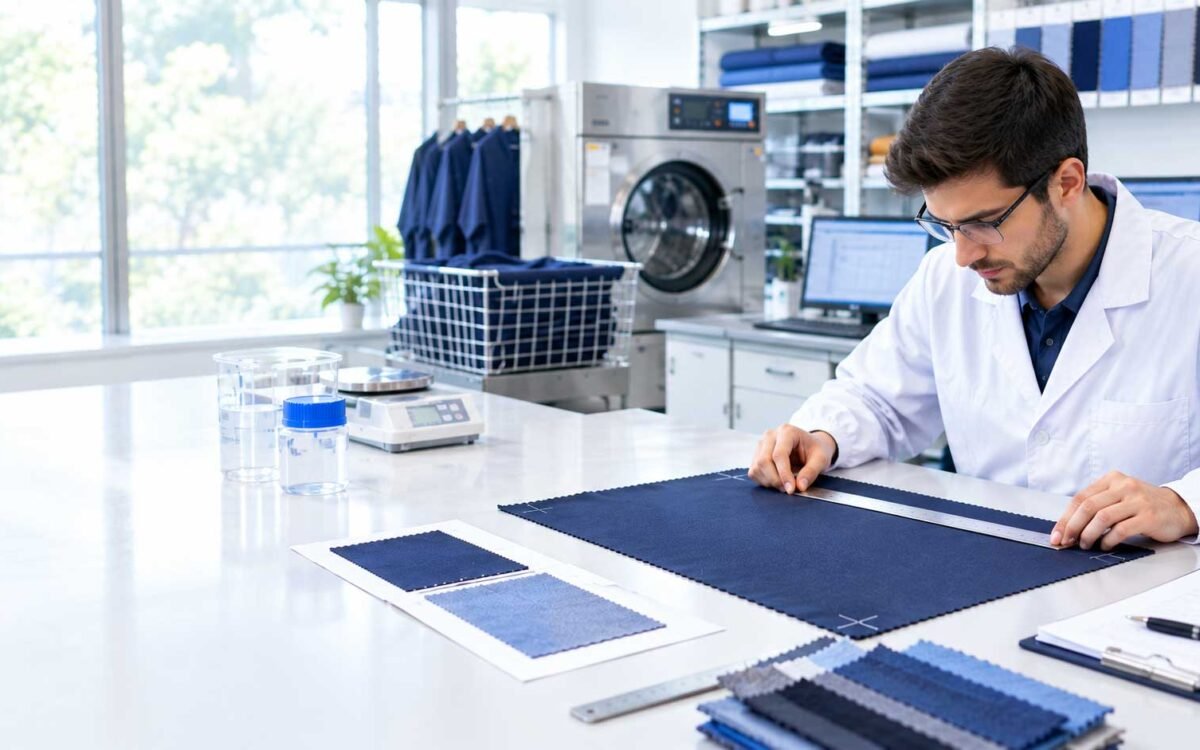
How Much Fabric Shrinkage Is Acceptable for Uniforms?
Discover how much fabric shrinkage is acceptable for uniforms, why it matters, and how to control it effectively. Learn industry standards, testing methods, and best practices to ensure uniform durability and fit.
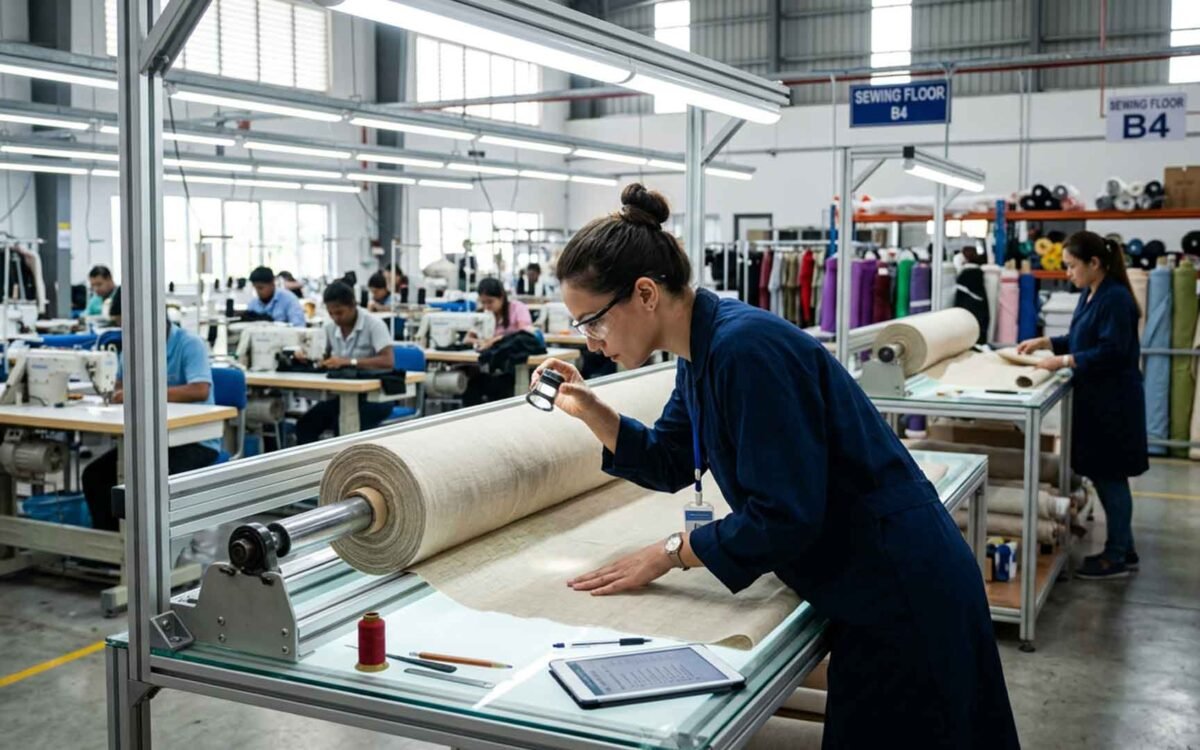
How to Check Fabric Quality Before Bulk Production?
Learn how to check fabric quality before bulk production to ensure your garments meet high standards. Discover essential testing methods, inspection tips, and quality control processes to avoid costly mistakes.

What Fabric Tests Should Uniform Buyers Ask For?
A reference checklist of the specific fabric tests uniform buyers should request before bulk production — covering shrinkage, colorfastness, tensile/tear/seam strength, pilling and abrasion resistance, and finish durability — with a priority guide matching test categories to different uniform types.
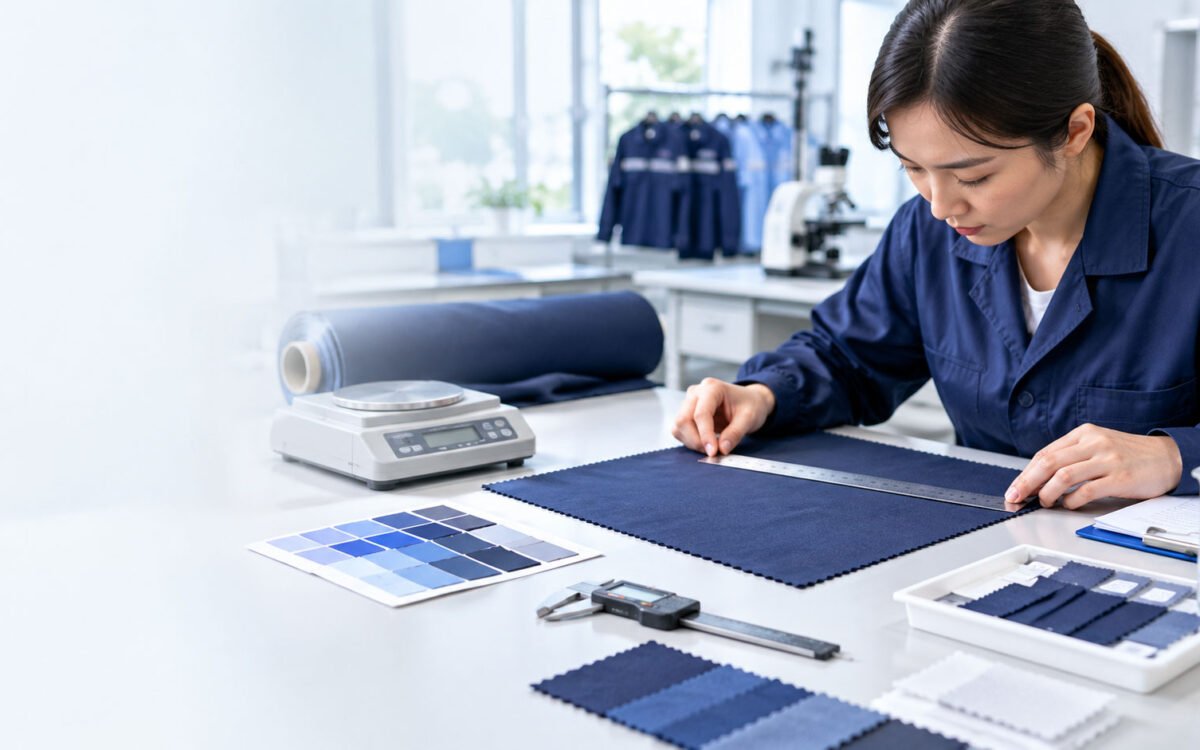
How to Test Uniform Fabric Before Bulk Production
A step-by-step guide to testing uniform fabric before bulk production, covering physical sample evaluation, essential lab tests shrinkage, colorfastness, pilling, abrasion, and the real-world wash and wear trials most buyers skip — with a full pre-approval checklist.
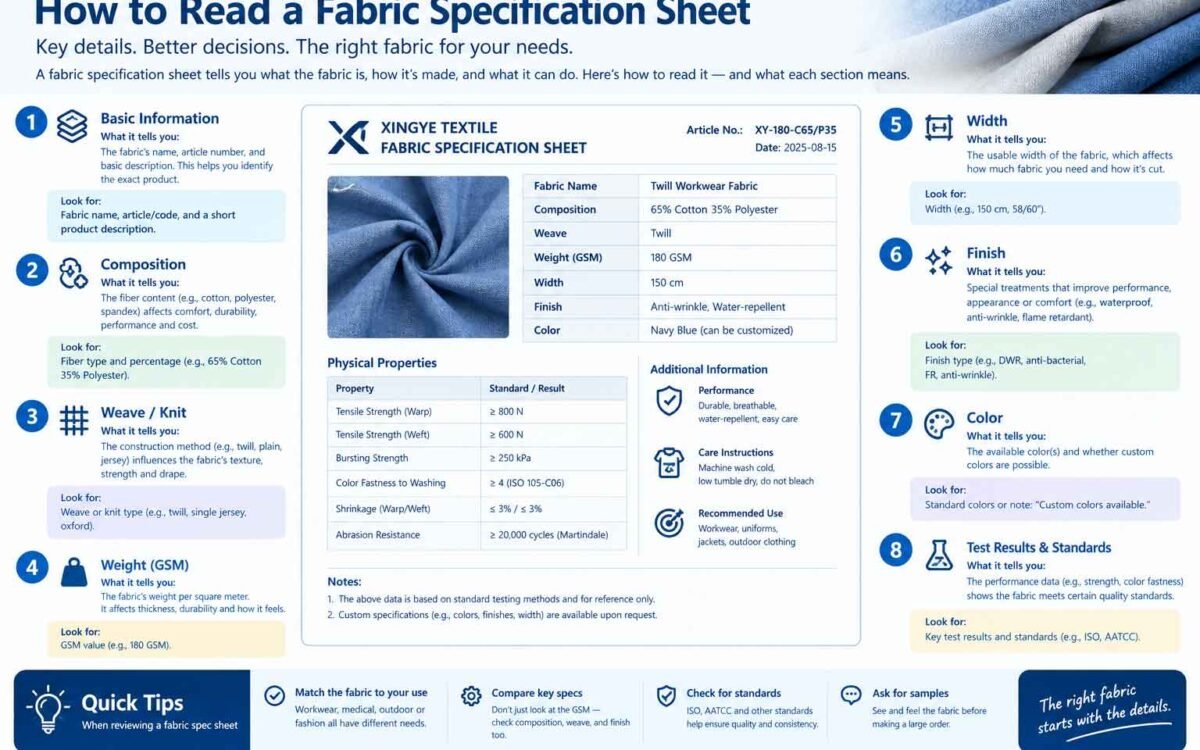
How to Read a Fabric Specification Sheet (Without Missing What Actually Matters)
A practical guide to reading fabric specification sheets, breaking down what each core field composition, GSM, width, weave, colorfastness, shrinkage, finish actually promises versus what it leaves out, with the specific follow-up questions buyers should ask suppliers before approving bulk production.
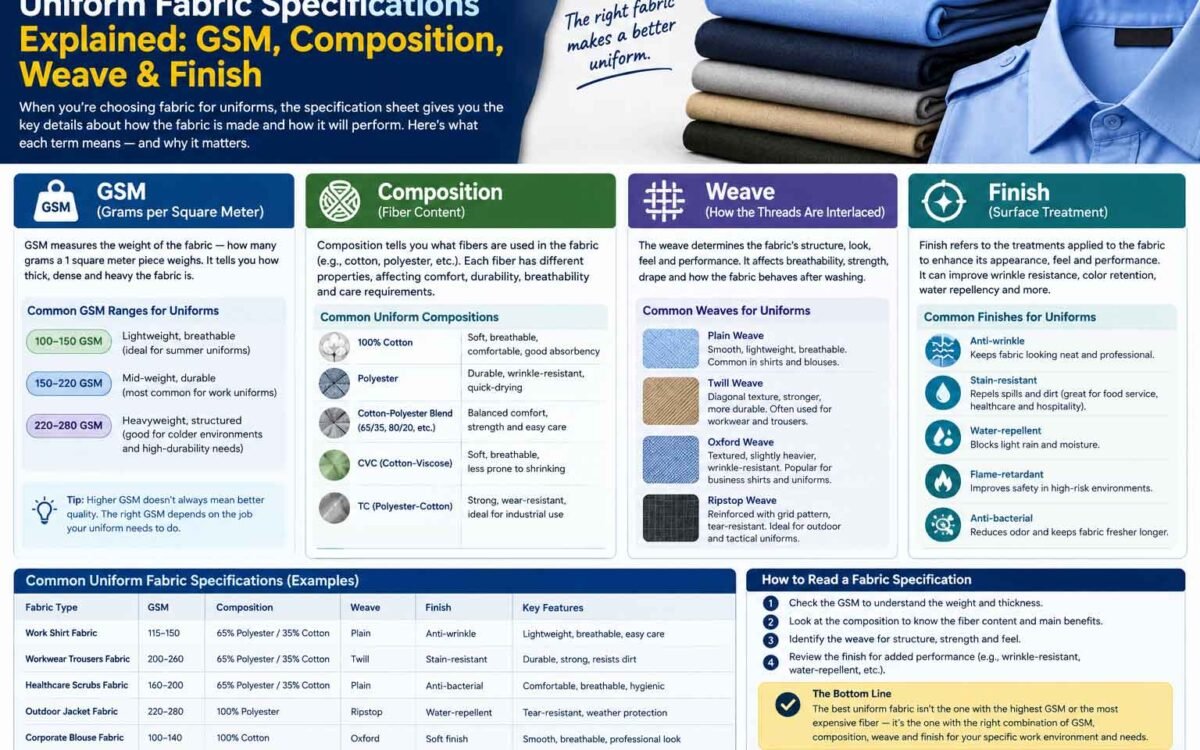
Uniform Fabric Specifications Explained: GSM, Composition, Weave & Finish
A glossary-style guide explaining how the four core uniform fabric specifications — composition, GSM, weave, and finish — interact with each other, with common traps buyers fall into when reading spec sheets and a checklist for reviewing supplier quotes before bulk approval.
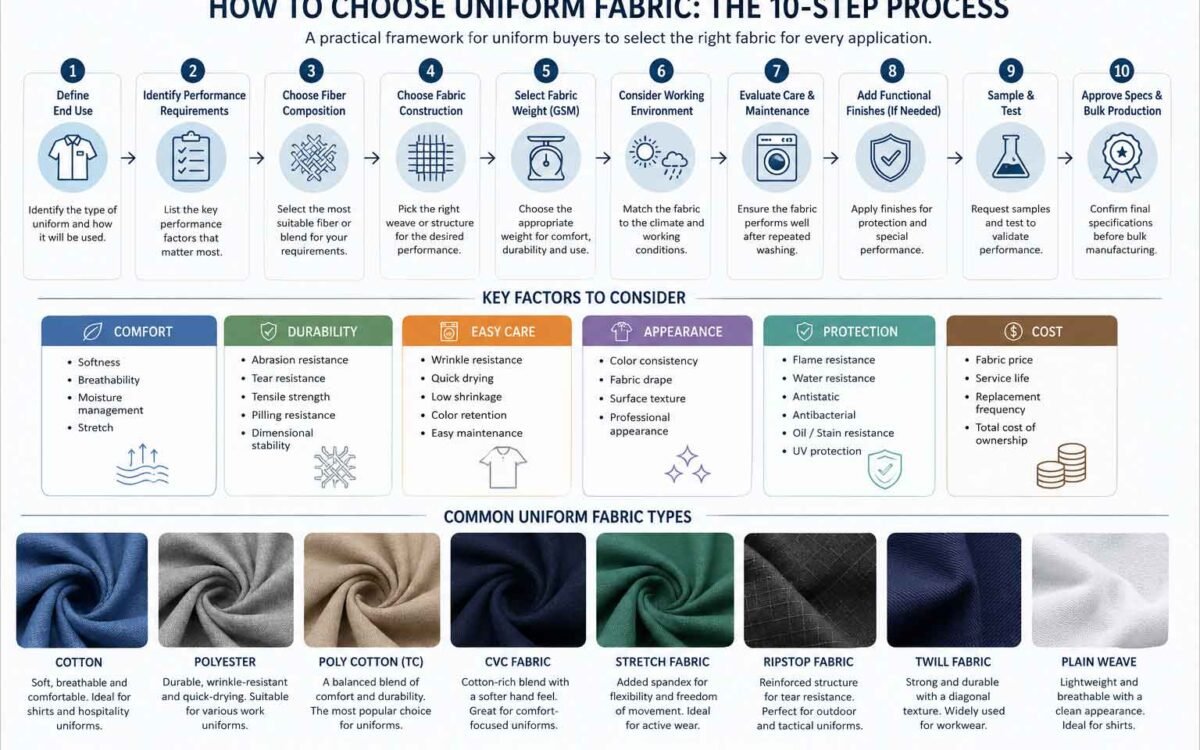
How to Choose Uniform Fabric: A Buyer's Guide for Bulk Orders
A step-by-step buying guide for sourcing uniform fabric in bulk — walking buyers through end use, performance priorities, fiber composition, construction, GSM, environment, and wash testing in the right decision order, with a supplier specification checklist to avoid costly fabric mismatches.
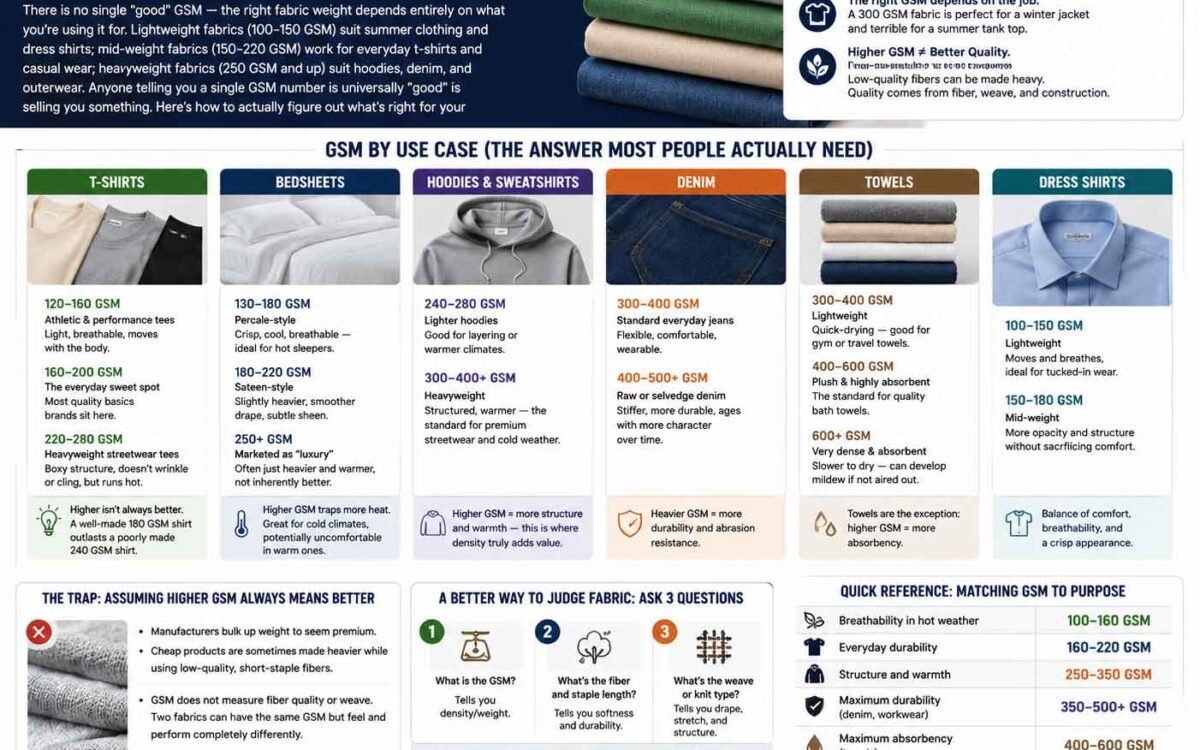
Which GSM Fabric Is Good? The Honest Answer: It Depends on What You're Making
A myth-busting guide to fabric GSM, explaining why "higher GSM" doesn't automatically mean "better quality," with use-case-specific GSM ranges for t-shirts, bedsheets, hoodies, denim, and towels to help readers choose the right fabric weight for their actual needs.
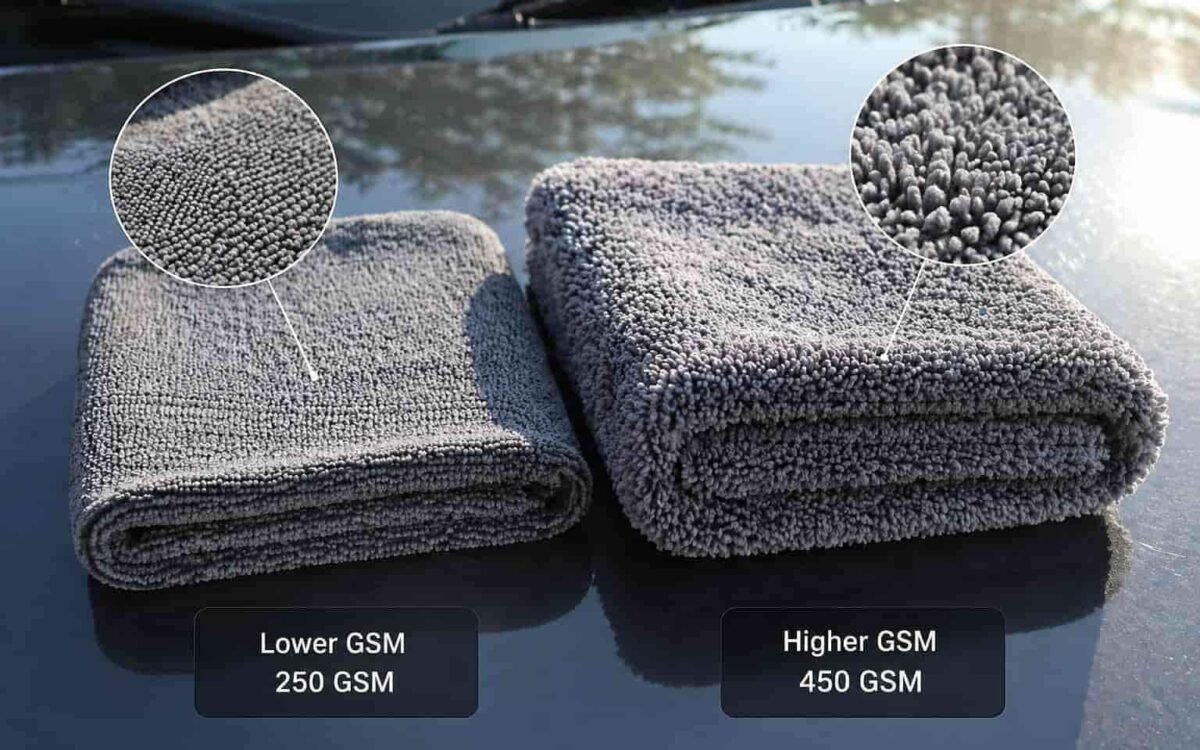
What Is GSM in Cloth? The Number That Actually Tells You How Fabric Will Behave
GSM Grams per Square Meter is a measurement of fabric density — it tells you how much a one-meter-by-one-meter piece of fabric weighs. The higher the GSM, the denser and typically heavier the fabric; the lower the GSM, the lighter and more breathable it tends to be. A t-shirt might sit around 160–200 GSM, while denim can run 300–500+ GSM.
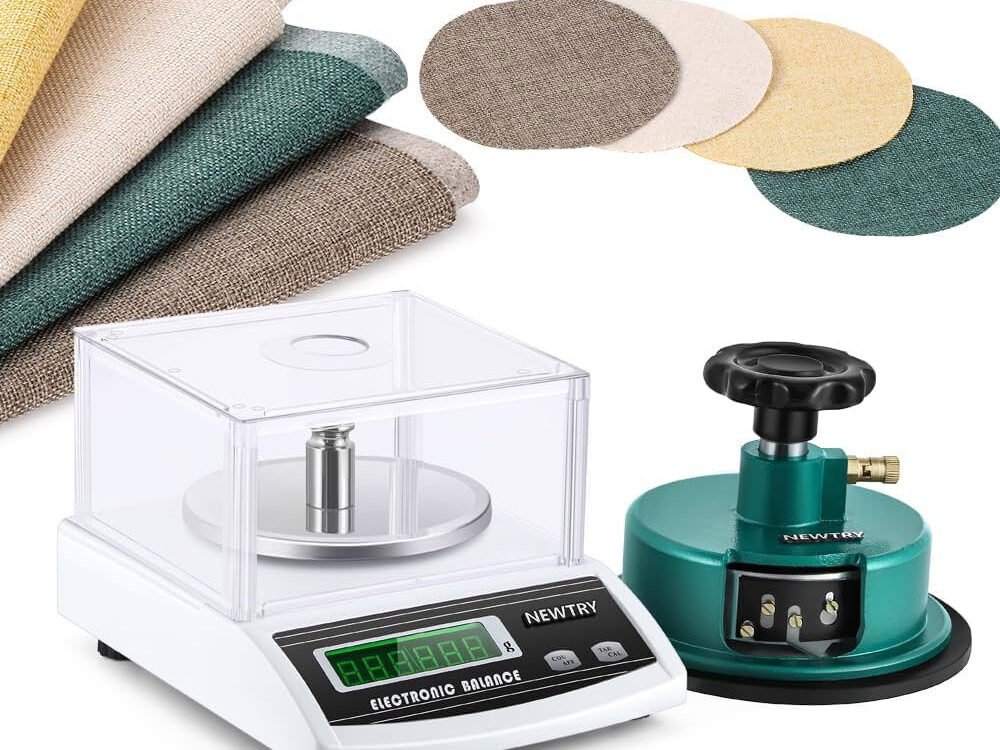
The Ultimate Uniform Fabric Weight Guide: GSM vs OZ & How to Choose for B2B Procurement
Unsure whether to choose 130 GSM poplin or 240 GSM twill for your uniform line? This B2B guide breaks down GSM conversions, industry specs, and how to select the right weight for durability and comfort.
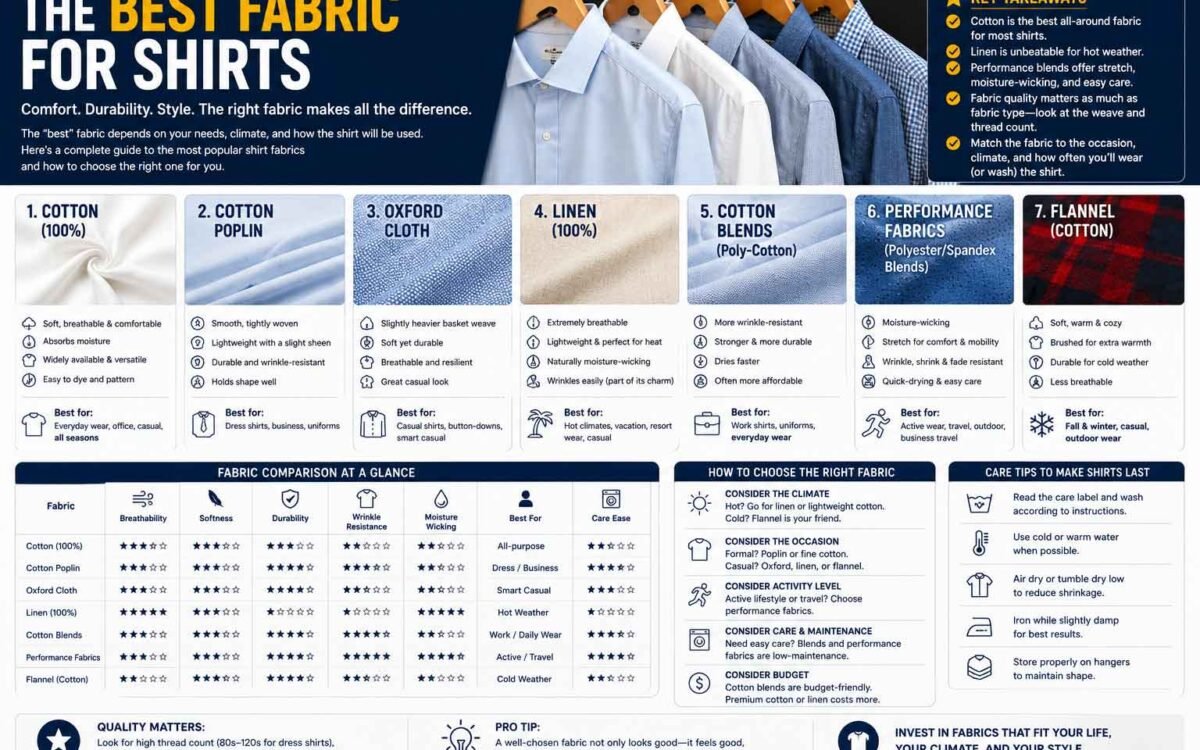
The Fabric Is the Shirt: Why Material Matters More Than Cut
A fresh take on shirt shopping that flips the usual advice on its head — instead of ranking fabrics as "best" or "worst," it explores how cotton, linen, merino wool, cotton-poly blends, and Tencel each excel in different real-life scenarios, helping readers choose fabric based on what their shirt actually needs to survive.
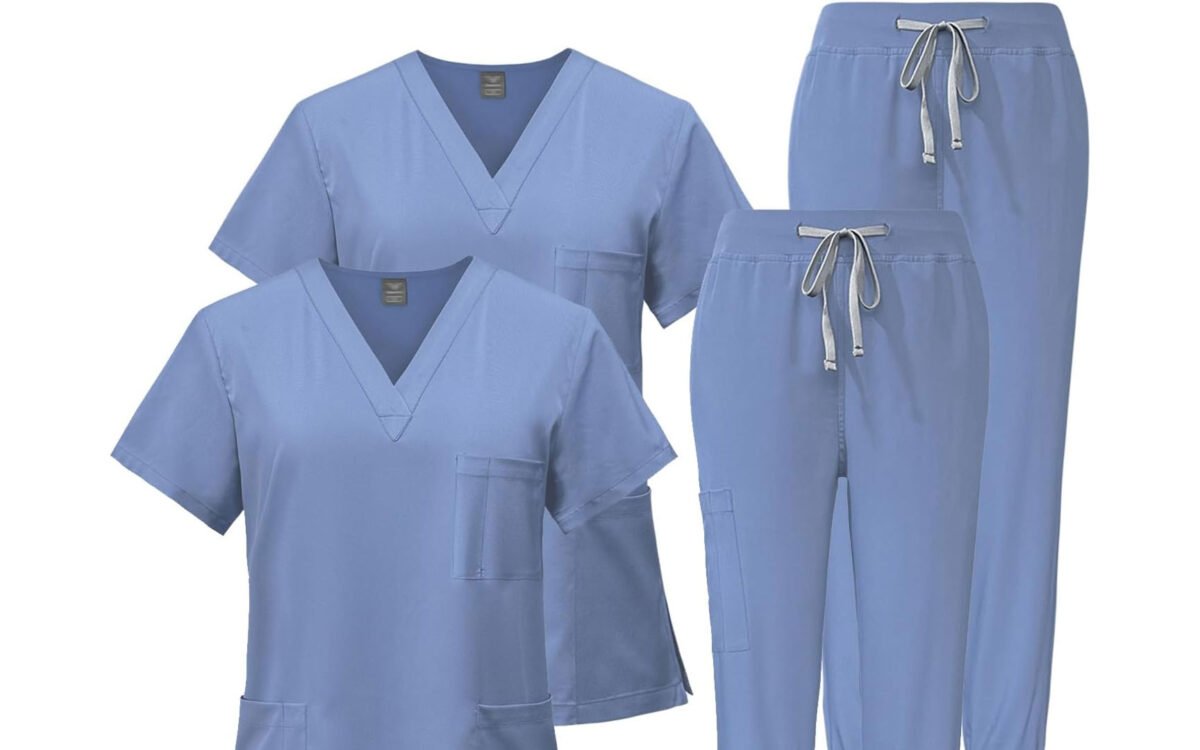
Nurse Scrub Uniform Requirements: A Procurement Guide
Sourcing nurse scrubs for a hospital, clinic, or healthcare staffing agency involves far more than picking a color and size chart. Scrubs are a functional safety garment as much as a uniform, and procurement teams need to balance compliance, durability, comfort, and cost. Below is a guide to the key requirements to evaluate before placing a bulk order.

Why Do Chefs Wear White? The History, Science & Practicality
Why do chefs wear white? The 130-year history of the white chef coat — Escoffier's uniform revolution, heat-reflection science, hygiene signaling, and the fabric technology that makes white practical in professional kitchens
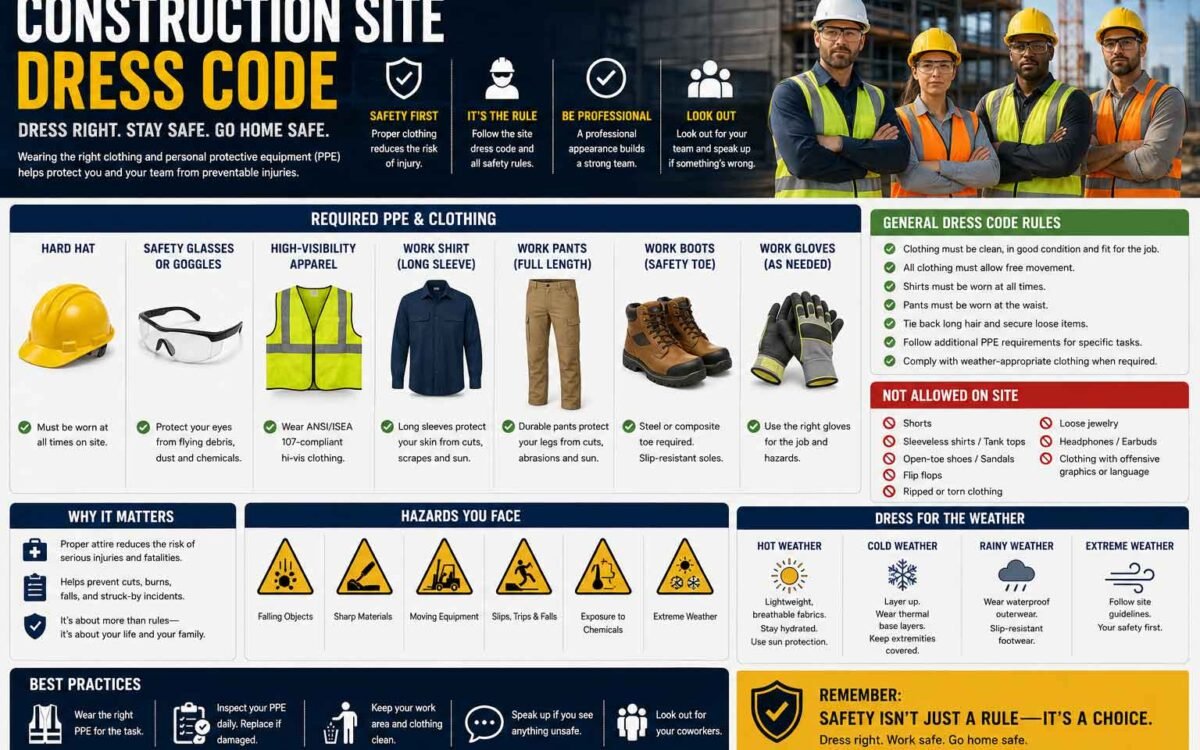
Construction Site Dress Code: The Complete Guide for Employers & Safety Managers
Construction site dress code guide for employers and safety managers — required PPE, prohibited clothing, OSHA compliance standards, role-specific requirements, and a ready-to-use policy template with fabric recommendations.
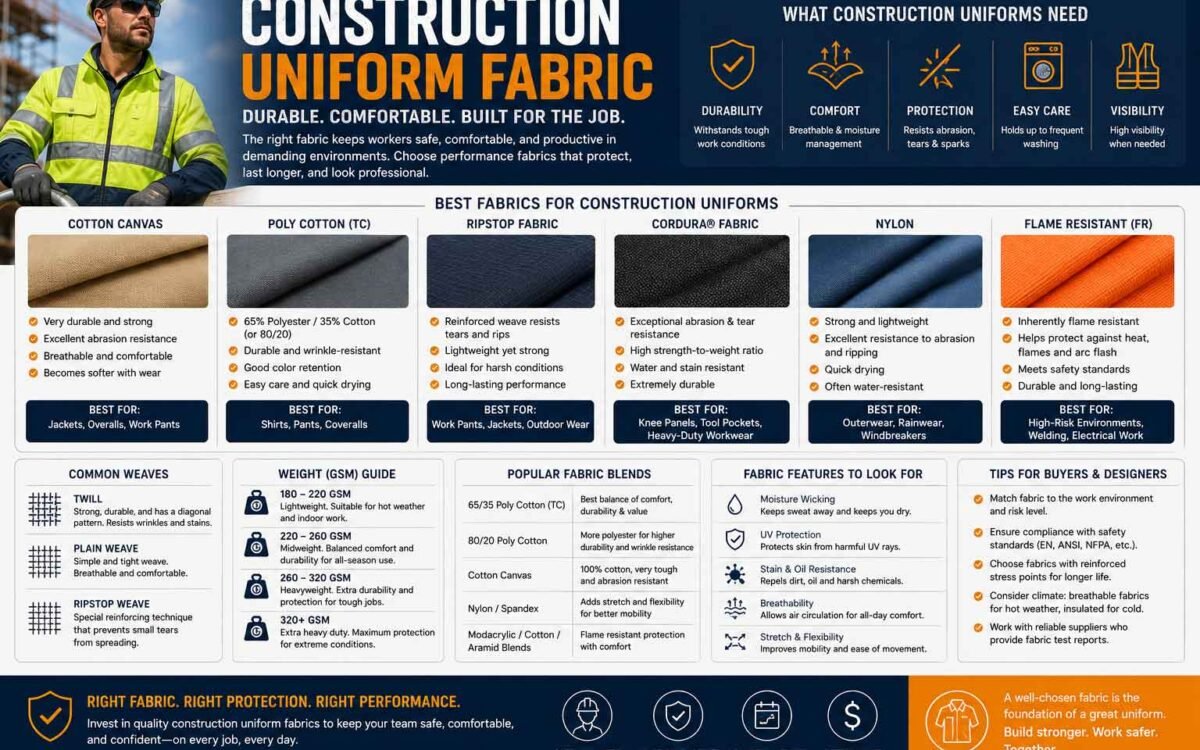
Construction Uniform Fabric: The Complete Buying Guide
Construction uniform fabric guide — role-by-role picks for laborers, electricians, welders, roofers, and road crews. FR and hi-vis compliance explained, plus a buyer's checklist from a 30-year textile manufacturer.
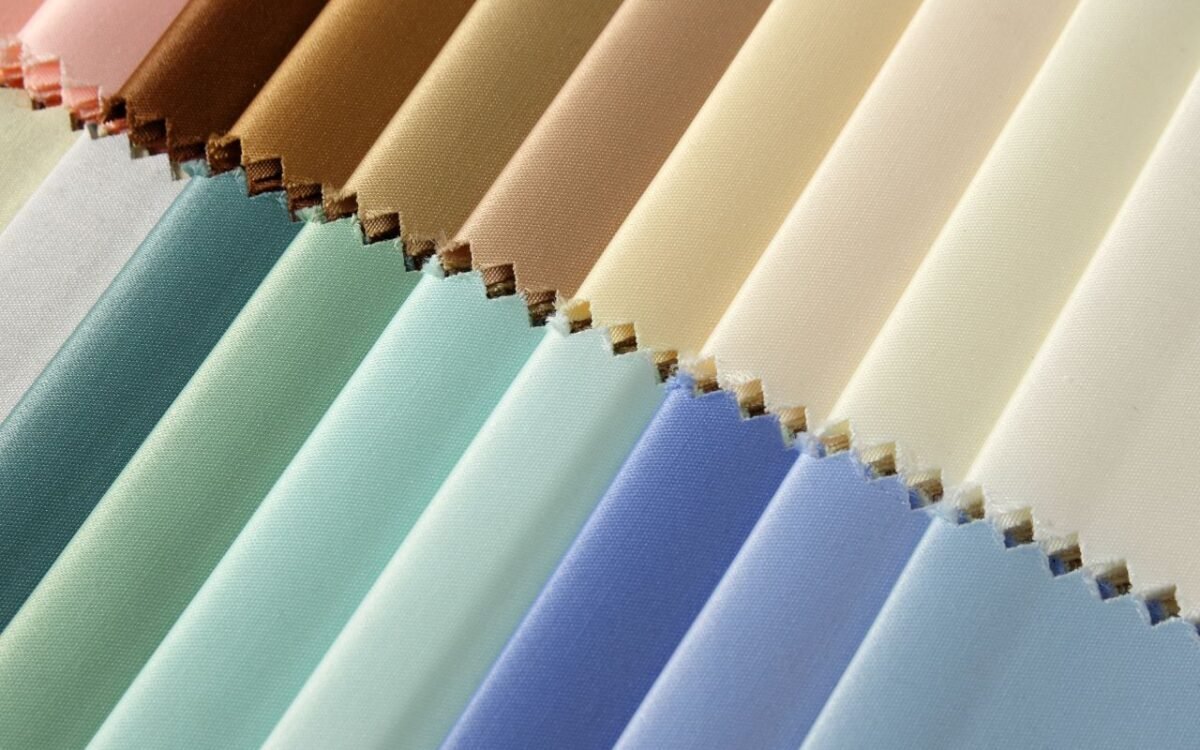
Best Fabric for Work Uniforms: The Definitive Buying Guide
Best fabric for work uniforms — TC 65/35, CVC 60/40, cotton twill, ripstop, FR, and hi-vis compared by scenario. Get the direct recommendation for your job, laundry system, and compliance needs, from a 30-year textile manufacturer.
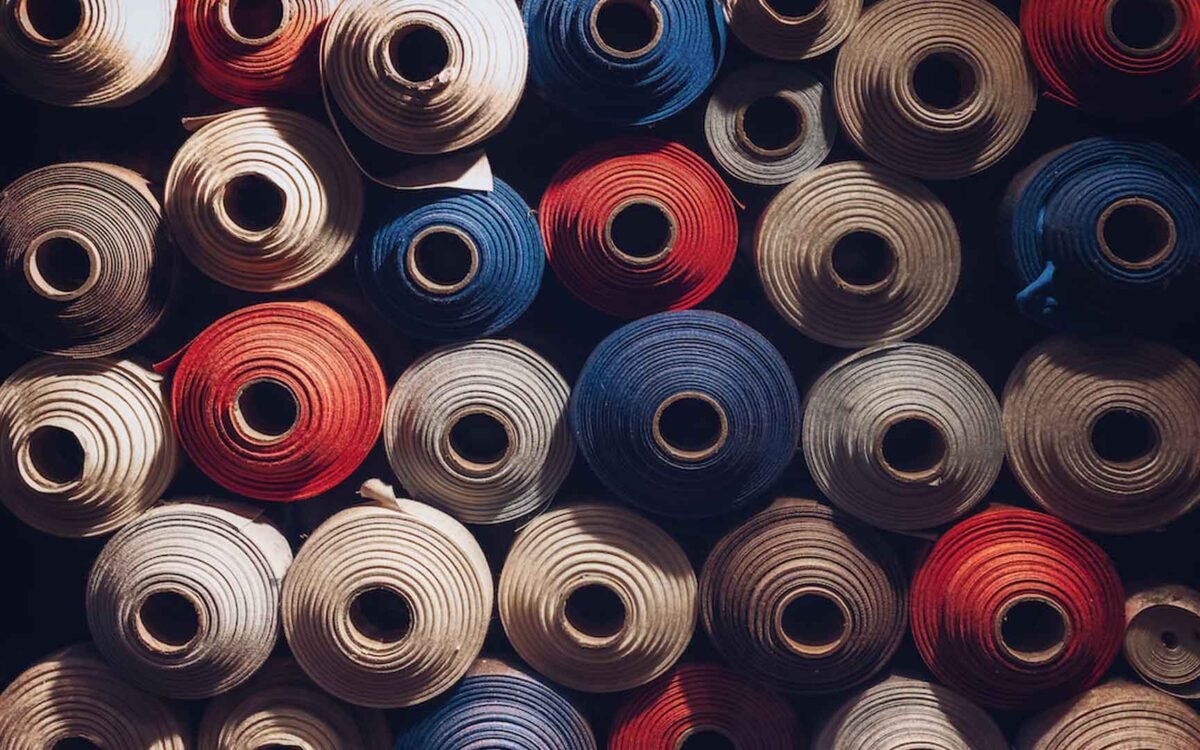
Work Uniform Fabric Types: The Complete Guide for Buyers & Manufacturers
Work uniform fabric types explained — cotton twill, TC 65/35, CVC, ripstop, FR, hi-vis, canvas, denim, and stretch. Compare durability, comfort, and cost per year, with an industry-by-industry selection guide from a 30-year textile manufacturer
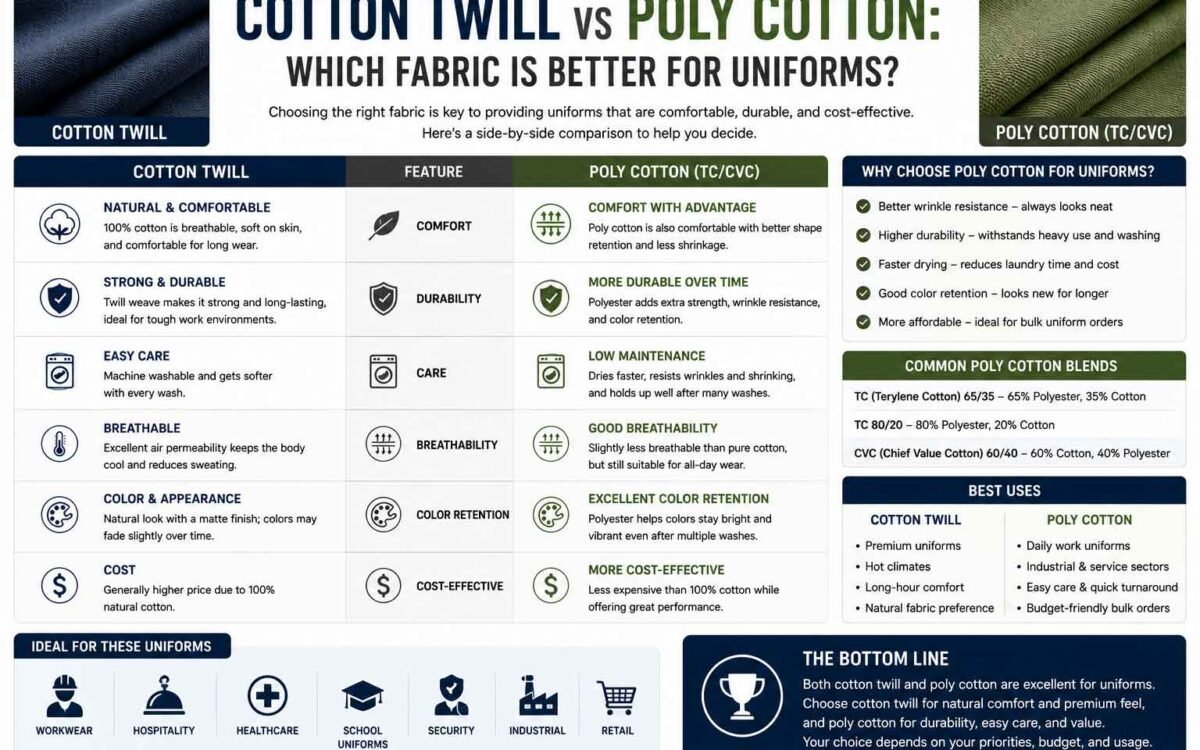
Cotton Twill vs Poly Cotton: Which Fabric Is Better for Uniforms?
Cotton twill vs poly cotton — compare comfort, durability, wrinkle resistance, industrial laundry performance, and cost per year. Learn which uniform fabric fits your program, with a decision guide from a 30-year textile manufacturer
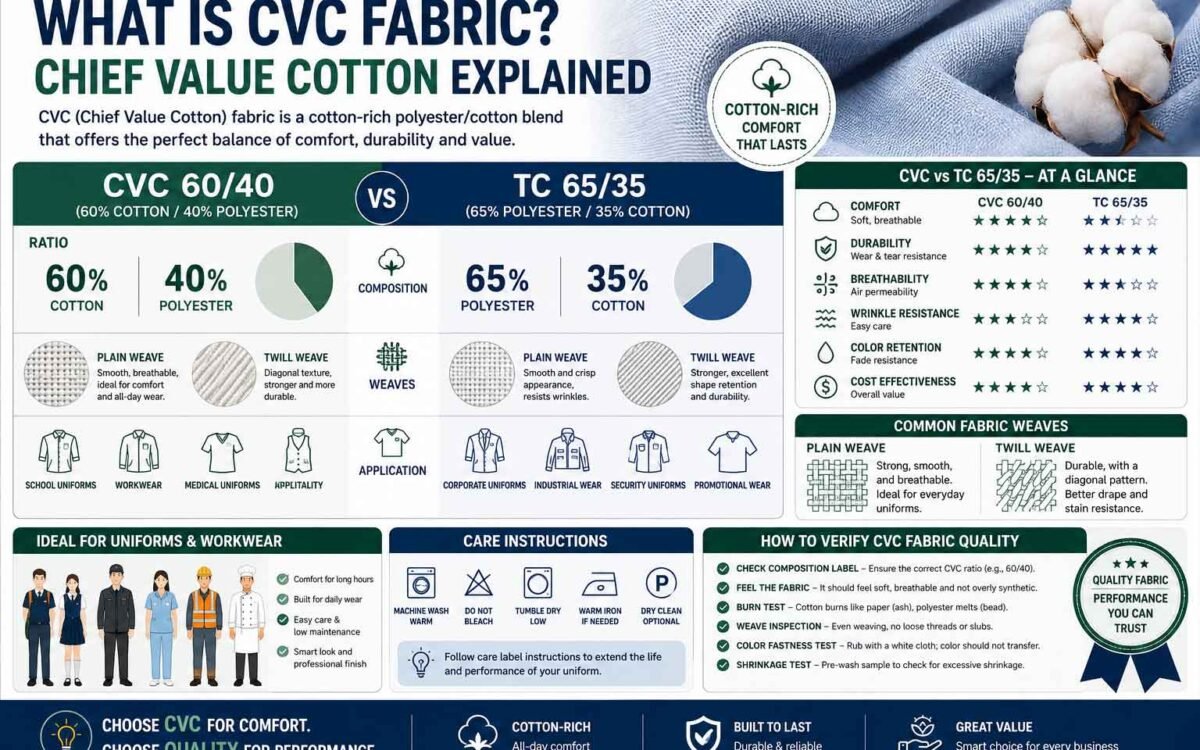
What Is CVC Fabric? The Complete Guide to Chief Value Cotton
What is CVC fabric? Chief Value Cotton explained — cotton-rich poly cotton blends, CVC 60/40 vs. TC 65/35 comparison, ratios, weaves, care, and how to verify quality for uniforms and workwear.