When a procurement manager compares fabric prices, the difference is plain to see. Cotton costs roughly twice as much per meter as polyester. The instinct is to pick the cheaper option and move on.
But after three decades of supplying industrial uniform fabrics to clients across Europe, Japan, and Southeast Asia, I can tell you this: the price per meter is the least reliable indicator of what a fabric will actually cost you. The real figure—the one that lands on the CFO's desk at the end of a three-year cycle—depends on how many times you have to replace the uniform, how much laundry damage it absorbs, and how long it maintains a presentable appearance.
This guide walks through those variables with lab-verified data, not marketing claims.
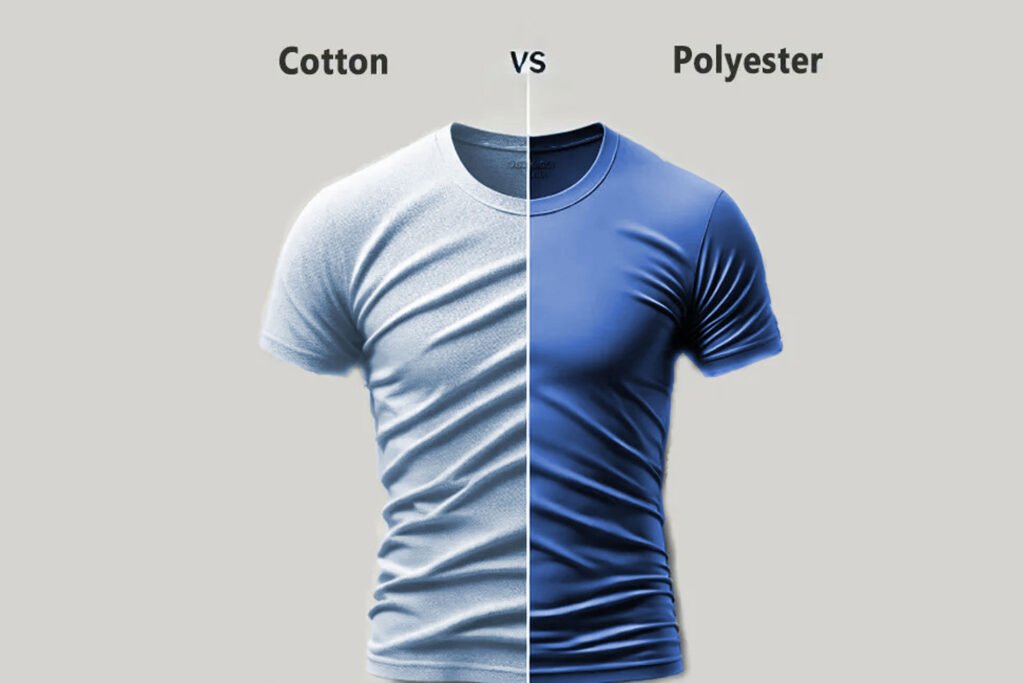
Polyester vs Cotton Workwear
This guide combines textile engineering principles with practical procurement insights to help you make informed decisions.
The Technical Baseline
Before discussing costs, it helps to establish what each fabric delivers at the engineering level.
| Property | 100% Polyester | 100% Cotton | 65/35 Polyester-Cotton (T/C) |
|---|---|---|---|
| Abrasion Resistance | 50,000+ Martindale cycles | 10,000–15,000 cycles | 25,000–30,000 cycles |
| Shrinkage (Industrial Wash) | <1% | 5–8% | <2% |
| Wrinkle Recovery | Self-smoothing | Poor | Good |
| Moisture Wicking | Minimal (fiber lacks microcapillaries) | High (ribbon-like fiber structure) | Moderate |
| Typical Lifespan Under Heavy Use | 3–4 years | 1–1.5 years | 2–3 years |
| Raw Fabric Cost per m² | $3.20–$4.80 | $6.50–$9.20 | $4.50–$6.00 |
Every property in this table translates directly into a cost variable. Let me explain how.
The Polyester Advantage: Why Lower Upfront Cost Holds Up Over Time
For high-turnover environments—warehouses, logistics centers, construction sites—polyester is the clear winner on total cost of ownership, and the gap is wider than most buyers expect.
Three-Year Cost Comparison: Polyester vs Cotton
Consider a hotel chain needing 500 uniforms, with each uniform requiring 3 meters of fabric.
Scenario A: 100% Polyester
- Fabric cost (one purchase): 500 × 3 m × $4.00 (mid-range) = $6,000
- Replacement cycle: every 3 years → 1 purchase over 3 years
- Total fabric cost over 3 years: $6,000
- Cost per year: $2,000
Scenario B: 100% Cotton
- Fabric cost (one purchase): 500 × 3 m × $7.85 (mid-range) = $11,775
- Replacement cycle: every 1.5 years → 2 purchases over 3 years
- Total fabric cost over 3 years: $23,550
- Cost per year: $7,850
The annual difference is nearly $6,000—and that is before factoring in indirect costs such as laundry energy consumption (polyester dries faster) and the labor hours spent managing reorders.
Where the Durability Comes From
Polyester's cost advantage traces back to its polymer structure. High-tenacity polyester fibers are extruded with tightly aligned crystalline chains that resist the friction-induced fiber breakage that causes pilling. When a warehouse worker's knee presses against a conveyor belt eight hours a day, it is this molecular resilience that prevents the fabric from thinning.
For extreme stress points—knees and elbows in heavy industrial settings—we recommend reinforcing with 500D or 1000D Nylon Canvas, Oxford weaves, or Cordura-grade polyester. These constructions naturally exceed 60,000 Martindale cycles and can extend the lifespan of a work pant by an additional 12 to 18 months compared to standard polyester.
What Polyester Cannot Do
The trade-off is real. Polyester lacks the microcapillary structure that gives cotton its moisture-wicking ability. A worker in a pure polyester shirt in a hot kitchen or a humid outdoor site will feel clammy because sweat sits on the skin rather than being pulled through the fabric. This is not a comfort issue that can be solved with weave adjustments—it is a fundamental fiber property.
The Case for Cotton: When Premium Pricing Is Justified
Cotton costs more, and in certain applications, it is worth every cent.
Healthcare and Food Processing
Hospitals and poultry plants pay a premium for cotton not because of comfort alone, but because natural cellulose fibers do not generate the static charge that attracts airborne particulates in sterile environments. In these settings, the cost of a contamination incident far outweighs any fabric savings.
Moisture Management in Hot Climates
The flat, ribbon-like cross-section of cotton fibers creates natural twists along their length. These twists form microcapillaries that actively pull liquid moisture away from the skin and spread it across the fabric surface for evaporation. This is physics, not marketing. In tropical environments or hot kitchens, that capillary action keeps workers cooler and reduces heat-related fatigue.
For Gulf region oil rig crews or Southeast Asian factory floors operating at 35°C with high humidity, cotton's moisture management is a productivity variable, not a comfort luxury.
The Engineered Compromise: Why 65/35 Blends Dominate Procurement Lists
Most procurement professionals end up choosing neither pure polyester nor pure cotton. The 65/35 polyester-cotton (T/C) blend has become the dominant choice in corporate and hospitality uniforms for a straightforward reason: it delivers roughly 80% of cotton's breathability with 90% of polyester's durability, at a price point that sits between the two.
The blend works by pairing two contradictory fiber behaviors. Polyester's thermoplastic memory means the fabric holds its shape after sitting, bending, and washing. A hotel front desk agent wearing a T/C blazer will stand up after an eight-hour shift without deep creases across the back. Pure cotton would be visibly crumpled within two hours.
Cotton's presence in the blend, meanwhile, stabilizes what pure polyester lacks: breathability. The cotton fibers provide enough capillary channels to wick sweat away from the skin, while the polyester content limits total shrinkage to under 2%—compared to 5–8% for pure cotton. That shrinkage control alone extends uniform lifespan by 12 to 18 months in facilities that use industrial tunnel washers.
For aviation and executive attire where a wool-like handfeel and superior drape are required alongside wrinkle resistance, many buyers turn to T-R (65/35 Polyester-Rayon) blends—our core T-R Series. The rayon component delivers a softer touch and better moisture management than polyester alone, while maintaining the structural durability needed for daily wear. This is why our T-R Series has become a preferred specification among airlines and corporate uniform programs where presentation quality directly reflects brand image.
A Realistic TCO for T/C Blends
Using the same 500-uniform hotel example:
- Fabric cost (one purchase): 500 × 3 m × $5.25 (mid-range) = $7,875
- Replacement cycle: every 2.5 years → 1 purchase over 3 years (with overlap)
- Total fabric cost over 3 years: ~$7,875
- Cost per year: ~$2,625
This puts T/C blends at only 30% higher annual cost than pure polyester, but less than half the annual cost of pure cotton. In practice, most hospitality and corporate clients find this the most defensible middle ground.
Functional Finishes That Shift the Cost Equation
A fabric's base properties are only part of the story. The right finish can dramatically change the total cost picture.
Fluorocarbon-Free DWR Coatings
For food service and hospitality, a properly applied Durable Water Repellent (DWR) coating prevents oil and water from bonding to the fabric fibers. The key specification is the AATCC 22 Spray Test rating. A pre-cured, heat-bonded finish should maintain a rating of 80 or higher after 30 industrial wash cycles. Spray-on coatings, which are significantly cheaper to apply, typically drop below 40 after 10 washes and offer no real protection beyond the first month.
A chef's jacket with a durable DWR coating lasts 18 to 24 months. An identical jacket without it often shows permanent oil staining by month four and is pulled from service by month six. The coating adds roughly $0.80 per meter to the fabric cost. The replacement savings from that $0.80 investment are in the range of $4.00 to $6.00 per meter over two years.
Antimicrobial Treatments
For healthcare uniforms, silver-ion or zinc-based antimicrobial treatments reduce odor retention and bacterial growth over the garment's lifespan. These treatments add $0.50 to $1.00 per meter but can extend the effective life of a scrub suit by 6 to 12 months by preventing the embedded odor that often triggers early replacement.
Procurement Red Flags That Inflate Your Costs
Buyers lose money not when they choose the wrong fiber, but when they pay for a specification they do not receive.
Fake Density Claims
Some suppliers use hollow-core polyester fibers or starch loading to inflate the apparent GSM of a fabric. A roll labeled '250 GSM' that actually weighs 190 GSM will wear thin at stress points months earlier than expected. The verification is simple: weigh the fabric before and after one industrial wash. If the variance exceeds 3%, the construction is compromised. Starch-loaded fabric will leave a white residue when rubbed with a damp cloth.
Misrepresented Abrasion Ratings
A '50,000 Martindale' claim on standard polyester is physically achievable only with specific yarn twists and weave densities. Demand the ISO 12947-2 test report for the specific batch, not a generic certificate from a different production run. Reputable factories provide batch-specific documentation without hesitation.
Short-Staple Cotton
The staple length of cotton fibers directly determines pilling resistance. Short-staple varieties pill aggressively after 15 to 20 washes. Egyptian or Pima cotton, with their longer fibers, do not. If the supplier cannot specify the cotton variety and provide documentation, the fabric almost certainly uses short-staple fibers.
Frequently Asked Questions
How do I calculate the real cost of a uniform fabric?
Track three variables: fabric price per meter, replacement frequency under your specific laundering conditions, and the indirect costs of reordering (labor, shipping, downtime). A simple spreadsheet comparing annualized cost across three fabric options will reveal the true picture within 15 minutes.
Can a T/C blend be used for heavy industrial roles?
For moderate industrial use—light manufacturing, warehousing, logistics—65/35 T/C is sufficient. For extreme conditions such as heavy welding, mining, or oil and gas extraction, we recommend pure polyester or purpose-engineered blends with nylon or aramid reinforcements.
Does polyester cause skin irritation in sensitive wearers?
Standard polyester can feel uncomfortable in hot, humid conditions, but it is not inherently irritating. For staff with known skin sensitivities, a T/C blend or a polyester fabric with a brushed back finish provides a comfortable alternative without sacrificing durability.
What about T-R fabrics for corporate uniforms?
T-R (65/35 Polyester-Rayon) is the preferred choice for executive, aviation, and high-end corporate uniforms where drape, softness, and wrinkle resistance are equally important. The rayon content gives it a noticeably better handfeel than T/C blends, making it ideal for blazers, dress pants, and pilot shirts worn in client-facing roles.
Making the Final Decision
The choice between polyester and cotton for workwear is not a technical debate about which fiber is better. It is a procurement decision that depends on your specific operational variables.
If your uniforms face high abrasion, frequent industrial laundering, and budget constraints, polyester delivers the lowest total cost over a three-year horizon—often by a margin of 3:1 or more compared to cotton.
If your staff works in hot, humid environments or sterile settings where breathability and static control are priorities, cotton is worth the premium, and the alternative will cost you more in productivity and compliance risk.
For the majority of corporate, hospitality, and light industrial applications, a 65/35 polyester-cotton (T/C) blend offers the most defensible balance of cost, comfort, and durability. And where presentation quality is paramount—think airline cabin crews, luxury hotel front desks, and executive suites—our T-R Series (65/35 Polyester-Rayon) delivers that extra margin of appearance retention that separates a good uniform from a great one.
At XINGYE TEXTILE, we manufacture all three options under one roof—from yarn spinning to finishing—and we provide batch-specific test data for every production run. Our technical team works directly with procurement departments to match fabric engineering to real-world operating conditions.
For swatch kits, lab reports, or a consultation on your specific requirements: